Ask most people what comes to mind when they think of Indonesian ghosts, and the answer tends to be fairly predictable: kuntilanak, pocong, tuyul. The white-dressed female spirit, the hopping shrouded corpse, the bald child who steals coins. These are the ghosts of horror films and late-night storytelling sessions, and they are popular for a reason: they are vivid, frightening, and deeply embedded in Indonesian popular culture.
But ghosts, in Indonesia as elsewhere, are rarely just about fear.
This special edition of Inside Indonesia takes the ghostly seriously. But not to debate whether ghosts are real or not. Through editing these articles and the conversations they provoked, we have realised that this may be the wrong question to ask. As the contributors to this edition show, ghosts do things. They hold memories beyond official reports. They protect forests from careless developers. They walk through the dreams of researchers who come into contact with forbidden manuscripts. They march, headless, through landscapes soaked in political violence. They open space for the ineffable — for everything that modernity insists we set aside.
The articles gathered here reflect a range of voices from scholars, journalists, ethnographers, and community researchers who are writing from across Indonesia and beyond. They offer a richly textured map of what ghosts do.
This edition
Christy Childs offers an evocative entry point into Balinese supernatural belief, exploring how leyak, balian, and the logic of spiritual balance shape everyday life through the testimonies of Pak Andri, a Balinese professor and jamu practitioner. Her piece establishes a key theme of the edition: that in Indonesia, the supernatural is not a parallel world running alongside the ordinary one, but woven into the fabric of it. Kananda’s and Cole's piece indicates how strands of the political manifest in the ghostly. In a region long stigmatised as backward and superstitious, Khairani tells the story of how young people in Gunungkidul are connecting with supernatural lore to protect vital water sources in drought-prone karst country and to fight against unethical tourism that commodifies supernatural rituals.
Verena Meyer’s contribution takes a more reflexive turn. As an Assistant Professor at Leiden University who works with manuscripts from Islamic Southeast Asia, Meyer recounts her experience accompanying a digitisation project at the Museum Siginjei in Jambi, Sumatra, where she encountered a photocopied manuscript bearing a handwritten warning that it must not be copied or shown to anyone who was not a descendant of a specific Sultan. In her article, she asks: how should researchers understand the agency of manuscripts themselves, especially in an age when digitisation, and now artificial intelligence, can thrust centuries-old materials into contexts their custodians never imagined?
Muhammad Afdillah writes about a different kind of archiving and remembering from Ponorogo, East Java. He opens with a dream, of headless soldiers marching, and asks what it might carry. In the 1960s, Ponorogo was one of many sites of mass killings during Indonesia's anti-communist purges. Afdillah traces how that violence persists in the present through ghost stories: the river behind his dormitory where bodies of accused communists were reportedly dumped, the hilly road where construction workers unearthed human bones, and the charged atmosphere that descends each September 30th. Read alongside Noanda Deghaska’s piece, which examines how Indonesian infrastructure carries and transmits the memory of violence, these two pieces ask a shared question: what happens when a society cannot mourn openly, and the land and infrastructure are left to do the mourning instead?
Bianca Smith’s article brings a different dimension to the edition, exploring how the supernatural djinn become active presences in processes of grief and community healing in ways that would not be legible without them.
Emmelia Helkins and Ronald Lukens-Bull, meanwhile, approach the ghostly from a different angle by arguing that Indonesian ghosts appear at the points where different temporal layers collide, colonial and postcolonial, rural and urban, traditional and modern.
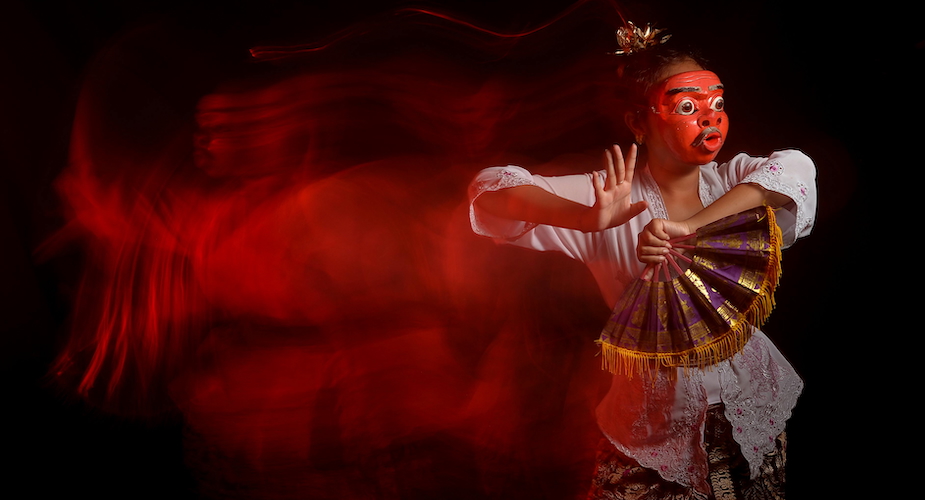
And we cannot do an edition on ghost stories without bringing in some horror films that shape the way we imagine and tell stories that haunt us. In her article, Andrea Decker explores the striking proliferation of female dancer figures in recent Indonesian films like KKN Desa Penari, Badarawuhi and Ronggeng Kematian, asking what anxieties about femininity, place, and power these spectral dancers are being conjured to carry.
We also had a conversation between one of the co-editors of this edition, Tito Ambyo with Titah AW, a journalist who has been reporting on ghosts in Indonesia. In this conversation, both reflect on what it means to take the supernatural seriously as a journalist, to include dukun, sacred trees, and the requests of the spirit world alongside interviews with government officials and community stakeholders. Her work points toward a journalism capacious enough to map not only human stakeholders but the more-than-human forces that Indonesians know to be present in the world.
This edition demonstrates that regardless of what you believe, or where you sit in the ambiguous phrase that Indonesians like to say: 'percaya engga percaya' (believe it or not) the ghost stories are there, and they are doing important work. They carry histories that have not been allowed to surface in an official manner. They regulate human relationships with nature. They make unspeakable grief speakable. They open up spaces for the ineffable.
In a world that is increasingly becoming harder to explain, maybe we need more ghost stories to help us admit what we do not know, and to uncover what we have buried.
Tito Ambyo (arsisto.ambyo@rmit.edu.au) is a media anthropologist, journalist, community organiser, lecturer at RMIT University, Narrm, Australia and a member of the Board of Inside Indonesia. Jamie Edmonds (James.Edmonds@asu.edu) is the Director of the Critical Languages Institute and Clinical Assistant Professor at Arizona State University as well as an aspiring master gardener and member of the Inside Indonesia editorial collective. Listen to the Talking Indonesia podcast about this edition, featuring Tito and James.