Folk horror and the haunting of Indonesia’s past
In the last decade, Indonesian folk horror has experienced a striking renaissance. The wave began with Perempuan Tanah Jahanam (titled Impetigore internationally) in 2019 and reached unprecedented heights with KKN di Desa Penari (Work Study in Dancer Village), the highest-grossing film in Indonesian history. These films repeatedly turn to East Java, Javanese village art forms, and kejawen spiritual practices to explore classic folk horror themes: the friction between modernity and tradition, the vulnerability of outsiders entering an isolated community, and the uneasy coexistence of religion and the supernatural.
One motif appears with remarkable persistence: the female village dancer. Often portrayed as a vengeful or seductive figure inhabiting the liminal space between human and spirit worlds, this figure is more than a folkloric archetype. She is also haunted by a powerful earlier image in Indonesian political culture: the dancing women of Gerwani, a left-wing women’s rights organisation demonised by anti-communist propaganda in the 1960s and beyond, including in the New Order film Pengkhianatan G30S/PKI (1984). Propagandistic depictions of women dancing sensuously while torturing Indonesian army generals cemented in national consciousness an association between female performers, sexual depravity, and political violence.
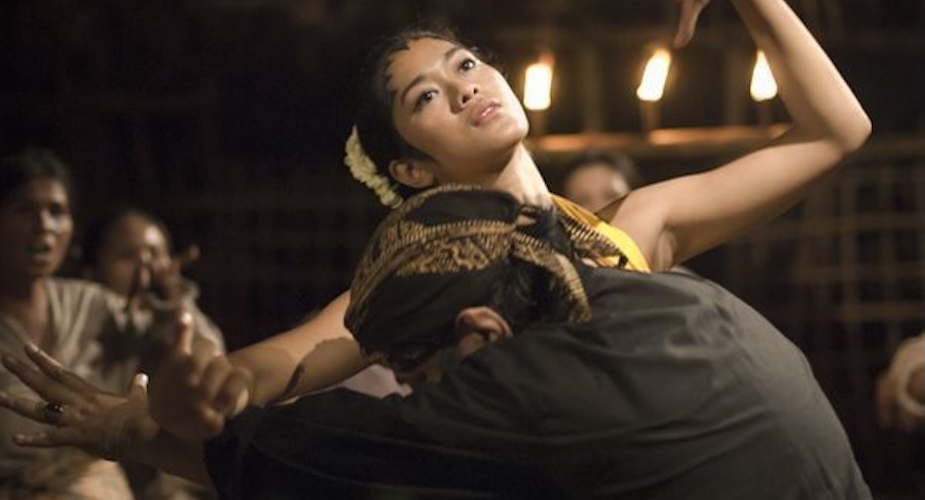
Recent Indonesian folk horror surfaces this cultural anxiety, linking women’s performing bodies with danger and transgression. In doing so, these films offer a contemporary artistic and popular genre for processing the unresolved trauma of Indonesia’s past.
The political haunting of dancing bodies
Village dance in Java is widely celebrated as cultural heritage and social entertainment, but its history is complicated by its entanglement in the political violence of 1965–66. In the aftermath of the generals’ murders, the army launched a massive campaign of anti-Communist propaganda. Gerwani and Lekra (the People’s Cultural Institute) were blamed for the killings, accused of dancing, singing 'Genjer-genjer,' and engaging in sexual acts while torturing the military officers. This sensationalist narrative, though wholly fabricated, played a major role in legitimising the army’s subsequent mass killings of suspected Communist sympathisers. Rachmi Diyah Larasati writes of this propaganda, 'These brutal sexual politics, repeated and reproduced throughout the media and national education systems, have constituted the dominant ideological force in the construction and establishment of a widespread Indonesian collective memory.'
Pengkhianatan G30S/PKI dramatically reinforced this imagery. Required broadcasting annually on Indonesian television until 1998—and voluntarily screened by public broadcasting network TVRI through to 2020—the film transformed the dancing female body into a symbol of violence and moral collapse. Although historians have long debunked the claims made in the film, the image of the dangerous, sexually transgressive dancer entered the national imagination as cultural memory.
Other cultural works have tried to revisit or complicate this history. Sang Penari (The Dancer, 2011), based on Ahmad Tohari’s novel Ronggeng Dukuh Paruk, depicts the events of 1965 through the eyes of a ronggeng, a professional village dancer chosen by a spirit to serve a ritual role. Though sympathetic in parts, the film portrays the dancer’s life as tragic, backward, and sinful—a narrative that reinforces, rather than challenges, the moral suspicion surrounding female performers.
As Saskia Wieringa writes, 'Few events have impacted Indonesian modern history more deeply than the mass murders of 1965/6. Yet what triggered these mass murders has mostly been hidden under deep layers of fear, guilt, horror and shame.' Recent folk horror films traverse those layers by mapping them onto women’s bodies. Whether consciously or not, the genre inherits this political legacy by returning to female dancers as symbols of danger, moral collapse, and suppressed history.
Seduction, possession and moral decay: KKN di Desa Penari (2022)
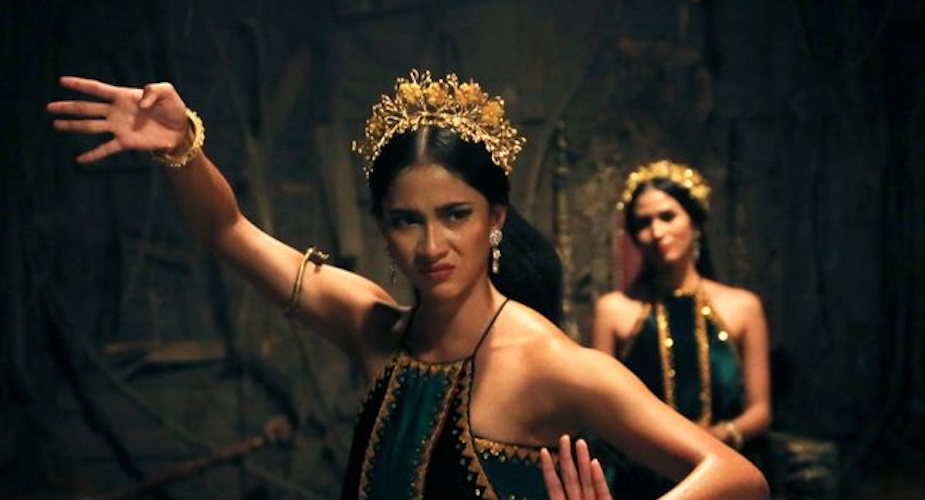
KKN di Desa Penari became a national sensation, selling more than seven million tickets in its first three weeks. The story follows six university students on their compulsory kuliah kerja nyata (work study) in a remote East Javanese village. The three young women—Nur, Widya, and Ayu—become entangled with the seductive and terrifying dancer-spirit Badarawuhi, whose green silk costume and mesmerising movements haunt the forest.
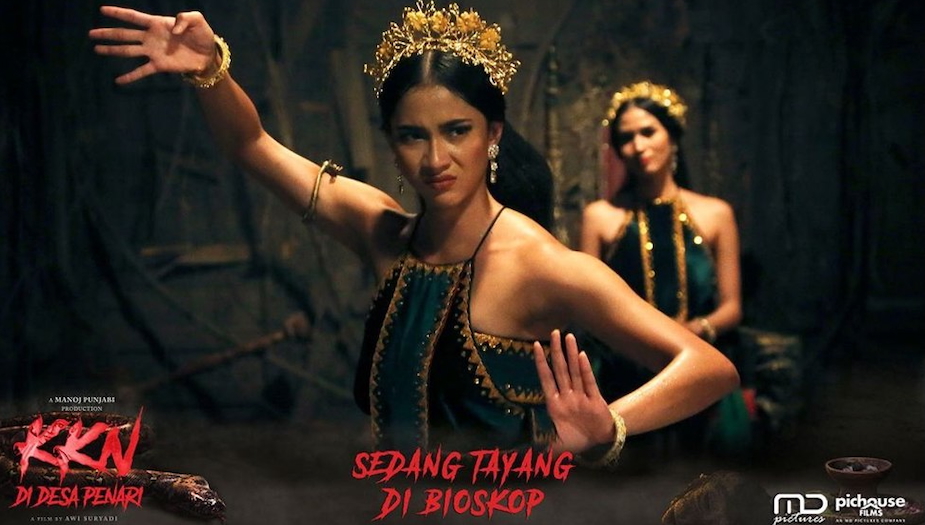
From their arrival, the students are warned not to pass through a gate into the forest. But visions of gamelan music and a ghostly dancer lure them deeper. Both students and villagers become possessed. Widya and Ayu are gradually drawn into a spirit-world pavilion where disfigured phantom villagers dance in grotesque celebration. The resemblance to New Order depictions of Gerwani and PKI members dancing while the generals are tortured in Pengkhianatan G30S/PKI is striking: the isolated pavilion filled with maniacal dancing implies danger and community decay.
Crucially, the film treats dance as punishment. Women who fall under Badarawuhi’s influence are forced to dance until death. No joy, artistry, or agency is permitted. The dancer is a manipulator and trickster, corrupting not only individuals but the entire village. This portrayal aligns with the cultural script shaped by the G30S narrative: the young woman’s dancing body is alluring but deeply dangerous, capable of leading others to ruin.
As Aulia Adam notes in Magdalene, the film’s moral world resembles the didactic universe of sinetron azab, where sinners receive supernatural punishments. But the film’s power also lies in its claim to be 'based on a true story,' as noted by Jawa Pos writer Dwiki Aprinaldi. Its success rests on its ability to evoke both a folkloric East Java and a deeper cultural anxiety about the dangers of female performance.
The battle for the soul of the village: Badarawuhi di Desa Penari (2024)
The IMAX-shot prequel expands this world by giving Badarawuhi and the villages greater backstory. Four young adults arrive in the village to return a cursed armband, hoping it will cure a relative. Instead, they find themselves entangled in a ritual world where the dancer-spirit uses the armband to select her next human vessel.
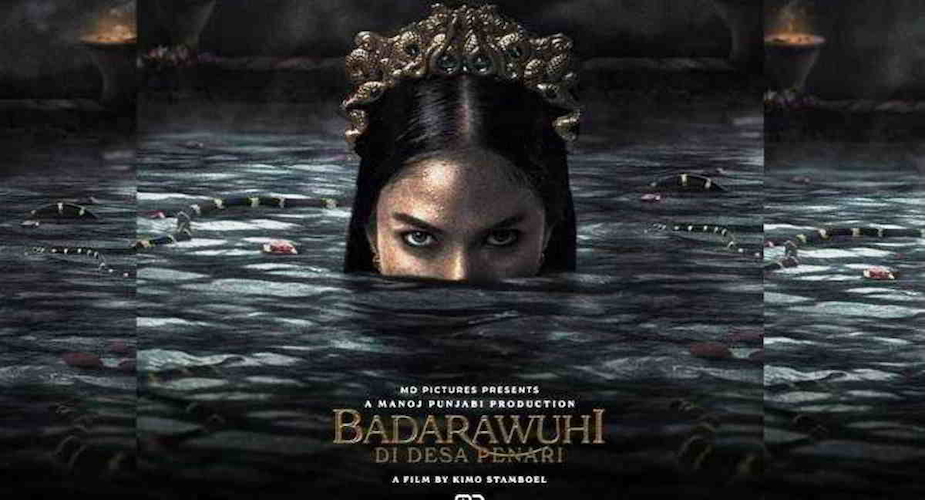
The film departs from the moralizing tone of the original. Here, villagers are active agents struggling to protect their community. No longer silent and malevolent, they struggle to rescue their village from the evil spirit that resides there. In a striking parallel to Sang Penari, the spirit’s selection process—marked by magical tokens, possession, trance, and bodily transformation—echoes the spiritual inheritance associated with ronggeng dancers. The students and villagers together battle Badarawuhi’s supernatural power to force young women to dance, culminating in a climactic scene of Badarawuhi forcing dozens of spirits of young women to dance together in hell. The story instructs the audience to resist the seductive power of the dancer.
Inverting folk horror narratives: Ronggeng Kematian (2024)
Verdi Soleiman’s Ronggeng Kematian directly responds to KKN while upending many of its tropes. Like KKN, the story begins with four university students visiting a remote village. But this time, the perspective shifts: the central character is the ronggeng herself, a young girl with academic ambitions and no desire to dance.
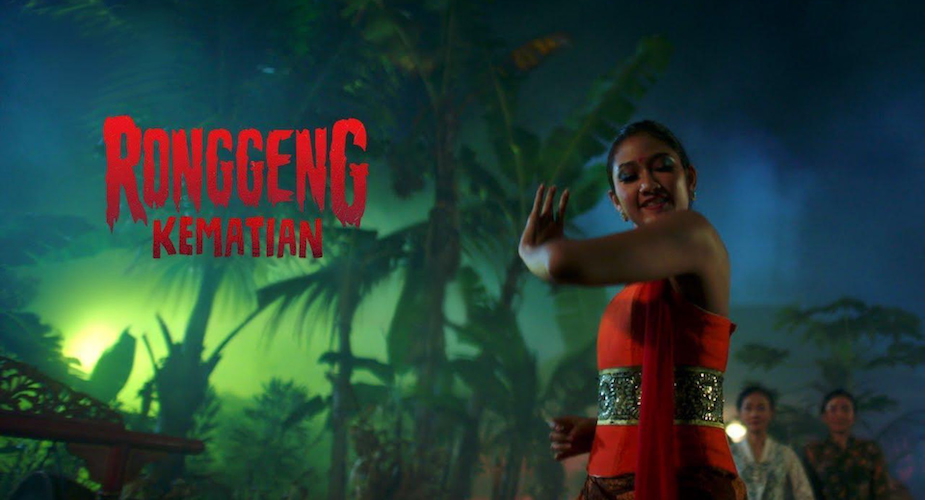
When a spirit unexpectedly selects her as heir to the village’s last ronggeng, the girl confronts a role she neither sought nor understands. The film gives unprecedented attention to the villagers’ own perspectives—their hopes, fears, and internal conflicts. The visiting students, by contrast, are depicted as careless and violent. One is revealed to have murdered the previous ronggeng, and when the villagers use the ronggeng’s supernatural power to take revenge, that revenge feels justified.
By centering the subjectivity of the dancer and the villagers, Ronggeng Kematian inverts the folk horror dynamic. According to Adam Scovell’s 2017 book Folk Horror: Hours Dreadful and Things Strange, folk horror is characterized by outsiders who encounter a malevolent landscape and, isolated there, become subject to the (usually skewed) moral code of the place. In KKN, the evil is in the village, and the well-meaning (if flawed) visitors are seduced by it. In addition, the outsiders are our point of view characters throughout, and the impact on the villagers is largely an afterthought. However, in Ronggeng Kematian, the outsiders do not accidentally unleash an evil that already exists in the village. They carry the evil within themselves, while the village is portrayed as idyllic and the villagers share the point of view position. Ronggeng Kematian questions the moral framework of KKN, arguing that rural lifestyles and cultural traditions have value and that modernity is a corrupting force.
Inherited violence: Perempuan Tanah Jahanam (2019)
Though not centered on dance, Joko Anwar’s Perempuan Tanah Jahanam was arguably the first film of the contemporary string of Indonesian folk horror, released four months after the KKN Di Desa Penari concept first appeared as a Twitter thread. It subtly shows how women’s bodies absorb and transmit historical violence.
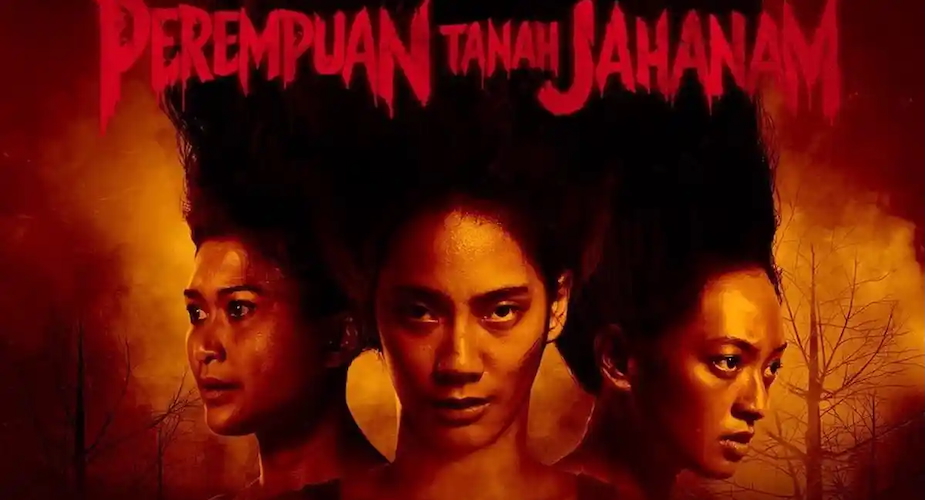
When Maya is attacked by a villager who tracks her down in Jakarta, she becomes the heir to her village’s cycle of vengeance, her physical body a representation of the crimes of her father and grandmother against the village. Her return to the village follows the script of folk horror, but the terror is not limited to that locale: Maya discovers that the horror of the village is embedded in her ancestry and her body, and, even as she escapes the village itself, distortions in the music imply that she’ll never truly escape the horror of what was done in the past. Javanese arts similarly become the target of suspicion, as shadow puppetry figures in the atrocities. Whether through village rituals or family secrets, women’s bodies become the repositories for unspoken communal trauma.
Taken together, these films show how dancing women—literal or symbolic—carry the burden of national memory. Their bodies become the stage on which unresolved histories replay themselves.
Why folk horror? Why dancing women?
Folk horror offers a cultural space where taboo histories can be confronted indirectly. The genre can articulate forms of shame, fear, and intergenerational silence that official history avoids, especially around 1965–66. Eleanor Johnson writes of feminist horror films, 'art is where the most complex social problems and traumas get worked through and processed, sometimes long before a culture is prepared to grapple with those problems and traumas in mainstream public discourse'.
The dancer is an ideal carrier of these anxieties, first because dance is embodied memory, a site where the past becomes physically present. Second, female performers have long been sexualised, scapegoated, or treated as morally suspect, making them ready vessels for social fears. Finally, ghosts represent the return of what has been repressed, allowing filmmakers to evoke 1965 without naming it.
By staging danger and seduction through the figure of the dancing woman, these films allow Indonesia to revisit the spectre of political violence, gendered scapegoating, and state trauma under the guise of the supernatural.
The dancing ghost as witness
The dancer in the forest, the ronggeng onstage, the spectral woman whose movements blur seduction and death: these figures haunt Indonesian screens not only because they are folkloric but because they tap into a deeper reservoir of cultural memory. Their ghostly steps echo an older narrative in which dancing women were cast as agents of national terror.
In contemporary folk horror, the dancing woman is not only a ghost. She is a reminder of the evidence of violence that hides, like Badarawuhi, in the corner of our vision, in the isolated forest, and in the ghosts of the past.
Andrea Decker is a reference librarian at the American Folklife Center with the US Library of Congress.