Students fundraising for victims of the Aceh and Sumatra floods demonstrate that offering assistance transcends sociocultural boundaries
‘This assistance (money and clothes) may be small, but within it there is love and prayer. Solidarity is not about how much we give but about how sincerely we are present for others.’ This was how Zainal (not his real name) a member of the student organisations of North Maluku and Maluku in Yogyakarta (Ikatan Keluarga Pelajar Mahasiswa, IKPM) described his experience raising funds and collecting goods to send to victims of the recent floods in Aceh and North Sumatra. They worked in collaboration with their fellow Acehnese students at their dormitory to distribute money and clothing.
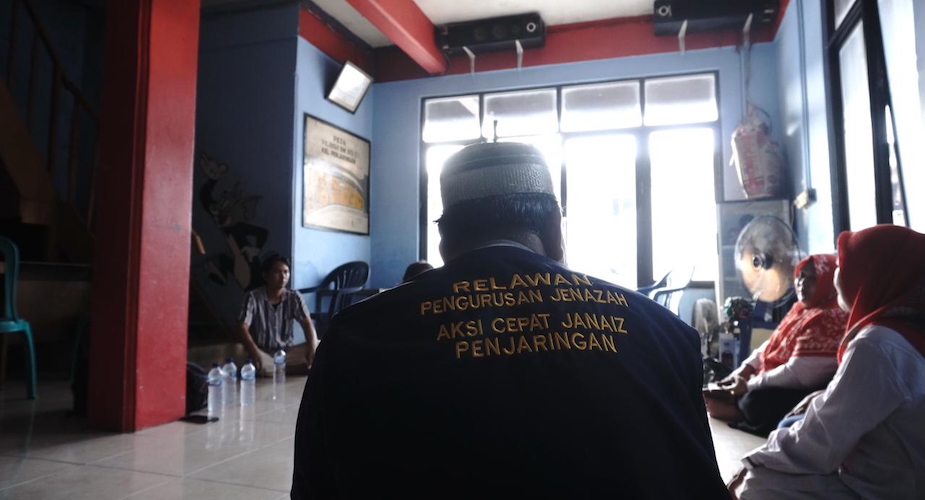
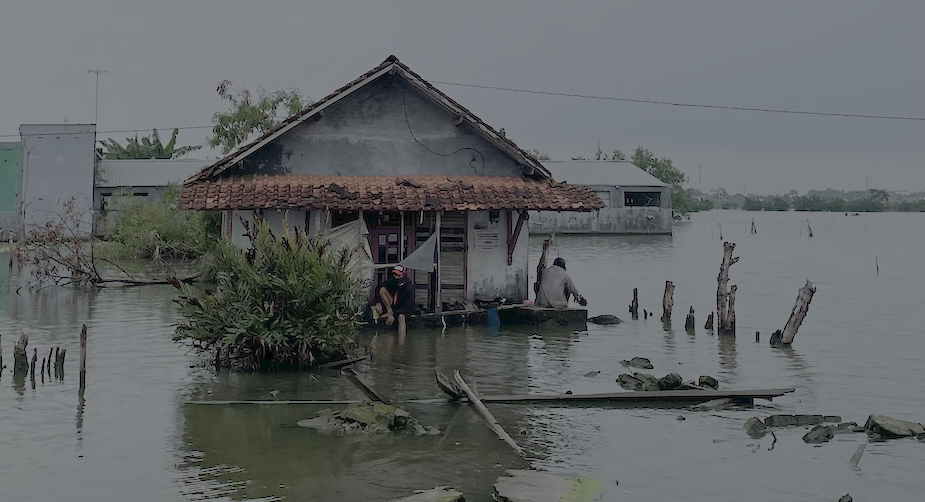
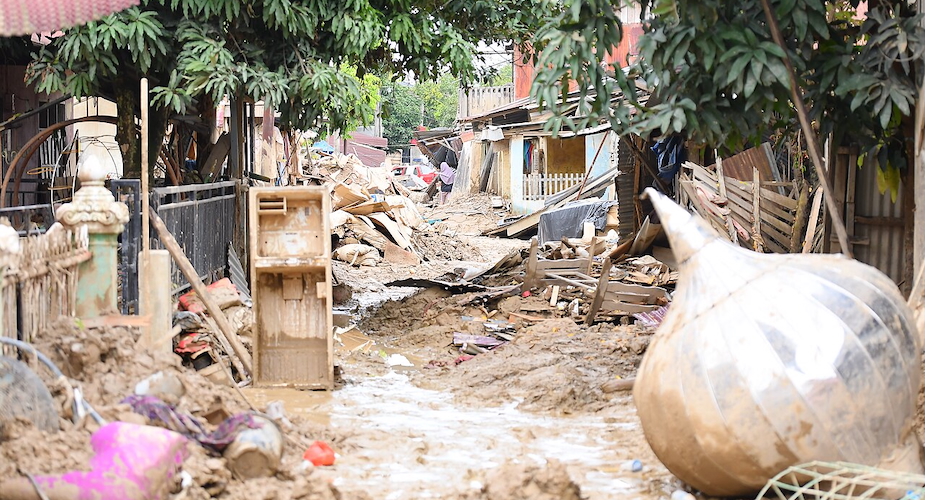
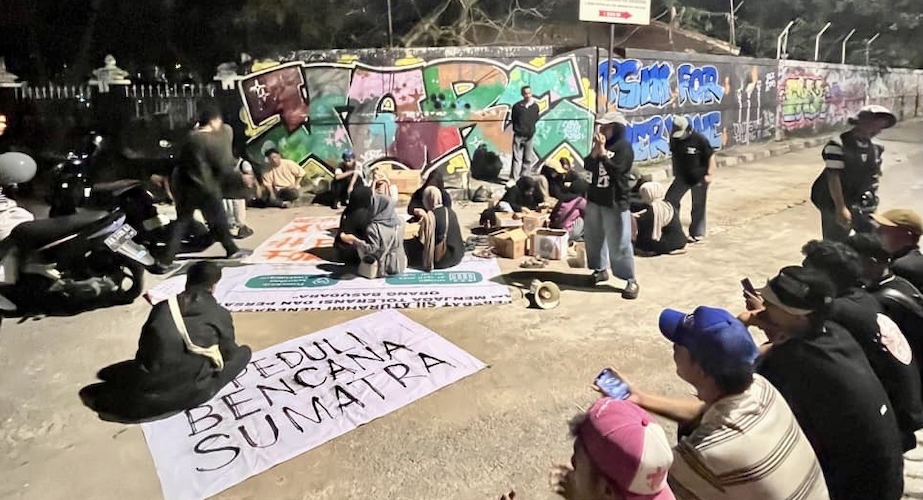
During November and December 2025, Aceh, North Sumatra and West Sumatra were affected by severe flooding. At that stage over 1000 people were reported to have lost their lives. In response, Zainal, a student from Maba, North Maluku, and Ibrahim (not his real name) from Namlea, Buru Island, Maluku, together with regional student organisations in North Maluku and Maluku in Yogyakarta, organised a fundraising campaign and collected clothing to provide assistance to the flood victims. On 1 December 2025, the students met to plan the fundraising activities. The meeting began with expressions of shared concern for the victims, followed by discussion of the schedule and the locations for fundraising. Each organisation was assigned specific tasks, including preparing necessary equipment such as donation boxes and material to make banners.
Over two days the students collected donations on the streets and gave ‘speeches’ to motorcycle, car, bus and truck drivers. They collected around Rp.10 million ($A800) in cash as well as clothing. A few days later, they visited the Acehnese student dormitory to deliver the donations. The Acehnese students then bought food supplies with the donated funds and arranged for it to be delivered along with the clothing to their home villages. On 21 December 2025, the students gathered once more with students from Aceh, North Sumatra and West Sumatra at the East Halmahera dormitory to distribute additional boxes of clothing they had collected.
I am not a student from eastern Indonesia in Yogyakarta. However, witnessing their solidarity action was one of the many insightful moments during my ethnographic fieldwork in Yogyakarta. I am Javanese, and a PhD candidate conducting research on these students’ experiences of educational mobility and also examining the extent to which they develop a sense of national belonging. Focusing on a case study of students from eastern Indonesia is particularly compelling to me because it offers a lens through which to view Indonesia as a nation, from the perspective of those often considered politically, economically and socially marginalised. During my fieldwork, I found little difficulty building relationships with these students. Despite differing ethnic backgrounds, other aspects of our identity, such as shared religious affiliations and student status, bridged any gaps between us. There were frequent exchanges of opinions and aspirations, and the students often expressed their appreciation for my participation in their activities, ranging from the ‘serious’ ones, like their activism, to the ‘lighter’ ones, such as simple companionship or sharing coffee together.
In a multicultural nation like Indonesia, ‘face-to-face’ encounters among people from diverse backgrounds are indeed crucial. Only through such interactions can Indonesians learn to understand one another and coexist. This was one reason why the students appreciated my engagement and sharing of activities. Participating in their daily routines and understanding their narratives through ethnographic fieldwork illuminated both their identities and their sense of belonging. One episode of the students’ solidarity action emerged spontaneously during my fieldwork, with their immediate response following news of a flooding disaster in Sumatra. While this kind of solidarity may appear unremarkable, I would argue that it discloses much, particularly about everyday lived nationalism from the perspective of students from eastern Indonesia.
From inward- to outward-looking
Being a student from eastern Indonesia in Yogyakarta is not easy. In addition to being far from their home villages, they must also endure various crises and stigmas both external and internal, related to enduring stereotypes or their social status.
Just to step into the classroom, noisy voices in their hearts keep asking, ‘Will I be able to understand the material today? Can I compete with other students from Java? What if I can’t speak Indonesian clearly when the lecturers ask me questions?’ A student from Tobelo, North Maluku, once confessed, ‘I feel inferior. I fear making mistakes in discussions, hesitating to critique. I don’t think I’m smart enough.’ Another student from Sabu Island, East Nusa Tenggara, reflected, ‘I come from a remote island. I lack the experience and knowledge. We have so little on our island.’ Their self-perception is shaped not only by academic comparisons but also by social interactions that constantly reinforce their sense of deficiency, reiterating the refrain: I am not capable, unlike the Javanese students.
These internal crises in the classroom, which create a questionable belief that they are ‘unable’ (tidak mampu), are exacerbated by external stigmas that label them as ‘problematic’ (banyak masalah). Such stigmas are often perpetuated by the local Javanese community in Yogyakarta, who are inclined to stereotype students from eastern Indonesia based on certain incidents involving them, such as public fights, disturbing neighbours by playing music late into the night or consuming alcoholic beverages, which are socially prohibited in the predominantly Javanese Muslim community. These stigmas often marginalise students from eastern Indonesia in the local community in Yogyakarta.
It is therefore unsurprising that regional student organisations become safe havens amid such crises and stigmas. In this sense, to a certain extent, they are constantly preoccupied with self-reflection, continually experiencing anxiety as they confront these pressures in their lives. Watching the recent fundraising activities of these students from North Maluku and Maluku seems to reveal that they have gradually transformed into more outward-looking organisations. No doubt the challenges and social prejudices are still there, but the students continue to move forward. While their lives in Yogyakarta are surely full of challenges, their acts of care symbolise a deep sense of altruism.
For instance, Zainal felt that by taking action and providing assistance to the victims through fellow students in Yogyakarta, he was able to express his presence and solidarity with those affected. Zainal and the other students from North Maluku and Maluku indeed had limited financial resources and time as students in Yogyakarta, which made it impossible for them to be physically present in Sumatra. However, they did not see these limitations as barriers. Through their fellow students from Aceh, North Sumatra and West Sumatra in Yogyakarta, the students from the eastern Indonesian provinces expressed their care for the victims. The decision by Zainal, Ibrahim and other students to offer assistance and meet students whose home villages were affected by the floods powerfully symbolised their outward-looking traits through their solidarity, emphasising their presence for their brothers and sisters as one nation. As reflected by Zainal, this symbol went far beyond the amount of money the students were able to give.
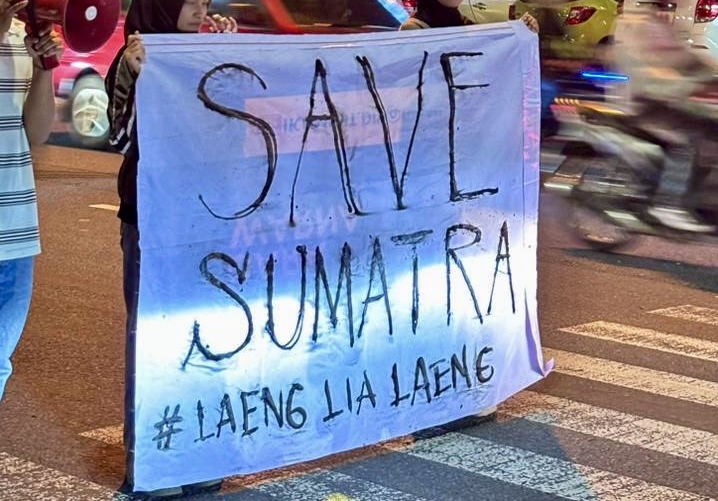
#laeng lia laeng
I was intrigued when I saw some of the students carrying a long white cloth banner that read, ‘Save Sumatra #laeng lia laeng’. Curious, I asked Ibrahim, ‘What does it mean?’ He explained that laeng lia laeng is a local term in Maluku that means ‘to care for others’. I then asked, ‘Why did some of you write that?’ He was not entirely sure. He simply told me that it is one of the cultural values deeply rooted in their community, especially in situations that call for helping others in need.
He further explained that the phrase is derived from pela gandong, a well-known cultural concept in Maluku that roughly means ‘a bond of brotherhood despite differences in background’. According to Ibrahim, the essence of mutual assistance transcends sociocultural boundaries. In a multicultural nation like Indonesia, such principles can act as bridges across diversity. After explaining this, he teased me with a smile, ‘It would be good for the Javanese in Yogyakarta to read and learn about laeng lia laeng, our cultural value, right? So, it is not only us who learn about Javanese values here.’
Interestingly, several days after the event, when I met Ibrahim again and we spoke about the fundraising action, he continued to explain the cultural values underlying it. He emphasised the value of humanity as the power that moved and encouraged him, and most likely other students, to do something for the flood victims. In the name of humanity, he placed the victims ‘above’ himself, continually asking, ‘What can I do for the victims?’ In this context, he shared with me a cultural value of Kai-Wai (Ade-Kaka, meaning younger sibling-older sibling). He repeatedly described this value as a ‘moral compass’, positioning himself as a younger sibling called to help his older sibling. As he explained to me, this was not a kind of imperative command imposed from outside but rather a calling that arose from within.
Contested digital narratives
Although the students were far from the regions where the severe flooding occurred, social media enabled them to witness the situation in real time. From official government accounts to influencers, such as Ferry Irwandi (@irwandiferry), various sources kept them updated. They were also keenly aware that the digital world is an arena of contested narratives.
On the one hand, students saw many people genuinely trying to help the flood victims. In contrast, they observed how some political elites attempted to take advantage of the disaster to build a ‘positive’ image, often with a connection to electoral politics. Some appeared to help clean up the floodwaters in distinctly ‘performative’ ways or carry food supplies while being fully aware of the cameras capturing their actions.
Even in moments of profound suffering, the spotlight itself becomes an object of contention.
This prompted Ibrahim and I to reflect on our own situation. ‘Don’t you want to use either your social media account or the organisation’s to let others know that the regional student organisations of North Maluku and Maluku have also contributed to helping the victims?’ I asked Ibrahim. He replied, ‘I don’t know about my friends’ opinions. Social media… the digital world… they are indeed important. But for now, I just want to help. That’s it.’
I fell silent for a moment, trying to understand Ibrahim’s response.
Perhaps the most authentic moments occur in a direct way. They are lived rather than mediated, experienced rather than narrated.
As Florian Schneider emphasised, the digital world has become a contested arena in which various actors construct and manage the image of the nation. They create networks and exercise power to shape the discourse of nationalism for their own purposes. These narratives are intentionally planned, shaped and produced. Digitally mediated nationalism presents a more complex reality and relationship with lived experiences of nationalism.
Lived nationalism
It seems to me that ‘the nation’ is not something merely imagined or mediated. Rather, it is embedded in lived experiences, including the severe floods in Aceh, North Sumatra and West Sumatra, and, more importantly, in how students from eastern Indonesia responded to this disaster in Yogyakarta. Bronwyn Elisabeth Wood (2022) further elaborated on the notion of the ‘everyday nation’, highlighting how people continually recreate and reproduce narratives of nationhood through their everyday interactions. ‘Nationalism’, then, is an idea that can be experienced in daily practices, encompassing feelings, emotions, struggles and aspirations.
As Zainal texted me, perhaps people considered the students’ fundraising as an insignificant action, especially when people focused only on the numbers and its immediate impacts. However, for the students themselves, both those from eastern Indonesia and those affected, it was meaningful. It was not only a response to a sudden disaster and a proof of laeng lia laeng, but also a reflection of the vivid experiences through which they understand the nation. Their act of solidarity through fundraising in Yogyakarta reflected a profound sense of belonging, where care for the most needy was demonstrated by other members of the nation. Such gestures also reflected an understanding of nationhood grounded in a sense of mutual responsibility. From this point of view, their collective action demonstrated how compassion and empathy can serve as everyday expressions of nationalism.
Paulus Bagus Sugiyono (paulus.sugiyono@uni-bielefeld.de) is a doctoral researcher at the Faculty of Sociology, University of Bielefeld, Germany. His project concerns educational mobility and the politics of belonging to the nation in the context of students from eastern Indonesia studying in Yogyakarta, Indonesia.