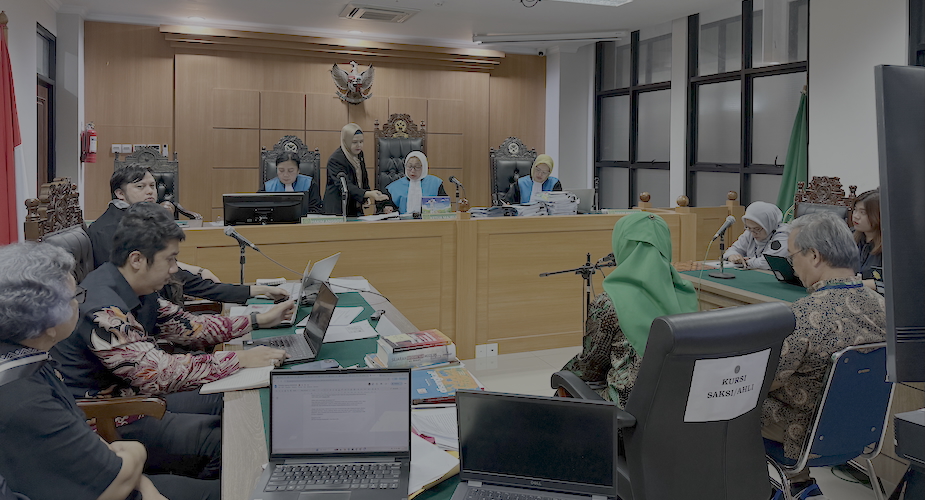
A ruling of the State Administrative Court in Jakarta signals not only a legal retreat, but also a retreat from a promise
In May 1998, when Jakarta was burning, I was a high school student in another city. A copy of Jawa Pos, a newspaper in the corner of my pesantren, Islamic boarding school, carried images of looted shops, overturned cars, and columns of smoke rising into the sky. Somewhere in the text, almost as an aside, I read that women were raped in the middle of that chaos. I did not see their faces. I did not hear their voices. Distance and age meant I was not there as an activist or a witness. All I had at the time was a vague unease that something had broken in this country, something that would later be called reformasi, the democratic reform movement.
Years later, working at the National Commission on Violence Against Women (Komnas Perempuan), that unease slowly turned into a clearer understanding. In meeting rooms, inside stacks of reports, in archives carefully compiled by those who came before me, I found the words that would shape much of my life: mass rapes. I read stories that never made it to television. I saw names that remained hidden from the public. I held testimonies written with shaking hands. I listened to those who once went door to door, persuading terrified families to speak. I did not accompany victims to safe houses, nor did I sit beside them in their first courageous interviews. But for ten years as a staff member and over this past year as a commissioner, I have tried to do one thing consistently: help keep the memory of the May Tragedy of 1998 alive.
Out of the ashes
Komnas Perempuan herself was born out of the shock and outrage over violence against women during the May 1998 riots, including the mass rapes of ethnic Chinese women. The existence of this institution is, in a sense, a promise: that women's experiences of violence will not again be swept aside as ‘collateral damage’ in times of political upheaval; that their bodies will not be treated as expendable for the sake of national stability. Our mandate is to remember, to document, and to disturb the comfort of forgetting. That is why the recent ruling of the State Administrative Court (PTUN) in Jakarta felt so painful; it signalled not only a legal retreat, but also a retreat from that promise.
That is why, when the state, through one of its ministers, denies the very violence that gave rise to this institution, and when the courts choose not to correct that denial, I feel it as a double betrayal, against the survivors and against the institution's founding mandate that I serve. When I read the ruling of the court, which declared the lawsuit against the denial of the May 1998 sexual violence ‘niet ontvankelijk verklaard (NO)’, or inadmissible, I felt something deeper than mere disappointment.
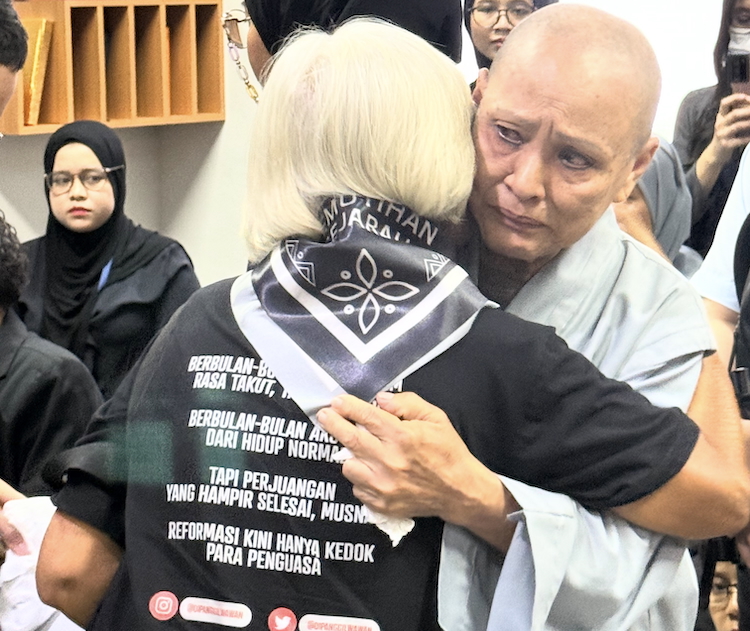
Officially, this is presented as a technical matter, a question of competence, not of conscience. But from where I stand, as someone who works daily with the legacies of May 1998, it is impossible to separate the two. On paper, the court mentions many things. The ruling cites the existence of mass violence. It refers to official reports, including those acknowledging sexual violence during the riots. It states that women were targeted, that the state has obligations under human rights law, and that there are instruments such as CEDAW and the law on sexual violence. Yet after pages of such acknowledgements, the court stops at the door of accountability. It says, in effect: yes, this happened, but we cannot intervene when a minister publicly undermines that very truth.
What angers me the most is how wounds are treated in a ruling like this. The suffering of survivors is mentioned, but then placed on the margins, far from the centre of legal consideration. Trauma, the re-humiliation, the fear that has been passed down across time and generations, these appear only as a sad backdrop, but not quite ‘real’ enough to generate a corrective obligation toward the state official who denied them. As though the law only recognises harm in forms that can be measured administratively. Meanwhile, the experience of women whose bodies were attacked and destroyed, and whose truth was questioned again in public by a state official, is deemed too fragile, too abstract, to constitute a legal injury that must be addressed.
I understand that courts cannot fix everything. I know there are legal definitions of what counts as a state ‘decision’ or ‘administrative act’. But I also know that words from those in power are never just words. When a minister speaks in his official capacity, using the ministry's facilities, symbols, and channels, his statements shape what the public considers true, whose voices are taken seriously, and whose pain becomes negotiable. For women who were raped in 1998, these are not neutral opinions about history. They are acts that cut into their already fragile sense of safety and worth, a denial that works not only in the mind, but in the body, calling back the shame, the fear, and the loneliness that had been, for so many years, so painstakingly buried.
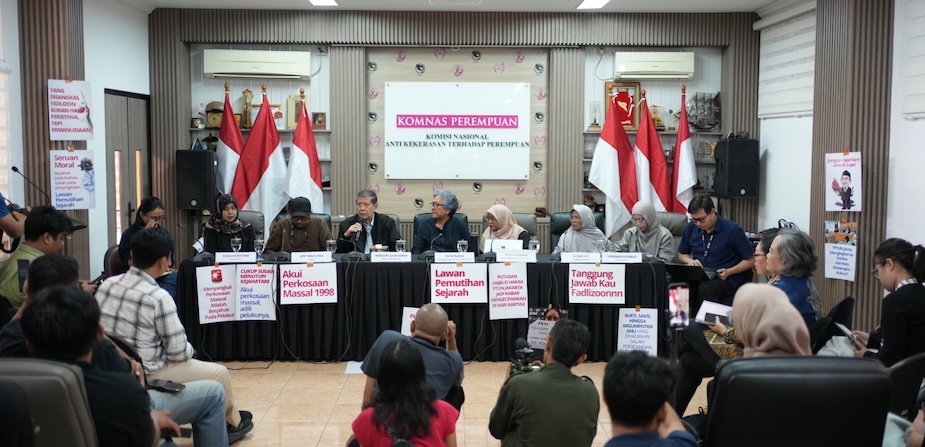
This is precisely why I believe the work of preserving the memory of May 1998 must not fade. Memory must be kept alive because that is where we place the most fundamental promise we make as a nation, so that such things must never happen again. Not because we wish to remain in the past, and not because we take any pleasure in repeating pain. Without clear memory, every statement about non-recurrence is nothing more than beautiful but empty rhetoric. We can keep saying ‘never again’, but if the truth of what happened is still being negotiated, denied, or diminished, then we have never truly learned.
On not forgetting
Preserving the memory of the May 1998 mass rape is also a way of refusing the normalisation of violence against women's bodies. Not all survivors had the chance to speak. Not all names made it into the reports. Some fell silent for their safety, for their families, to survive. To preserve memory is to acknowledge that truth does not always arrive in the form of testimony that is complete and perfect by the state's standards. Sometimes it comes as a fragment, a trace, a wound carried quietly for decades.
That is why a ruling that says, in effect, ‘this is not within our jurisdiction’ feels not only like a legal failure, but like a small betrayal of the promise of non-recurrence. If the courts will not say that a public official denying the truth about acts of sexual violence is a problem, then where can we hope to find someone or some institution to stand firm and say, ‘Enough, this cannot be allowed to continue’?
Because I was not a direct witness, my relationship with May 1998 has been shaped by inherited memory, by archives I have read, by testimonies I have heard from survivors and advocates. This experience has taught me that preserving memory is a form of involvement no less important than witnessing.
In the end, the court ruling will never erase the historical fact that mass rape took place during the May 1998 Tragedy. Denial, even when it comes from a state official and is supported by a court ruling, can never cancel the reality that lives in the bodies and memories of survivors. We all have an obligation to preserve this memory. So that the women whose bodies and dignity were taken in May 1998 are not betrayed a second time, by forgetting. And so that one day we can honestly say it will never happen again.
Yuni Asriyanti (yuni.asriyanti@komnasperempuan.go.id) is a Commissioner of the National Commission on Violence Against Women (Komnas Perempuan) of the Republic of Indonesia.