Men’s sexual and reproductive health is overlooked
At almost every major intersection scattered throughout Yogyakarta there are makeshift signs affixed to the back of traffic lights advertising ‘terapi kejantanan’ or men’s virility therapy. These traditional healers guarantee their services will increase their clients’ penis size, enable them to ‘last longer’ and fix infertility. The presence of these signs, along with hundreds of other small businesses advertising obat pria (men’s medication), indicates there is a demand for male-focused sexual and reproductive health services in Indonesia. If this is the case, then why is men’s engagement with official national services so low?
Indonesia’s internationally praised National Family Planning Program (Badan Kependudukan dan Keluarga Berencana Nasional, BKKBN) is obligated to provide sexual and reproductive health information and services to both men and women. Historically, however, men have not been actively included in Indonesia’s reproductive health promotion campaigns and services and only eight per cent of BKKBN’s clientele are male. This leads men to seek alternative providers or ignore their sexual and reproductive health entirely.
The lack of focus on men within sexual and reproductive health discourse and program design has significant impacts not only on their own individual health outcomes, but also the health outcomes of their partners and communities. This is evident in the long list of sexual and reproductive health challenges faced in Indonesia: including high rates of unplanned pregnancies, infertility, maternal and child malnutrition, maternal mortality, sexually transmitted infection (STI) and HIV incidence and sexual violence. These challenges are exacerbated by the dominant gender and socio-cultural norms associated with sex and sexuality in Indonesian society.
Sexual and reproductive health
Budi and his wife had mutually decided that they were ‘one and done’ with having children, but when he visited the local clinic to enquire about a vasectomy he was turned away and told to come back with his wife. When the couple returned together, the health worker was eager to ensure Budi’s wife was aware and consenting of his actions, as they’d had experiences in the past where a husband would hide his vasectomy from his wife to maintain affairs. Budi’s wife was also shamed for only having one child, with the health worker querying why she wouldn’t use a non-permanent form of contraception instead of ‘forcing’ Budi to get a vasectomy.
Budi’s story illustrates how gender and socio-cultural norms influence both men’s and women’s experiences of sexual and reproductive health care. In Indonesia sex is seen as something only permitted between a husband and wife, resulting in marriage and subsequent family formation boasting high cultural significance in the country. It has long been viewed as a wife’s duty to manage her family’s reproductive health and fertility, leaving Indonesian men with limited agency to manage their own sexual and reproductive health, even though these men may face a diverse range of sexual and reproductive health challenges in their lifetimes.

Agung and his wife have been married for five years and haven’t been able to fall pregnant naturally. Earlier this year they pooled their savings to undergo three rounds of fertility treatment or intrauterine insemination. Their fertility specialist was hesitant to suggest the problem may lie with Agung, as he didn’t want to risk offending him. It was only after the failure of all three rounds, that the fertility specialist finally decided to test Agung’s sperm, finding that he had a low sperm count caused by a common treatable condition. Indeed, as many as one fifth of Indonesian couples experience infertility.
Agung’s experience with infertility is just one example of the wide variety of sexual and reproductive health conditions Indonesian men may encounter over their lifetimes. STIs can cause or contribute to fertility issues, but health workers may be reluctant to acknowledge these conditions openly, particularly when, in many cases it is the husband who has transmitted these infections to their wife and maintaining marital harmony is prioritised.
Conditions like male infertility and sexual dysfunction are also known to be early warning signs of more significant general health issues like diabetes or heart disease. These diseases put significant strain on Indonesia’s health system and economy, so emphasising increased primary sexual and reproductive healthcare screening for men could improve rates of early diagnosis and treatment and help prevent these conditions.
Physical conditions are not the only factors influencing Indonesian men’s sexual and reproductive health. The diversity of their sexual behaviours and associated identities also significantly influence the way research and services are designed.
Sexual identity and behaviour
Dito is a young married man who works for long periods away from his home village on cargo ships. He identifies as heterosexual in public, but when he docks at ports in big cities, he will often meet up with men for casual sex or pay transgender commercial sex workers for their services. Throughout Indonesia men who engage in non-heteronormative sexual behaviours may not necessarily identify as queer due to conservative socio-cultural norms, resulting in this key population being missed by public health promotions that specifically target men who have sex with men and transgender women.
Behaviourally bisexual men are also overlooked in academic literature due to the ways that sexual behaviours and sexual orientation are measured. For example, many Indonesian studies associated with sexual health and behaviour will rarely ask men what their sexual orientation is and/or will not include questions related to same-sex sexual behaviours due prevailing assumptions of heterosexuality that exist in Indonesia.

The societal pressure to adhere to heteronormality also has consequences for Indonesian men’s sexual and reproductive health outcomes. Men may put off going to see a doctor and ignore health symptoms as not to appear ‘weak’ or ‘effeminate’. Instead of engaging with healthcare services and providers, Indonesian men often turn to their peers for sexual and reproductive health information, medical advice and guidance.
Peer sexuality and masculinity
Riko and his friends were out drinking together on a Friday night after work. Riko is more sexually inexperienced than his friends boast to be, and this is something they constantly ridicule him about. When later that evening the group wandered past a brothel, Riko’s friends pressured him to enter and ‘finally become a man’.
Riko’s case isn’t uncommon as many men have their first sexual experience at the urging of or sometimes in the company of other men. Communal visits to sex workers, communal consumption of pornography and communal engagement in sexual practices and rituals are practiced across Southeast Asia. Indonesian men have engaged in various forms of penis enhancement practices, such as injecting or applying various substances to their penis to increase size or virility. These practises are commonly carried out in groups.
One of the main drivers behind these sexual behaviours relates to the masculinity ideals upheld in Indonesian communities. An ideal man is portrayed as being the head of a heteronormative household and the main economic provider for his family. For Indonesian men, many of these traditional markers of manhood are less achievable than they once were.

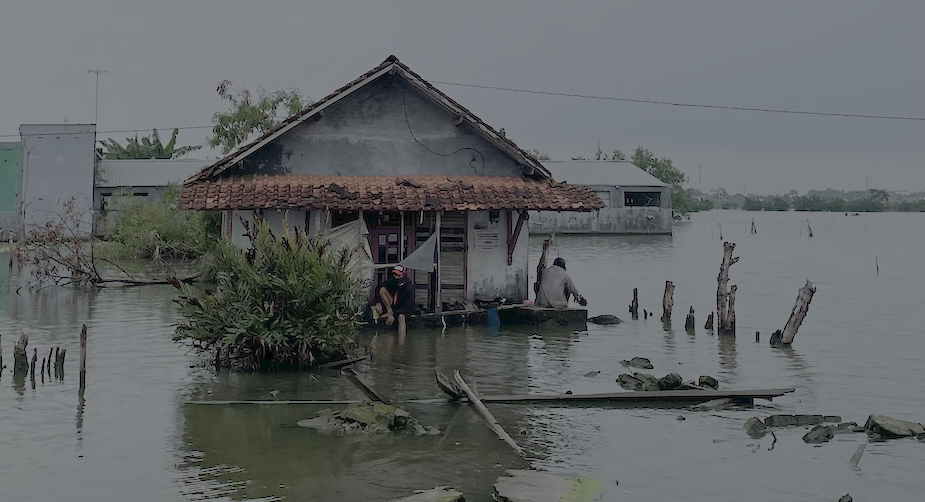
Rising rates of unemployment or underemployment, associated with instability in the agricultural sector fuelled by climate change, results in men feeling unable to fulfill the social and cultural obligations to be breadwinners or migrate in search of work. The desire to meet societal and peer expectations lead some men to affirm their gender and masculinity in other ways, including through engaging in risky sexual practices.
Education and health care urgently needed
Budi, Agung, Dito and Riko’s experiences aren’t just stories, they are real-life examples of situations Indonesian men have experienced. If these men had access to sexual and reproductive health education and to inclusive healthcare services, their experiences may have been different.
Increasing the provision of comprehensive sexuality education and primary sexual and reproductive healthcare and screening for men would not only improve their individual sexual and reproductive health outcomes, but also detect early signs of other serious illnesses, subsequently lessening the overall burden on the health system. If the Indonesian government sincerely wants to address the poor sexual and reproductive health outcomes within the country, it must expand its focus to include men and their diverse sexual and reproductive health needs.
Afterall, how can community sexual and reproductive health outcomes be improved if it only focuses on one half of the equation?
Laura Wallace (laura.wallace@monash.edu) is a Herb Feith Phd Scholar at Monash University. She is currently based in Indonesia while undertaking 18 months of ethnographic fieldwork.