The first few months of 2026 marked a new stage in global geopolitics, particularly concerning the escalation of tensions in the Middle East. Amid the ongoing genocide in the Gaza Strip, the United States and Israel launched a military strike against Iran on 28 February 2026. Alongside widespread public concern in Indonesia and in other countries over rising oil prices driven by the war, many Indonesian observers and activists continue to question the current Indonesian President, Prabowo Subianto’s, ambition to bring Indonesia into the US-led Board of Peace (BoP) organisation.
When it was first announced on 22 January 2026, Prabowo’s support for the BoP sparked protests on the streets in Jakarta and on social media. Protesters have called for the government to revoke its membership on the board. A survey released on 2 April 2026 showed that more than 50 per cent of respondents opposed the government’s plan to join the BoP. Observers have highlighted that Indonesia’s decision to join was most likely motivated by political factors, including international cooperation and the US tariff reduction, although the latter has since been overturned by the US Supreme Court.
Significantly, Nahdlatul Ulama (NU, the Awakening of the Ulema), Indonesia’s largest Muslim organisation representing over 40 million people, sided with Prabowo on the decision to join the BoP. At NU’s 100th anniversary celebration at the Gelora Bung Karno in Jakarta on 31 January 2026, the Chairman of the Executive Board of this Indonesian’s largest Muslim organisation, Yahya Staquf, also known as Gus Yahya, expressed his support for the initiative.
NU’s decision to support the BoP has attracted significant public attention. Moreover, many are seeking to understand why the largest Muslim organisation in the country supports Indonesia’s decision to join the board, whereas the board of the Indonesian Ulema Council (MUI), the second largest organisation representing Muslims, has opposed it.
Moderate Islam
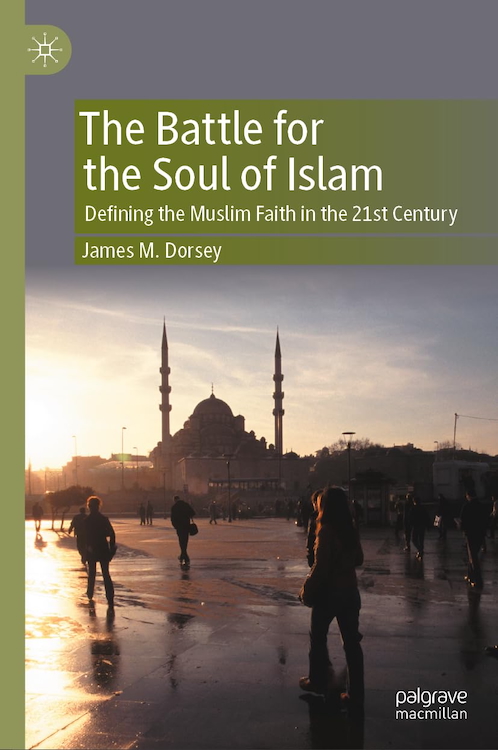
James M. Dorsey’s book The Battle for the Soul of Islam: Defining the Muslim Faith in the 21st Century (Palgrave Macmillan, 2024) offers some guidance in attempting to understand the dynamics within Indonesia and the Muslim world more broadly. The efforts of state actors in Muslim-majority countries and key Islamic clerics will together shape which notions of ‘moderate Islam’ will dominate. The most prominent players in this struggle for ascendency – as identified by Dorsey in his comparative study – are Indonesia, the Kingdom of Saudi Arabia and the United Arab Emirates (UAE), followed by Qatar and Türkiye.
The battle, as Dorsey puts it, holds different meanings for at least three groups of people. Some regard this battle as more than a faith, for it promotes peaceful, ethical, moral and positive values, or with something more opaque. The second group's concern is more about religious integrity. The third one tends to struggle for geopolitical power and is part of a survival strategy for current rulers.
For these countries this battle has also become a feature of their ‘soft power’. Dorsey demonstrates how this religious soft power has shaped and determined certain strategies these countries employ in the pursuit of legitimacy as the most ‘moderate’ Islamic country, thereby making them suitable partners for more powerful countries, such as the United States and France.
The book examines each country in turn, specifically how the notion of moderate Islam is articulated by different state and religious actors, and the strategies that emerge from the state-religion relationship. Dorsey uses the examples of Indonesia, Saudi Arabia and the UAE to demonstrate how the battle to become a moderate Islamic country is a long-term endeavour that does not stem entirely from religious institutions.
Chapter Two is a close examination of the reproduction and maintenance of the relationship between the state of Indonesia and the NU, as well as its interactions with other Muslim countries. Dorsey focuses on the 2022 Bali G20 summit, where Indonesia hosted a meeting on religious dialogue, known as the R20 (G20 Religion Forum). He pays particular attention to the NU's proposal to re-exegete, or reinterpret, the Qur’an and the Prophetic Tradition (Hadith). The NU proposal of a new interpretation is not the same as that conceived by Saudi Arabia and the UAE. As Dorsey explains, this new interpretation is likely to promote a democratic system, which Saudi Arabia and the UAE are unlikely to accept, given that they are autocratic states.
Leadership differences
Whilst Indonesia places its trust in the mass Muslim organisation, NU, Saudi Arabia’s prime minister, Mohammed bin Salman Al Saud (MBS), and the UAE president, Mohammed bin Zayed Al Nahyan (MBZ), are regarded as the leading figures of religious authority in their countries. Nevertheless, to strengthen their positions both rulers seek to further legitimise their positions through other religious elites. For MBS the key relationship is with the Secretary General of the Muslim World League, Mohammad bin Abdulkarim Al-Issa, who claims to be the highest Islamic authority. Similarly, in the UAE there is Abdallah Bin Bayyah, a Mauritanian Islamic scholar who serves as head of the Abu Dhabi Forum for Peace.
It is important to highlight that in promoting its version of moderate Islam, Saudi Arabia has not shied away from implementing harsh measures. Clerics who rejected and publicly criticised the government are no longer simply viewed as ‘ultra-conservatives’ but can face arrest. Dorsey highlights the arrest of the Islamic scholar Abdulaziz Al-Rayes in 2022 as an example. Nevertheless, MBS has also taken a number of soft-power initiatives, such as lifting the ban on women driving, allowing music concerts and reducing the role of the mutaween (religious police).
MBZ of the UAE takes a more subtle approach, though one still involving ‘hard power’. On the one hand, he publicly promotes a moderate form of Islam, by engaging with inter-religious leaders, such as the late Pope Francis, and the Grand Imam of Al-Azhar, Ahmed el-Tayeb – an act which led to the signing of the Document on Human Fraternity in Abu Dhabi in 2019. On the other hand, behind the soft-power diplomacy, the UAE president does not distance himself from hard-power moves, such as backing the construction of military bases in Yemen and the Horn of Africa, and taking a stake in key ports.
The state-religion nexus
Dorsey’s book reveals that the mutual success of the state-religion nexus, depends on a systematic, well-maintained collaboration between state actors and clerics. They rely on one another: state actors need Islamic scholars not only in religious matters but also in areas that extend far beyond that, including influence at the international level and, domestically, to protect the state’s elites. In return, government support is essential for Islamic scholars, not only to maintain the significance of their religious teachings for the state, but also to be recognised as the highest religious authority in promoting moderate Islam and combating terrorism.
How do we link this relationship to the current issue of BoP membership? Prabowo clearly needs such moral recognition to support his ambition to join the BoP. This US-initiated board, of which Israel is also a member, has, ironically, escalated tensions in the Middle East and sparked protests at home; calling into question Prabowo’s ambition. To gain the support of the ‘public’ the state sees the NU as central.
On another level, NU's support for Prabowo's ambition confirms a further strategic step in the trajectory of the relationship between all former Indonesian presidents and the organisation. It is important to highlight that this step is not only a follow-up of the R20 summit in Bali 2022, but also a concrete move by NU to achieve its global ambition. This is, as Dorsey notes, to form a global coalition that brings together humanitarian activists and supporters of national security in order to counter the influence of Islamic extremism, whilst combating anti-Islamic sentiment. The cooperation between the Indonesian state and NU demonstrate how religious moderation strategies can be used not only at the local level, but also as a powerful diplomatic tool on the world stage.
Dorsey invites readers to recognise that the notion of ‘moderate Islam’ has multiple meanings across global Islam, and that the ways different actors construct it will always be contingent on their interests. At the same time, we should also avoid concluding that Islamic scholars' involvement in the political arena is driven by opportunistic motives per se. Their presence at the political stage is always guided by their own principles. This idea is comprehensively discussed in Greg Fealy’s book Ijtihad Politik Ulama: Sejarah NU, 1952—1967 (The Political Independent Reasoning of Islamic Scholars: The History of NU, 1952—1967), which traces the historical existence and maintenance of the state-religion relationship in the Indonesian context.
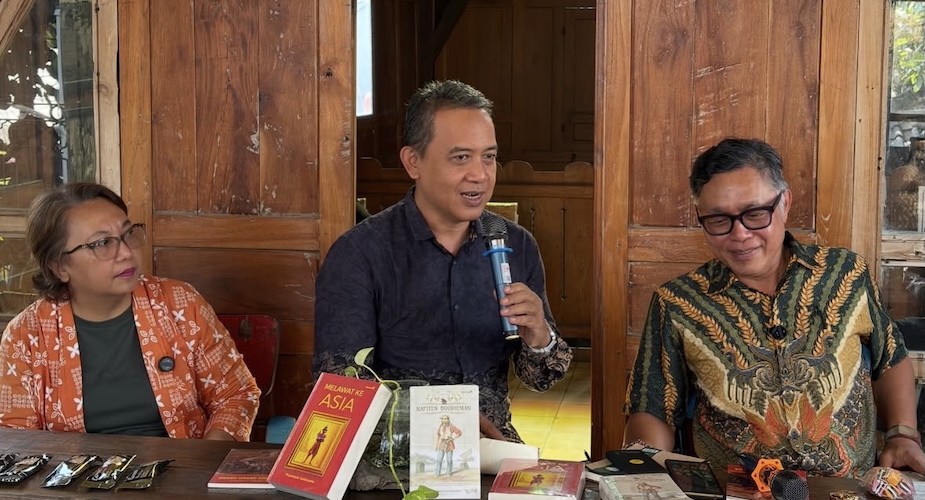
James M. Dorsey, The Battle for the Soul of Islam: Defining the Muslim Faith in the 21st Century. Palgrave Macmillan (2024).
Hafidz Fadli (hafidz.wahyuni@monash.edu) is a PhD Candidate at Monash University.