An introduction to Betawi music
The orang Betawi are the native ethnic group who inhabit the Greater Jakarta metropolitan area, colloquially known as Jabodetabek. The ethnic group derives their name from Batavia, the capital city of the former Dutch East Indies established in 1619. During the Dutch colonial period, there was much intermingling between different peoples: indigenous pribumi, Chinese-Indonesians, intranational slaves, foreign slaves of the Portuguese known as the Mardijkers, Arab migrants, European traders and more. This melting pot of diverse culture contact contributed to the creation and development of the Betawi ethnic group.
Despite the economic strength of the Jakartan metropolis, or perhaps for that very reason, the artistic outputs of the orang Betawi have gone largely unnoticed. The globalised position of Jakarta tends to feature more contemporary, international arts on the main stage, consigning the Betawi arts to both the physical and metaphorical outskirts. Moreover, the overwhelming popularity of other traditional Javanese arts, such as the mainstay that is Central Javanese gamelan and the growing acclaim of East Javanese reog, further obscure Betawi traditions.
I this essay I provide a brief introduction to Betawi musical traditions, drawing particular attention to the interesting phenomenon that each is primarily derived from the practices of one of the cultural demographics that comprised Batavia. These practices provide the baseline for their respective Betawi genre, upon which further musical hybridity could develop. The ethnic diversity of Betawi society means that cultural aspects of other demographics would undoubtedly influence these musical traditions, thereby creating uniquely Betawi genres of music.
Ajeng
Ajeng can be the most likened to a Betawi form of gamelan. The musical characteristics of ajeng are rooted in Sundanese traditions, however, comparisons can also be made between music from Cirebon. The instrumentation of an ajeng troupe comprises gong-chimes, metallophones and gongs that are staples of a Sundanese village gamelan. Moreover, the kendang (drums) used in an ajeng troupe can be configured either in a typical Sundanese manner or in the iconic mounted position used for topeng Cirebon performances.
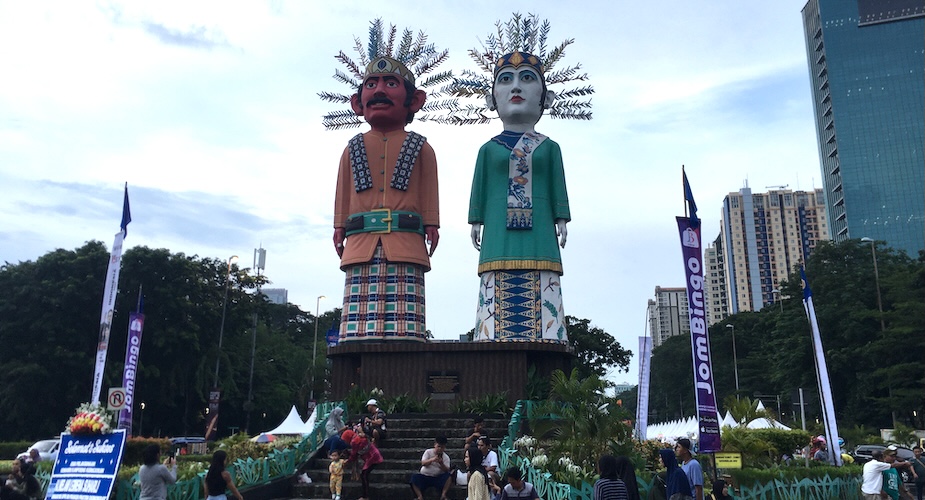
Ajeng troupes often provide musical accompaniment for the orang Betawi’s own variant of topeng, although intriguingly, unlike other Javanese regional forms of the genre, topeng Betawi does not necessarily incorporate masks nor dance. Rather, topeng Betawi is folk dance-drama, the plays of which usually depict pre-colonial pribumi life. Ajeng troupes also provide musical accompaniment for Betawi versions of wayang kulit (shadow puppetry), which comprise stories and performance styles distinct from Central Javanese versions. The melodic leader in ajeng troupes is typically the rebab (bowed lute) for topeng Betawi and the tarompet (reed aerophone) for wayang kulit Betawi. Historically, ajeng troupes also had a musical repertoire distinct from that performed for topeng and wayang, however this is now severely endangered.
Gambang Kromong
Chinese seafarers are known to have traded with Indonesia as early as the fourteenth century, long before European colonisation. In Java, Chinese settlements first appeared around the port of Banten and over time, spread to what would later become known as Batavia. The orang Tionghoa (Chinese-Indonesian) community is prevalent in Jabodetabek. Not only is there a unique Chinese-Indonesian culture from Tangerang, the orang Tionghoa Benteng, but elements of Chinese culture have also permeated Betawi culture.
Gambang kromong is a Betawi genre of music rooted in Chinese traditions. The genre was developed in the 1700s by the orang Tionghoa and was known as orkes gambang. The ensemble consisted of Chinese instruments brought to Batavia from Fujian, Chinese instruments made locally in Batavia and one adapted Sundanese instrument: the gambang (xylophone). Around the 1880s, more Sundanese instruments were added to the ensemble – kendang, gongs and the kromong (gong-chime) – at which point the genre became commonly known as gambang kromong. Some of the instruments still found in gambang kromong ensembles today are distinctly Chinese and differ from their Javanese equivalents. For example, the Chinese bangsing is a transverse flute whilst the Javanese suling is end blown. Also, the Chinese bowed lutes (kongahyan, tehyan and sukong) have their bows passing between the two strings, compared to the Javanese rebab that uses a detached bow.
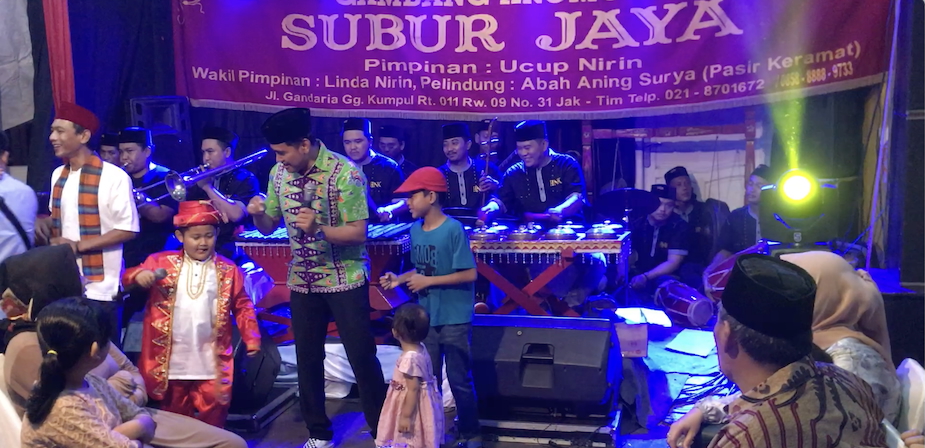
The Chinese-influenced repertoire of gambang kromong consists of pobin (instrumental pieces) and lagu dalem (old songs), both of which are endangered. Attempts are being made by the younger generation of expert musicians to reconstruct some of these pieces from existent recordings on gramophone records and cassette tapes. The commonly performed repertoire of Betawi songs is, amusingly, known as lagu sayur (vegetable songs), which includes the well-known Jali-Jali. In the realm of popular music, gambang kromong can be heard on Benyamin Sueb songs. Moreover, gambang kromong ensembles usually provide musical accompaniment for the Betawi folk theatre genre lenong. Lenong shows are all-night long events, the stories of which usually present the everyday lives of the orang Betawi, including historical struggles of being enslaved and more modern family dramas. For lenong shows, gambang kromong ensembles draw on a special repertoire of marches.
Tanjidor
The establishment of Batavia as the capital city of the Dutch East Indies laid the foundation for continued European influence on the region. For European middle class society, light dance music was the preferred form of entertainment. Moreover, like other colonial forces, the Dutch would have paraded their military bands across the city as a spectacle of pride representing the image of their empire. At the same time, the environs of Batavia comprised estates and plantations owned by European settlers, wealthy orang Tionghoa, Arab migrants and even certain Mardijkers. It was custom for these landowners to own Indonesian slaves, some of whom were pribumi, others of whom came from regions of eastern Indonesia, such as Sulawesi. Several historical records illustrate the vibrant and diverse music-making by slaves at these estates. Ensembles included military-style bands, variety dance bands, Chinese orchestras and gamelan groups.
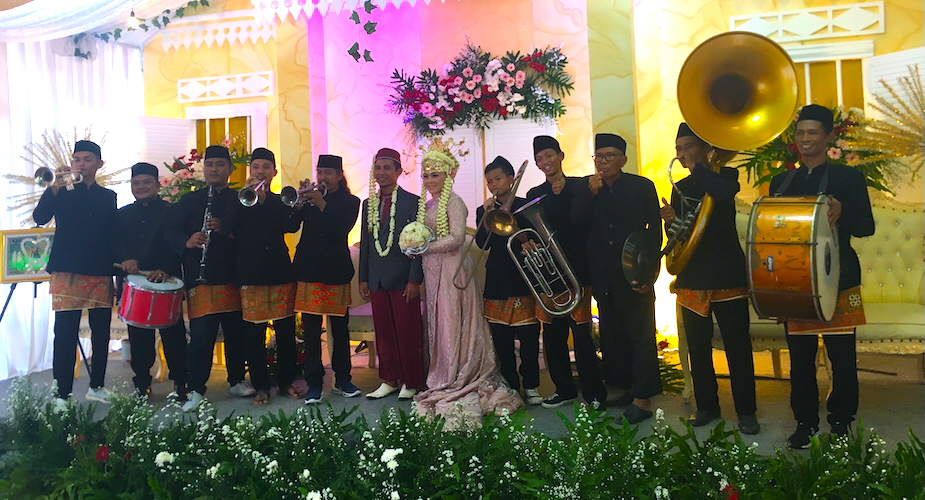
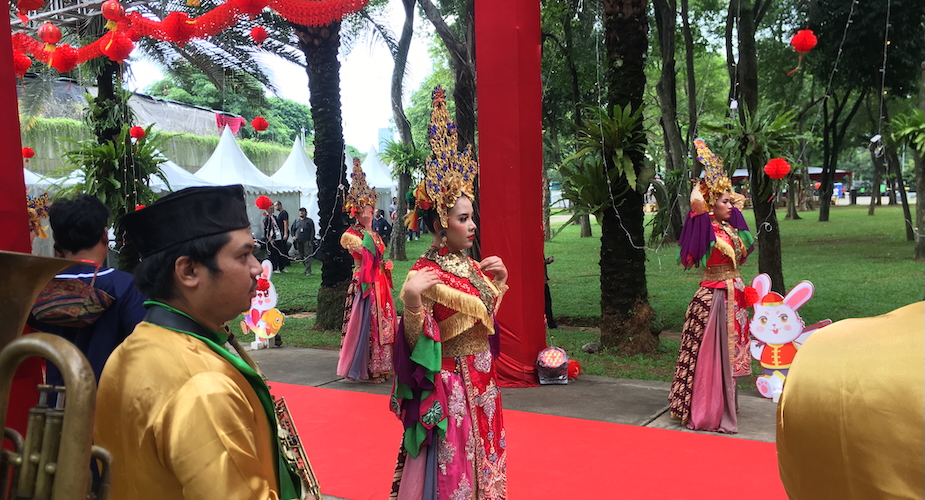
Once the Dutch abolished slavery in Batavia in 1853, it is most likely that these slave musicians continued to publicly perform their multiculturally-influenced, European colonial-military-band-derived genre of music, which would become known as tanjidor. Nowadays, tanjidor bands are primarily made up of trumpets, trombones, clarinets, European-style drums and other miscellaneous brass, woodwind and percussion instruments. The mobility of tanjidor bands lends the genre well to processional performance contexts (arak-arakan). These include ceremonies at Betawi weddings, Cap Go Meh (the fifteenth day of Chinese New Year) and just about any other event – cultural, religious or for entertainment purposes – that resembles an outdoor celebration of sorts.
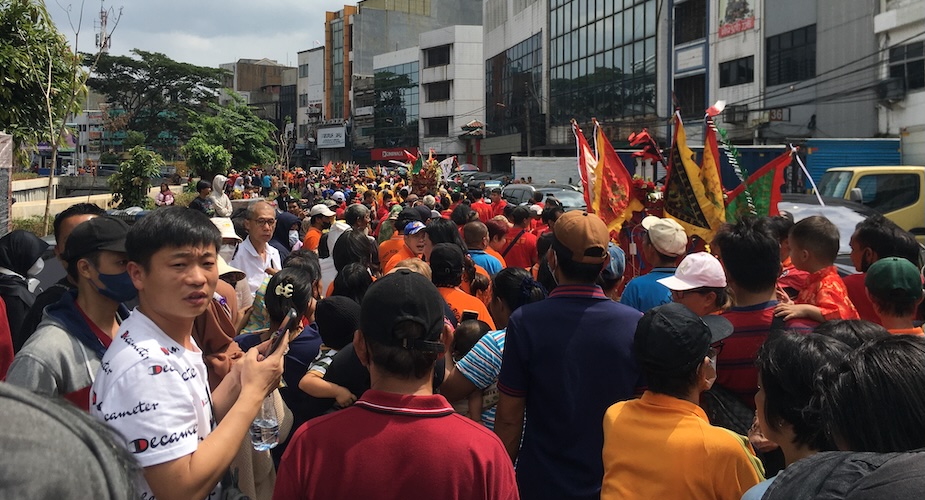
Tanjidor is a versatile genre of music. The core repertoire of tanjidor bands is comprised of European-style marches and waltzes, the idioms of which were first learnt by observing Dutch military band musicians. Tanjidor bands are also capable of performing traditional Betawi songs influenced by the Chinese origins of gambang kromong, Sundanese music from border regions of Jabodetabek and more modern dangdut songs. When a tanjidor band provides musical accompaniment for topeng or lenong, the performance is referred to as jipeng or jinong, respectively. In theory, whilst prospective performance contexts and repertoires are incredibly varied, in practice, several constraints limit these possibilities, including public demand and the loss of traditional knowledge due to the retirement and death of senior musicians.
Samrah
Samrah is a Betawi genre of music primarily influenced by Arab culture, with contributions from Indian and Malay Islamic cultural elements. The name derives from the Arabic word for a gathering, referring to traders of various cultural backgrounds coming together, such as at the renowned Tanah Abang market in Batavia. Continued interaction between these Arab, Indian, Malay and other traders with the orang Betawi led to musical escapades that eventually resulted in the development of samrah. Initially, the genre was known as orkes harmonium, drawing attention to the reed organ that formed the core of the musical ensemble. However, the harmonium was later replaced by the accordion, which is still found in some groups and maintains the iconic samrah sound. Groups without an accordionist make do with synthesiser keyboards.
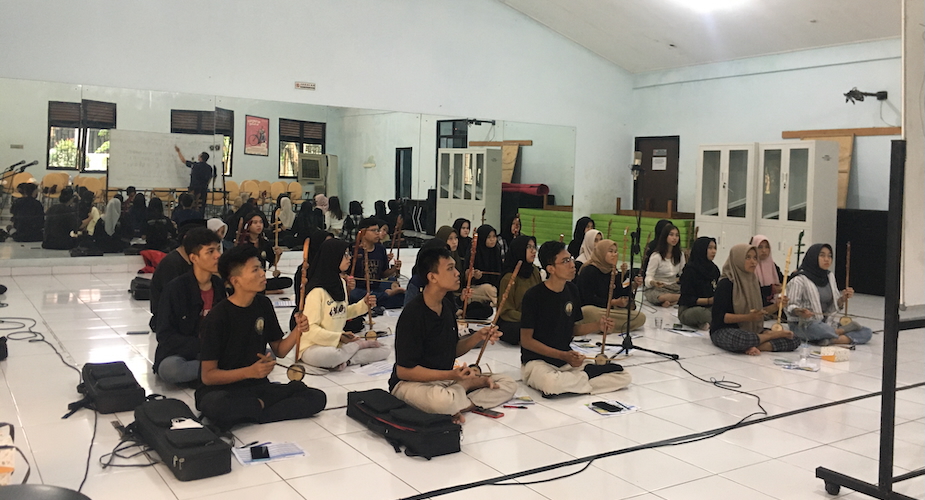
Other instruments typically found in a samrah group are the biola (violin), bas betot (double bass), gendang lontong (drum particular to samrah), and an array of guitars. The repertoires of samrah include Malay songs, Betawi songs and Javanese langgam. Some of the music, particularly that for dance, appears to be influenced by the vibrant polyrhythms characteristic of the musical output of Portuguese slaves. In Batavia, this trait of samrah is likely to be an early influence of the Mardijkers. The samrah ensemble provides musical accompaniment for the Betawi theatre genre called tonil. This name is derived from Dutch, referring to the aristocratic theatre performed in Batavia. Like the other Betawi folk theatre genres discussed, tonil performances are known to be all-encompassing, including music, dance, poetry recitations and comedy. However, it is very rare to witness tonil in Jabodetabek today.
This essay has only scratched the surface of the musical diversity of the orang Betawi. Hopefully, this short introduction encourages readers to actively seek out traditional Betawi arts on their next visit to Jakarta.
Rohan Iyer (iyer.rohan@gmail.com) is an ethnomusicologist, musician and teacher based in Melbourne.