Twenty years on, in Sidorajo the mud continues to flow and survivors feel neglected, diminished and unheard
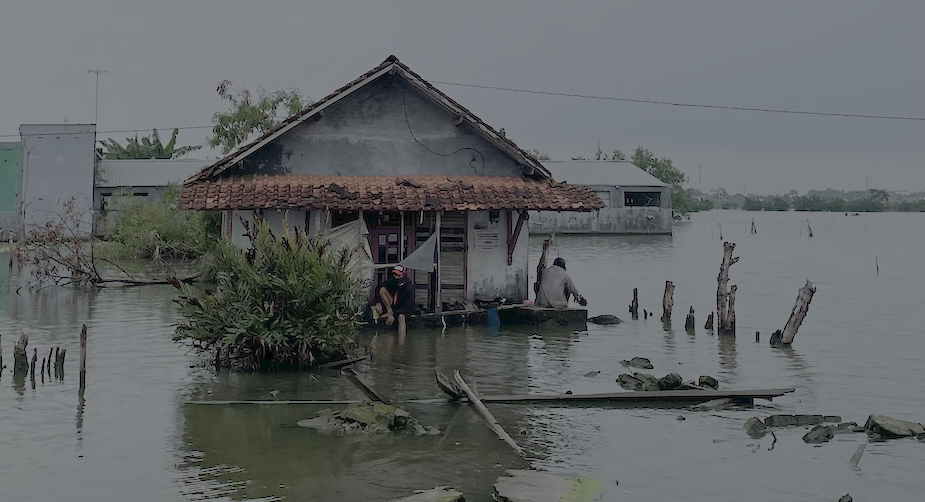
Toxic mud continues to inundate former homes, factories and agricultural plots in Sidoarjo, East Java following an oil drilling operation that went catastrophically wrong in May 2006. Solutions to mitigate the effects of the mudflow, beyond pumping it to the nearby sea, have proven to be wishful thinking. Bereft of much of their rightful compensation, victims encounter daily difficulties restoring their livelihoods and dignity in the face of discrimination from officialdom and members of their local communities. As natural and man-made disasters appear to be on the rise in Indonesia, the plight of Lapindo mudflow survivors is likely to become more commonplace.
Indonesia is no stranger to devastating disasters, natural and man-made. Recent reports of the catastrophic effects of climate change-induced floods and landslides in Sumatra spotlight the human costs for victims dealing with personal tragedy, destruction of property and loss of livelihoods.
In one of Indonesia’s most populous regions, the province of East Java, climate change-induced levels of heavy rainfall, deforestation and a lack of repair of irrigation canals built by the Dutch increase the incidence of flooding and landslides. Man-made calamities have hit the region. In 2022, 125 soccer fans were crushed to death at a sports stadium in Malang that was inadequately prepared for large numbers of spectators. In September 2025, an unauthorised extension to a Muslim boarding school in Sidoarjo suddenly collapsed killing up to 67 young male students. The religious leader of the school had failed to heed building regulations in prosecuting his vanity project.
The East Java mudflow disaster
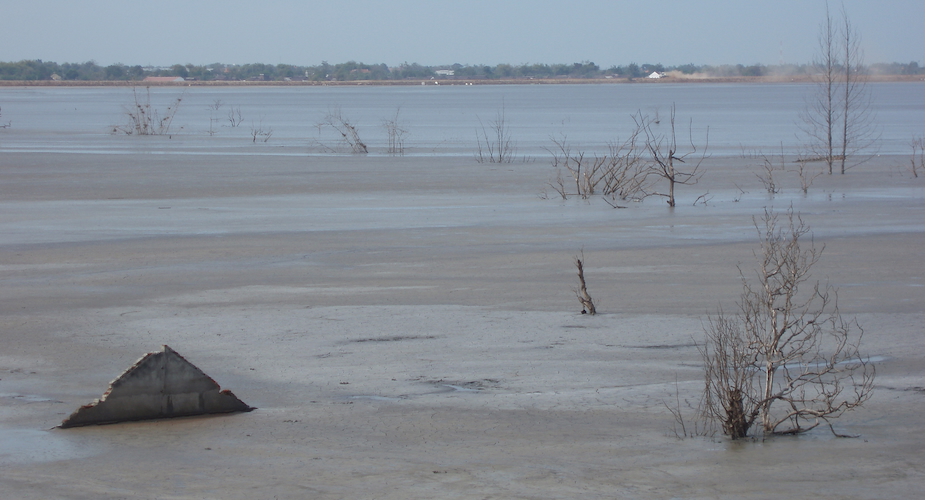
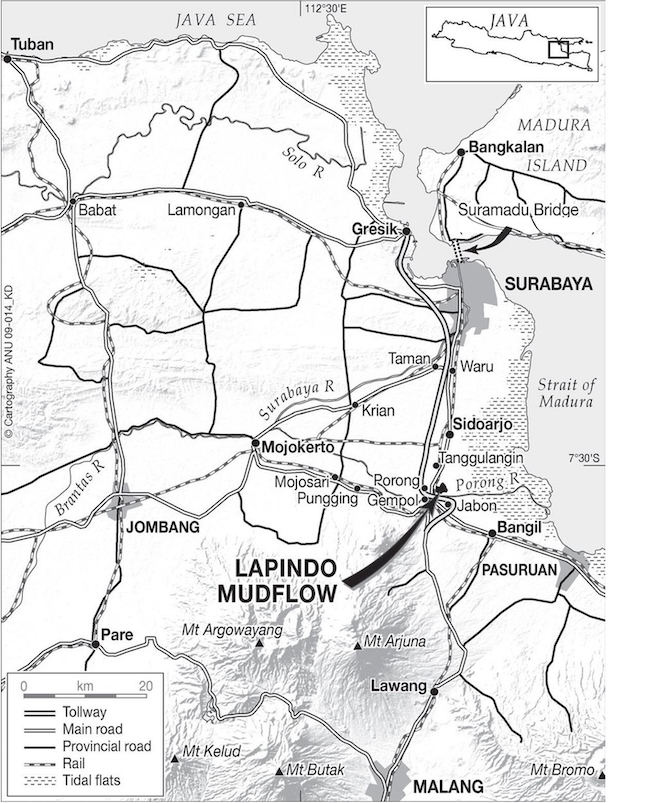
Twenty years ago, East Java experienced its most debilitating disaster in living memory. On 29 May 2006, mud and gases began erupting unexpectedly from a vent 150 metres from a hydrocarbon exploration well near Sidoarjo south of Surabaya. Dubbed the ‘Lapindo mudflow’ after the Indonesian company responsible for drilling the well, PT Lapindo Brantas, the mud volcano inundated factories, farmland and an arterial toll road and created a seven square kilometre mud lake held at bay by makeshift earthen embankments. Mud flowing from the volcano displaced over 30,000 people in 18 villages, severely disrupting their livelihoods. 300,000 jobs were lost and provincial GDP was estimated to contract by one per cent. The local property market collapsed as residents were initially unable to obtain valuations on their properties, which were considered unbankable.
The company, controlled by the then Chairman of the Golkar Party, Aburizal Bakrie, a prominent businessman with close government ties, has consistently denied responsibility for the disaster. Despite a wealth of independent expert opinion to the contrary, Bakrie maintained that the mudflow was a natural calamity linked to an earthquake in Central Java that had occurred several months earlier. He insisted a 2016 Supreme Court verdict cleared his company of any responsibility for the eruption.
Lapindo Brantas was slow to restitute victims of the mudflow eruption, initially handing out only 20 per cent of the funds it was required to pay. In the face of widespread public concern, the Indonesian Government issued Presidential Decree 48/2008 which required the company to fully compensate the victims. According to survivors, Lapindo Brantas employees living near the disaster site were the first in line to receive cash handouts. By 2016, compensation was still outstanding and it was only with a government bail out that the company finally honoured its financial obligation. It is believed that of the 13,000 households affected, only around 7,000 households received compensation in the form of money, goods and housing. Communal religious facilities, such as village mosques and cemeteries, were included in the compensation arrangement.
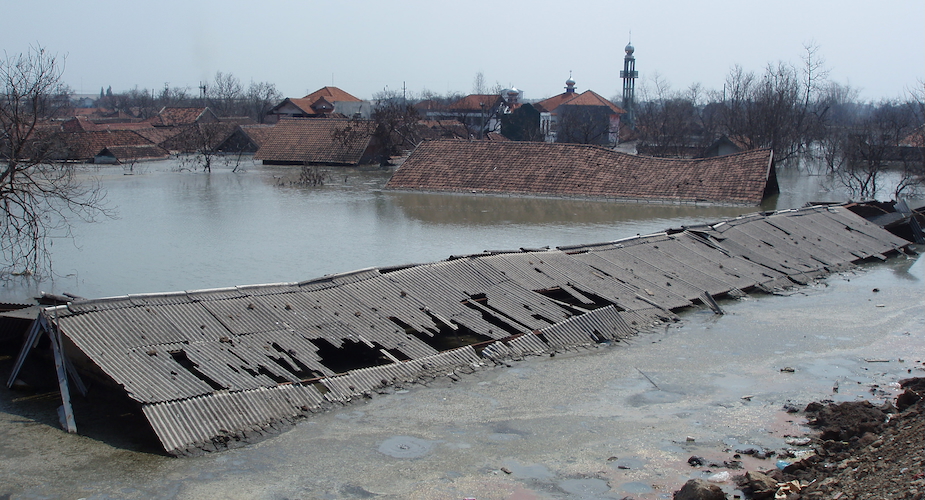
Mud continues to ooze out at a rate of approximately 24 million cubic meters per year from below ground in the middle of the mud lake, albeit at a reduced rate than in the years immediately following the disaster. A largely empty museum dedicated to the disaster and rehabilitation efforts occupies a site adjacent to the mud lake. It appears to attract only occasional visitors.
Efforts to stimulate the local economy
Initially, infrastructure rebuilding was in the hands of the Sidoarjo Mudflow Handling Agency (BPLS), but this responsibility has shifted to the Sidoarjo Mudflow Control Centre (Pusat Pengendalian Lumpur Sidoarjo, PPLS) under the national Ministry of Public Works and People’s Housing. Recently PPLS controversially issued an exploration permit to PT Lapindo Brantas to recommence drilling for gas on the south side of the Porong River not far from the epicentre of the mud volcano. Work has apparently already begun.
Efforts continue to attempt to revitalise the retail economy in the Sidoarjo Regency. PT Indraco, a subsidiary of East Java property developer Purnama Group, has purchased land to construct a shopping mall as part of its Sun City retail chain in Sidoarjo. However, the mall’s proposed location has been questioned as it appears to be close to the mud lake. Moreover, survivors are sceptical about the project as they consider the prices of goods for sale at the mall will be beyond the reach of local consumers.
Over the last ten years, various ‘geo-tourism’ initiatives have been flouted by PPLS and local government agencies as a way of capitalising on the disaster. Officials advanced a proposal to construct a recreational fishing pond adjacent to the mud lake. Plans included the cultivation of seaweed in overflow ponds beside the mud lake. Survivors describe these and other suggestions for utilising the mud, e.g. lightweight mud bricks for housing and road aggregate, as completely impractical, not least in light of reports soon after the disaster of high concentrations of arsenic in mud exuding from the site. Ojek motorbike riders continue to earn a meagre living from ferrying occasional visitors around the site.
Environmental concerns
Harmful effects of the mudflow on the environment have been a concern for a long time. In November 2025 survivors in Sidoarjo told me that they believe health issues afflicting local residents, for example hypertension, autism, stunting and lung disease, are a result of the mudflow, and possibly the occurrence of high pollution levels in the nearby Brantas River. These claims have not been substantiated and a formal government study of the health impacts of the disaster has yet to be conducted. Apart from possible traces of harmful arsenic already mentioned, there has been considerable speculation about the content of the mud outflow – as well as its potential economic benefit.
A PPLS report in 2023 suggested the mud contained critical minerals such as lithium and strontium. Exploitation of these ‘precious’ minerals does not yet appear to have commenced. It remains to be seen whether PT Lapindo Brantas or any other private company or state corporation will seek commercial gain from the mud, for example in electric battery manufacturing.
Ongoing discrimination
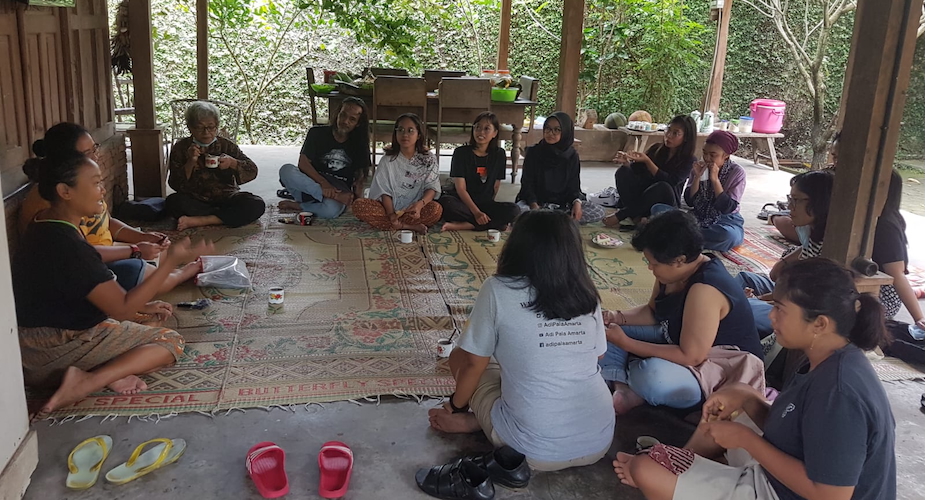
How are the mudflow survivors faring today? My field trip to the Sidoarjo region in November 2025 revealed some sobering details. Essentially there are three groups of survivors: those who received some form of government-provided housing; those who sold and bought new houses in areas surrounding the mud lake; and those who left East Java as economic exiles. A public housing complex built by the East Java government in the village of Kahuripan, near Mojokerto to the west of Sidoarjo, was found inadequate by some families who were forced to sell their homes.
Survivors in the villages nearest the epicentre of the mudflow argued it was the responsibility of local government or Lapindo Brantas to compensate them for the loss of their homes and livelihoods. When compensation failed to materialise or was late in arriving, local authorities put in place a scheme whereby survivor victims could sell their mud-affected land and purchase new land. The scheme was clearly intended to avoid compensation or any form of ex gratia payment by offering victims a commercial arrangement to dispose of their land entitlements. It appears the official position was that if land sales could be finalised, the mudflow problem would be placed firmly on the backburner.
Although many victims agreed to participate in the scheme, constraints were placed on it from the outset. Landowners could only sell their holdings if they possessed documents proving land title and individual landowners were obliged to show evidence of houses or farm buildings on their land as a condition of sale.
Difficulties proving land title have dogged the selling and buying of land and homes of survivors for years. The lack of rigour in Indonesia’s land titling system means that several parties could lay claim to parcels of land in the area affected by the mudflow. Activists advocating for survivors claim that some 150 land title cases remain outstanding. Apart from the difficulty of proving land title, landowners have been reluctant to relinquish their holdings as they believe their land is their birth right and confers a sense of social and cultural place.
A number of survivors who did sell their land claim to have been shortchanged by government-appointed land brokers. One family described how they had expected to sell their mud-inundated land for Rp.150 million but only received Rp.120 million – not paid in full at the time of the transaction but in periodical instalments. Adding to their burden, according to locals, the price of land designated for resettlement west of Sidoarjo in the village of Candi Pari, rose rapidly between 2006 and 2008 from Rp.35,000 to Rp.300,000 per square metre.
Since the disaster, survivors have also faced discrimination from local officials and communities where they have resettled. In interviews in November 2025, Lapindo victim activists pointed to discriminatory behaviour towards them from local service providers. One female activist said she had been denied access to ‘Indonesia Sehat’ cards which are designed to confer eligibility for cover under the national health insurance program, Jaminan Kesehatan Nasional (JKN). Notwithstanding the cards are intended for poor families, no explanation was offered for this denial of service.
Disenfranchisement
Some survivors maintain they have been effectively disenfranchised since the disaster, claiming they were given only a short window of time to register on the electoral rolls in the lead up to national elections in 2009, 2014, 2019 and 2024. They also allege electoral authorities discriminated against them by refusing to allow ballot stations (Tempat Pemungutan Suara, TPS) to be set up near their homes at election time.
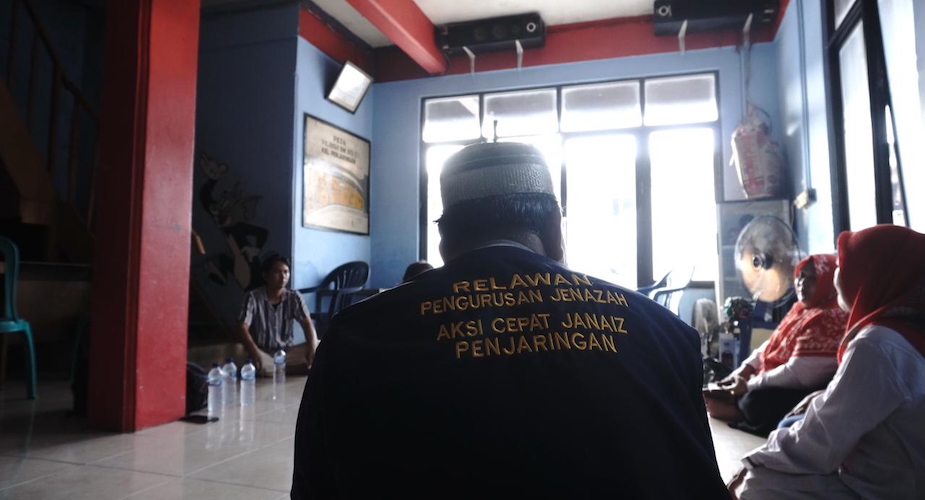
Another example of discrimination that survivors suffer is the placing of restrictions on where they may bury deceased family members. In Java, the common practice is for families to inter their dead in graves adjacent to community mosques in line with Muslim practice. One survivor family claims it was told by local religious authorities that they could not bury their relative in a communal religious plot of their choosing and would have to pay for the burial.
Lapindo victims claim they initially supported the Indonesian Party of Struggle (PDI-P) and subsequently the National Awakening Party (PKB), two parties with wide support in East Java. However, their political allegiance shifted to President Prabowo’s electoral vehicle, Gerindra, at the last presidential election in 2024. In the lead up to recent elections, survivors allege political parties discriminated against them by refraining from handing out envelopes containing money in exchange for their vote – a common practice in electoral contests in many parts of the country.
While it was not possible to substantiate the extent of discrimination encountered by survivors, the stigma they face is a source of continuing resentment. A common refrain voiced by survivors and their families is that they are a ‘lost generation’. The discrimination encountered by survivors may, in part, reflect complications inherent in relocating to new areas. At the same time, survivors are convinced local government and PT Lapindo Brantas have eschewed their responsibilities.
Can disaster victims ‘heal themselves’?
Twenty years on what does the plight of mudflow survivors in East Java tell us about Indonesia’s attitude to disaster victims today? The firsthand accounts of the social, economic and political discrimination experienced by many Lapindo victims over the last two decades are sobering. PT Lapindo Brantas should have borne the burden of initial compensation, instead it has consistently avoided taking meaningful measures, such as ex gratia payments to survivors, to ameliorate loss of livelihoods. Former Lapindo Brantas boss, Aburizal Bakrie, is today a spent force in national political life but his son, Anindya, is currently Chair of the Indonesian Chamber of Commerce and Industry and might be expected to harbour political ambitions.
Local authorities, for their part, appear to have been content to limit their liability to facilitating the selling of land at increasingly higher prices in and around Sidoarjo. That Lapindo Brantas was never sanctioned by the national government sets a bad precedent for future industry-related environmental disasters. Government policy seems to have been that disaster victims must heal themselves, thereby creating the conditions for on-going ‘structural poverty’ within survivor communities.
It is surely a cruel irony that those who have had so much taken from them by circumstances beyond their control must face up to inaction on the part of perpetrators, official indifference and discriminatory behaviour by members of communities where they have relocated. With the increasing occurrence of natural and ‘unnatural’ disasters in Indonesia, the Lapindo mudflow experience shows that survivors will have to navigate their own course towards economic rehabilitation and social justice.
Heath McMichael (hmcmichael@tpg.com.au) is a former officer in the Australian government’s Department of Foreign Affairs and Trade (DFAT) with expertise in Australia’s economic, political and cultural relations with Indonesia.
This article is part of a mini-series commemorating the 20th anniversary of the Lapindo disaster and marking Anti-Mining Day/Hari Anti-Tambang (HATAM), 29 May.