
Can vertical housing solve the problems of the urban poor?
On that sunny day, life in Kampung Bayam went on as it always had. Children chased each other and played around while mothers cooked some snacks to sell. It was a peaceful afternoon, for a while. Suddenly, the air changed when a group of tall and uniformed officers surrounded the area while shouting orders, telling them to leave. ‘They told us to leave in 30 minutes. What do they think we are? They treat us like animals,’ said one of the villagers.
The suffering began around 2019 when the construction of Jakarta International Stadium (JIS) started, and their rights within the city began to vanish. Kampung Bayam residents had lived there for decades. They grew vegetables and fruits, worked the land and relied on this produce to earn a living and feed their families. When the land acquisition and evictions took place, both their living spaces and livelihoods were stolen. The kampung residents were moved to a temporary neighbourhood known as hunian sementara (temporary residence) or huntara. The government leased them the land and they were then expected to build houses themselves. But the plots were too small and the compensation far too inadequate for them to build proper places to live.
In 2020, the then governor Anies Baswedan, together with PT Jakarta Propertindo (Jakpro) pledged to build apartments for the Kampung Bayam residents to live in rent-free, promising they would be ready by 2022. The keys were never handed over. With nowhere else to go, the former residents of Kampung Bayam decided to occupy the apartments illegally. Once again, they were treated as intruders in a place that was supposed to be their home. Life was far from easy.
‘They promised to give us access to water and electricity, yet they ended up imprisoning our leader (Furqan) in 2024. They accused us of stealing groundwater and electricity. This is not true since we have been fighting on our own. We collectively bought a generator and built our own well. Why are we being called thieves?’ said one of the mothers, holding back tears.
Furqan was released from police detention on 21 May 2024, but the conditions facing the community were still unresolved. Displacement had fragmented the group; some families gave up and left for good while those who stayed still had no clarity about what came next. Jakpro insisted that the flats had always been intended for JIS workers. The community pushed back and their resistance eventually forced the issue on to the agenda for Jakarta’s local elections in 2024. Gubernatorial candidate Pramono Anung visited the group and signed a pledge to return 133 families to Kampung Susun Bayam. Anung went on to win the election, but various delays set back his promised timeline for the move.
After years of uncertainty, in July 2025 the residents finally reclaimed their right to the city and moved into the flats that had been promised. Happiness and joy should have filled the air. Instead, despair and sadness remained.
Reclaiming the right to the city
The experience of being evicted for a second time in 2024 had left its mark on the community. Life in temporary housing was extremely harsh. Farming became nearly impossible and they could barely meet their basic needs. Children were traumatised due to the intimidation of authorities, and everyone was suffering a sense of dislocation and extreme stress.
The ‘right to the city’ can be understood as citizens having the ability to access and also change the city through their collective power. Despite the ongoing issues in Kampung Bayam, the situation today— including the adoption of vertical housing as a solution—reflects the progress they have earned through countless struggles as a community acting together.
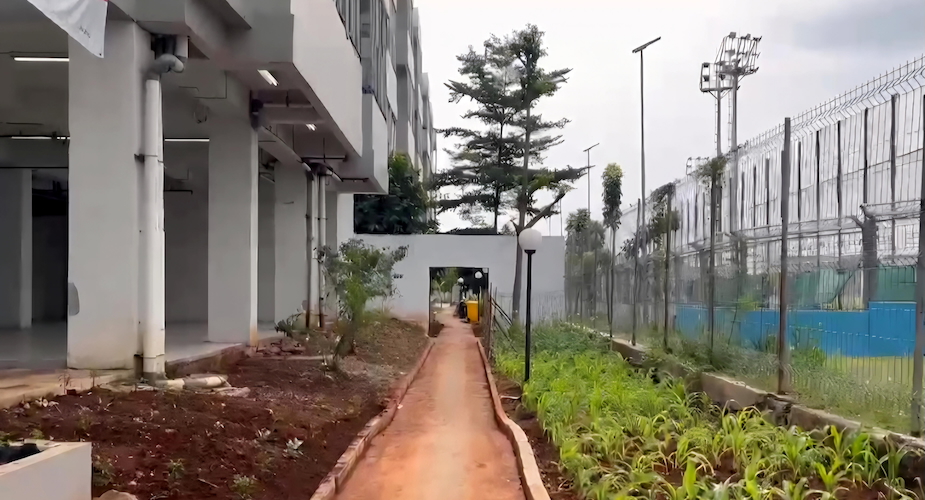
‘We have promised to fight together through thick and thin. What matters is that we can stand on our own feet,’ explained one of the residents.
The development of urban space is increasingly driven by capitalist interests in turning the city into a site for profit rather than one of collective belonging. Kampung Bayam reflects this reality. Residents were displaced to make way for JIS, a stadium designed to host concerts and sporting events that generate enormous revenue. At the end of the day, those with money gain more and those without are left to struggle.
The struggle described here can be understood as a fight to reclaim a right to the city. This right cannot be reduced to access affordable housing or basic services such as electricity. It is better understood as the right to reshape the city according to collective needs—to reclaim power over the urbanisation processes that determine how a city is built and rebuilt.
Whose needs are being addressed?
‘Honestly, we never asked for the flats in the first place. We asked Anies for row houses. But he said, if it’s row houses, where will your gardens be? You’re farmers. We understand since JIS already took up part of the land and there wasn’t much left. So with this kind of housing, we can still keep some land. We work the land together from one end to the other,’ said one woman resident, while also reminiscing about the old days.
At first, vertical housing, or high-rise apartment living, sounds like a great solution that would suit their needs. It was not long, however, before a voice of despair and protest was once again being heard.
Vertical housing in Kampung Bayam brought certain benefits, but problems remained. Some residents have tried to sustain their livelihoods by opening small kiosks in their houses, but operating such businesses in a vertical housing area is challenging. Since the area is quite enclosed, the kiosks are only visible to people who come inside.
‘Of course it affects us. Most buyers are residents, along with some guests. We also sometimes wonder if we are even allowed to do this or that? But what else can we do? We need to earn money,’ a woman told me as she cooked together with the others in the hallway of the apartment complex.
This demonstrates that residents do not have clear information about the regulations governing what is permitted and not permitted within the complex. They are unsure whether opening small kiosks, cooking together in the hallway, or if certain other activities are allowed. And although they do it anyway, they are constantly worried about the possibility of being punished or receiving a warning because their activities are considered violations.
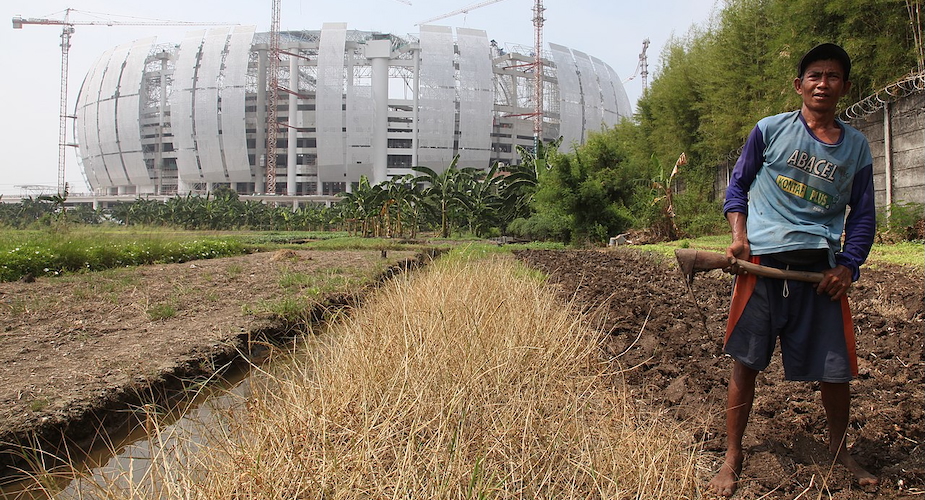
People also fear that their communal life will be disrupted because vertical housing regulations often include strict regulations on hallway use. There is also growing concern the flats will be commercialised and the costs will become too high. This leads to the community’s primary concern: that they will be evicted yet again.
‘This place was meant for Kampung Bayam residents to live for free in the beginning. Why do the rules shift when there’s a different governor? Now they’re asking us to pay when Anies never said that,’ said one woman in reference to the assurances given to the community by the former local government.
With the election of the new local government, the residents were informed that the flats would only be rent-free for six months. From January 2026 they would pay Rp.1.8 million per month for rent, with water and electricity costs an additional expense. This is far more than what they can afford. Many residents survive on irregular, day-to-day work and depend on harvest yields to earn money. If they cannot pay, they are fined Rp.60,000- a day and if the unit remains unpaid for three months, they face possible eviction.
Does vertical housing really solve the problem?
The problems in Kampung Bayam show that moving urban poor communities into vertical housing after forced eviction does not end the struggle. The fear of losing shared spaces, difficulties adapting and high monthly costs indicate that vertical housing comes with disadvantages.
As one Kampung Bayam resident and farmer explained, balancing the community’s needs was always going to be complex, ‘I liked the huntara model better when the houses were in a horizontal layout and it made us feel closer. But again, what matters most to me is farming.’
At the time of their initial eviction, the residents of Kampung Bayam were involved in a dialogue with the Jakarta administration, including particularly close engagement when then-Governor Anies Baswedan first put forward vertical housing as a solution, allowing the residents to continue their farming activities. Nevertheless, several other community demands, including basic utilities and fair compensation, were not accommodated. To continue to push for their rights, residents have relied on their own collective power. This is evident in a recent resident-led proposal to Jakpro for the development of fishponds around the flats to be used as another source of income.
The Kampung Bayam case shows that vertical housing can solve only part of the problems of Jakarta’s urban poor. Whilst it helps to sustain their farming needs and supports the residents’ right to remain in the city without losing connection to their farming identity, it also highlights the need for good governance, consultation and co-design in housing development.
Vertical housing for urban poor must be approached through this form of community-based development. Planning should be based on their needs and daily realities. These insights can only be obtained by meaningfully involving the urban poor in the planning process and valuing their collective lived experience and are all too often overlooked by market-oriented urban development.
Velma Anindya Hapsari (velma.anindya@ui.ac.id) is a third year political science student at Universitas Indonesia, and Research Assistant at PUSKAPOL UI.
This article is part of a series focused on writings by and about Indonesia's young people.