On the centenary of Daoed Joesoef’s birth, we might reflect on what is possible when education and culture become projects of the state
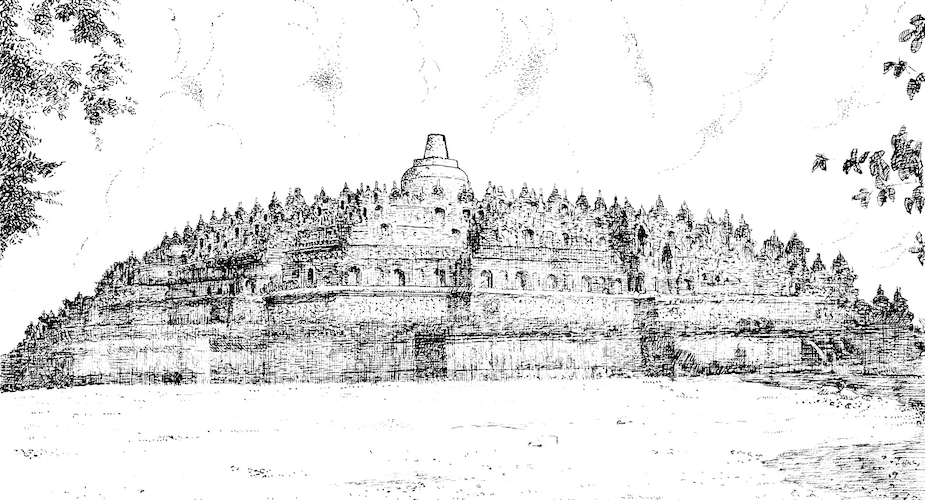
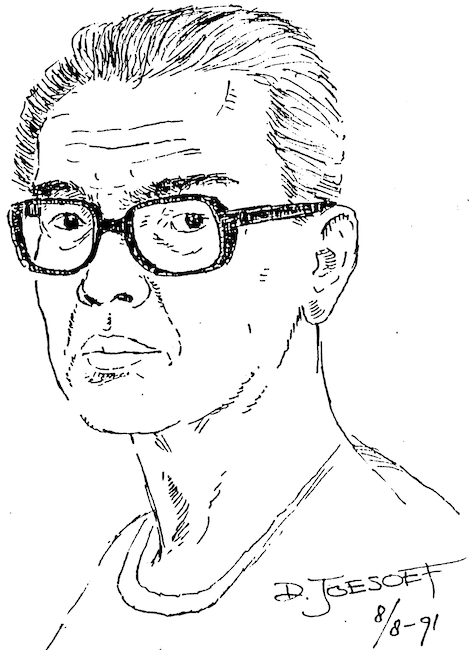
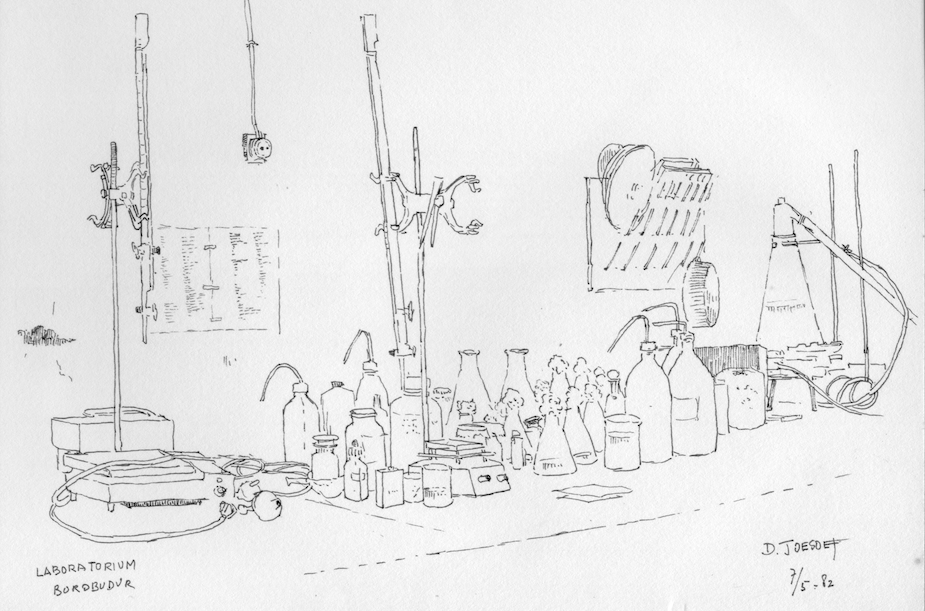
On 7 May 1982, an ANTARA photographer recorded Daoed Joesoef walking around Borobudur. The ten-year restoration was then about three-quarters complete. As Minister of Education and Culture from 1978 to 1983, Daoed followed the work closely and made pencil sketches during site visits. Their light, measured lines suggest someone trying to understand how separate stones held together.
Many Indonesians remember Daoed through a harsher image. During that term, his name became inseparable from Normalisasi Kehidupan Kampus and Badan Koordinasi Kemahasiswaan (Normalisation of Campus Life -- Coordinating Body for Student Affairs), better known as NKK/BKK. These 1978 decrees restricted political activity on campuses. Independent student councils were dismantled or prevented from returning, while student organisations were drawn more tightly under university supervision.
Borobudur and NKK/BKK are usually placed in different histories. One concerns cultural preservation, the other deals with New Order efforts to contain student politics. Yet both were shaped by Daoed’s confidence that the state should do more than administer institutions. It should help form the country’s intellectual habits, cultural outlook and sense of national purpose.
Indonesia marks the centenary of Daoed’s birth on 8 August 2026. The occasion invites celebration and a harder reckoning. He was an imaginative educator, but his pursuit of academic order also strengthened an authoritarian government’s grip on the university. Both belong in the same frame.
Borobudur before the restoration
Daoed first saw Borobudur in 1953, while studying economics at the University of Indonesia. He travelled there with his close friend Adi Putera Parlindungan, then a student at Gadjah Mada University. With no guards present, they climbed to the upper terraces virtually alone.
They found a magnificent but visibly fragile monument. Rainwater had penetrated the structure, plants spread across the stone, panels had shifted and parts were leaning. From the top, Daoed saw both the Kedu plain and how much of Borobudur might be lost without serious intervention. The visit stayed with him.
After graduating from UI in 1959 and teaching there, Daoed moved to Paris in 1964. He lived and studied in France until the end of 1972, returning to Indonesia in 1973 after completing doctoral work at Paris I Panthéon-Sorbonne. His time in Paris also placed him close to UNESCO. He served with the Indonesian delegation to UNESCO from 1968 to 1970 and as an adviser to Indonesia’s permanent delegation in 1971-72.
That formal role mattered. Daoed used discussions in UNESCO circles to press the case that Borobudur was not simply a neglected Indonesian monument. Its survival was of international concern. Indonesia’s appeal became one of UNESCO’s earliest large international conservation campaigns.
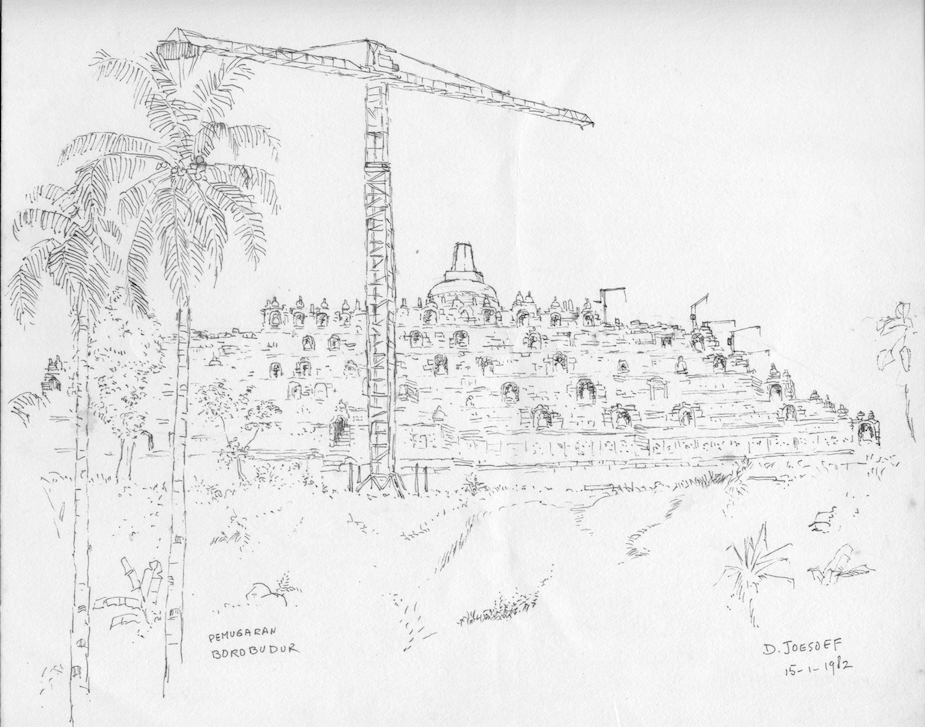
The restoration formally began on 10 August 1973. Over the next decade, Indonesian and international specialists dismantled, cleaned and rebuilt large sections of the monument, repaired its drainage and strengthened areas damaged by rain and unstable soil. The surviving archive contains tens of thousands of photographs, thousands of technical drawings and hundreds of project documents.
When Daoed entered the cabinet in March 1978, the restoration came under the ministry he led. He visited the site as the minister responsible for the project, received technical briefings and watched the final stages unfold. The work was declared complete on 23 February 1983, only weeks before he left office.
A Buddhist monument in a Muslim-majority republic
The restoration did not pass without argument. Daoed later recalled receiving anonymous letters accusing him of rebuilding an idol in a country where most citizens were Muslim. He did not answer by denying Borobudur’s Buddhist character. Instead, he asked Indonesians to widen their view of their own history.
Borobudur, he argued, could not be owned by one religious community. Nor should it be valued merely because tourists were willing to pay to see it. The monument carried evidence of the encounters among religious traditions and cultural worlds that had shaped the archipelago over centuries.
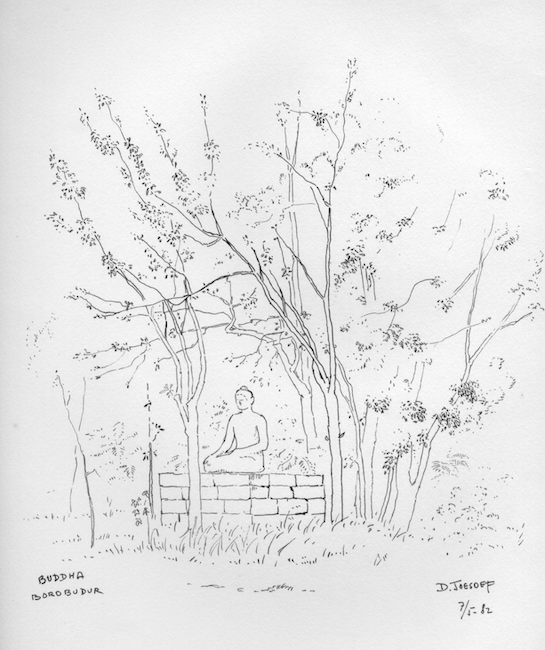
This was why he linked Borobudur to universalism, relativism and, above all, pluralism. A Muslim-majority republic did not have to erase its Buddhist past; it could recognise it as part of a shared inheritance that complicated narrow definitions of Indonesia.
For Daoed, conservation was therefore an educational act. The repaired monument preserved more than old stone. It offered Indonesians a way to read difference as something woven into their history, rather than as a recent threat to national unity.
Development beyond roads and factories
Daoed’s defence of Borobudur grew from a broader unease with the way the New Order spoke about development. Trained as an economist, he understood the importance of investment and planning. But he distrusted the assumption that progress could be measured mainly through roads, factories and higher output.
A country might import sophisticated machinery without mastering the knowledge behind it, or build more schools without creating a reading public. Foreign capital could generate jobs while leaving control over technology and markets elsewhere. More possessions did not necessarily mean greater independence.
Daoed described culture as spiritual and intellectual capital. He was not referring only to monuments, performances or museum collections. Culture also lived in reading habits, scientific work, ethical judgement and the ability to learn from technology rather than simply consume it.
Education offered a route out of dependence. Schools and universities could prepare Indonesians to maintain, modify and eventually create technology, while learning from the wider world without mistaking imitation for modernity.
Daoed wanted ordinary Indonesians to possess knowledge that colonial rule and an unequal world economy had kept beyond their reach. Yet once the state decided that it must shape its citizens, how much room remained for them to reject the shape imposed from above?
Making campus life ‘normal’
Daoed regarded the university as a scholarly community. Students were not there only to collect qualifications; they were meant to test evidence, argue carefully and contribute to knowledge. He entered the cabinet, however, at a time when the New Order saw campuses as a recurring political danger.
Throughout the 1970s, students criticised corruption, inequality, foreign investment and the concentration of power around President Suharto. The Malari unrest of January 1974 intensified official distrust. In 1978, protests again placed universities at the centre of political opposition.
Daoed’s concern was not identical to that of the security establishment. He believed practical politics had crowded out academic work. Yet his idea of scholarly order fitted the government’s desire to remove an organised source of dissent.
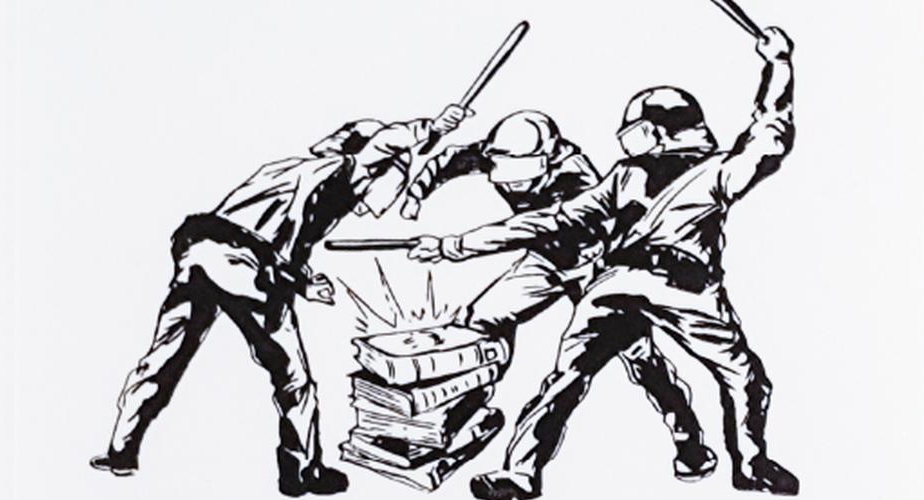
The 1978 NKK decree, No. 0156/U/1978, presented ‘normalisation’ as a return to the university’s proper purpose. The BKK arrangements that followed channelled activities through bodies answerable to university authorities. Independent councils disappeared, extra-campus organisations lost access and rectors gained greater supervisory power.
Campus politics did not vanish. It became one-sided. The government retained influence over appointments, regulations and the boundaries of permissible activity, while students lost much of their institutional ability to challenge those decisions.
Daoed’s concern about standards should not be dismissed: universities needed stronger research, and student activism was not always rigorous. The problem was the setting. Under authoritarian rule, academic improvement became a respectable vocabulary for political control.
Daoed wanted students to take scholarship seriously. The government wanted quieter campuses. NKK/BKK brought those aims together, although the state gained far more from the bargain.
Culture, order and the limits of pluralism
Borobudur shows the developmental state at its most constructive, assembling expertise and international support to rescue a vulnerable monument. NKK/BKK shows the same confidence in planning directed towards political life.
Daoed did not necessarily see a contradiction. He believed education should produce people capable of reasoned work and national responsibility. For a country emerging from colonial rule, this was an important ambition. The difficulty began when officials and experts assumed that they alone could define the educated citizen.
The contrast exposes the limits of New Order pluralism. Borobudur’s religious and cultural differences could be gathered into a national story and displayed as harmonious inheritance. Student activists were harder to absorb: they questioned policy, named officials and disputed the government’s version of development. Their difference spoke in the present tense.
The regime was more comfortable with diversity once it had become heritage than with disagreement that demanded an answer.
A legacy that will not sit still
Daoed left the cabinet in 1983 but continued writing until late in his life. He criticised consumerism, short-term politics and universities that distributed qualifications without nurturing intellectual life. Indonesia, he argued, had to learn from global science and technology while retaining the ability to select, adapt and judge what it borrowed.
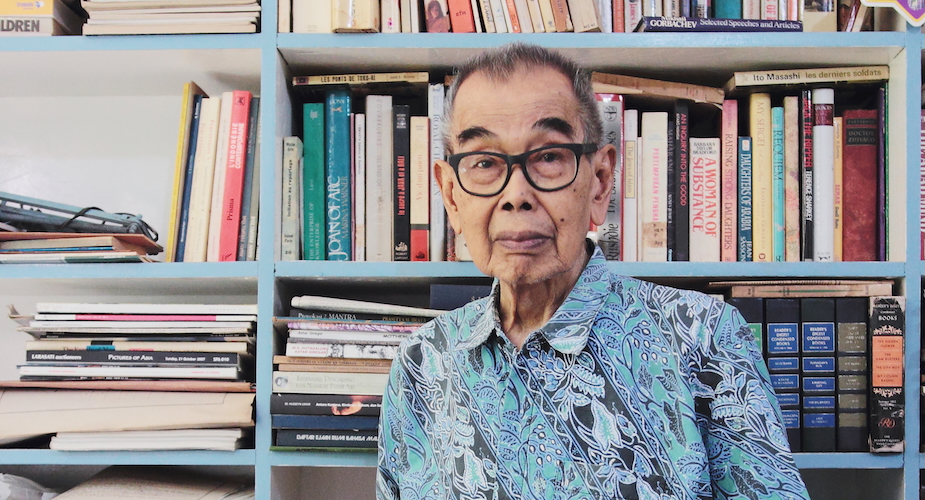
His essays could be sharply critical, yet he never abandoned faith in the state. He worried less about its reach than about the knowledge and integrity of those who exercised power. That trust in learned authority explains both the reach of his ideas and their limits.
Daoed was right to insist that development required more than concrete, investment and rising output. It depended on teachers, scientists, readers, artists and citizens with some command of their history. His work for Borobudur helped a Muslim-majority republic claim a Buddhist monument as part of its common inheritance.
His role in NKK/BKK remains harder to defend. He placed too much confidence in administrative order and too little in the intellectual value of disagreement. Universities need discipline, certainly, but they also need argument, restlessness and the freedom to make those in power uncomfortable.
That tension has not disappeared. Indonesian universities are still expected to produce employable graduates, useful research and technological innovation. Governments still prefer experts who offer solutions to critics who complicate the problem.
A century after Daoed’s birth, Indonesia can recover his seriousness about education, science and culture without repeating his faith in direction from above. His sketches asked viewers to notice not only individual stones but the relationships holding them together. His legacy deserves the same attention. The monument he helped preserve and the campuses he helped quiet belong in one picture.
Muhammad Iqbal (m.iqbal@uin-palangkaraya.ac.id) is a lecturer in the History of Islamic Civilisation at UIN Palangka Raya and a doctoral researcher in History at Universitas Diponegoro.