What would our public sphere look like if women had the time and energy to be part of it?
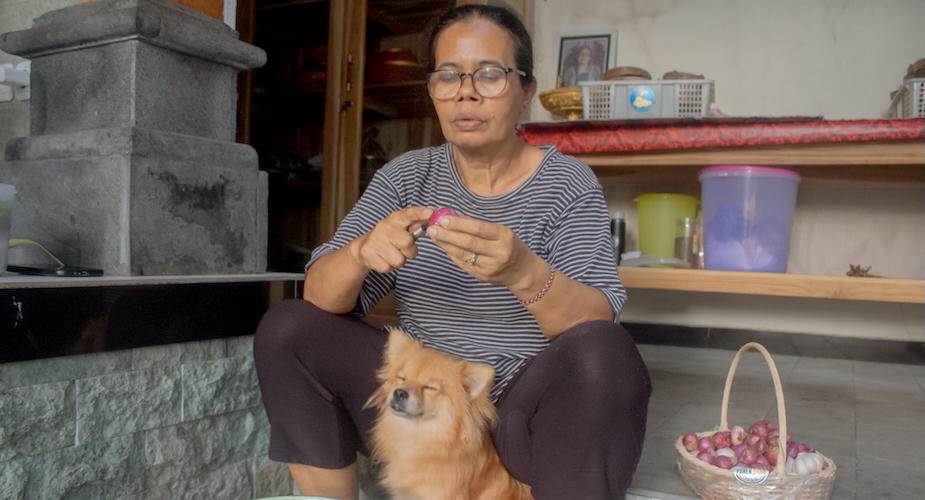
Whenever Balinese Hindu holidays like Galungan and Kuningan approach, I am reminded of just how much domestic work falls on women. My mother, aunts, sisters and I sit in the kitchen, cooking endlessly and handling a long list of other preparations, including making banten (ritual offerings), which require an astonishing number of components. While we are still busy with one task after another, the men, having already finished making the penjor (decorated bamboo poles hung with woven young coconut leaves) and slaughtering the animals, gather to play cards.
This scene points to something larger: the domestic work women do is not just a lot, but too much, especially compared with what men do. What stings is that this mountain of work is treated as women’s duty and is often dismissed as unimportant. This supposedly trivial work takes up women’s time, leaving them almost none for anything else they might choose for themselves.
This dedication is not born of women’s choice. It has become an obligation, passed down from generation to generation. Society assumes that women are the ones who should cook, wash dishes and clothes, clean the house, and care for the family. This division of labor has become so ingrained as kodrat—God-given and natural roles—that both women and men take it for granted.
I have seen this struggle over kodrat first-hand in my own family. My grandmother, or 'dadong' in Balinese, was not allowed to work by her husband, who expected her to look after the house and the children. When the family’s finances declined, she wanted to find work, but he would not allow it. His refusal was even accompanied by violence: he hit dadong in front of the children because she wanted to work.
My dadong’s experience is far from unique. Study after study has shown that unpaid domestic and care work keeps women out of paid employment. But the unequal division of domestic work does more than deprive women of paid jobs. It also takes away their opportunity to be present in public spaces.
This leaves me wondering: what would women, especially those my age, do if they had the choice and the time for themselves?
Public spaces for young women in Denpasar
That question led me to public communities started and attended by women. I was not interested in whether young women become better people by joining these communities. What I wanted to understand was how women make use of these spaces for public participation.
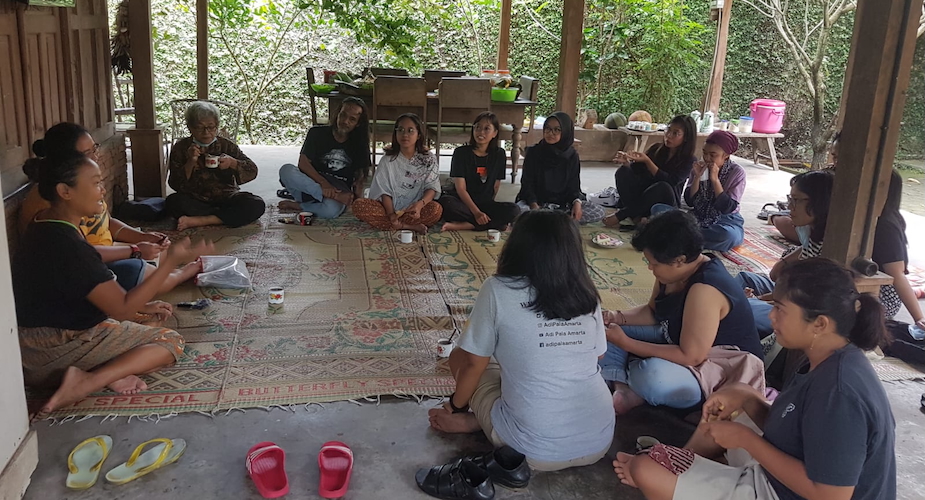
The first community I visited was Nyujur, which focuses on gender equality. Nyujur was started by a group of women concerned about gender inequality and mental health. I joined one of its events called 'ngawit saking titiang' or 'starting from me'. The event invited young Balinese Hindus to discuss and reflect on gender equality in society through journaling sessions.
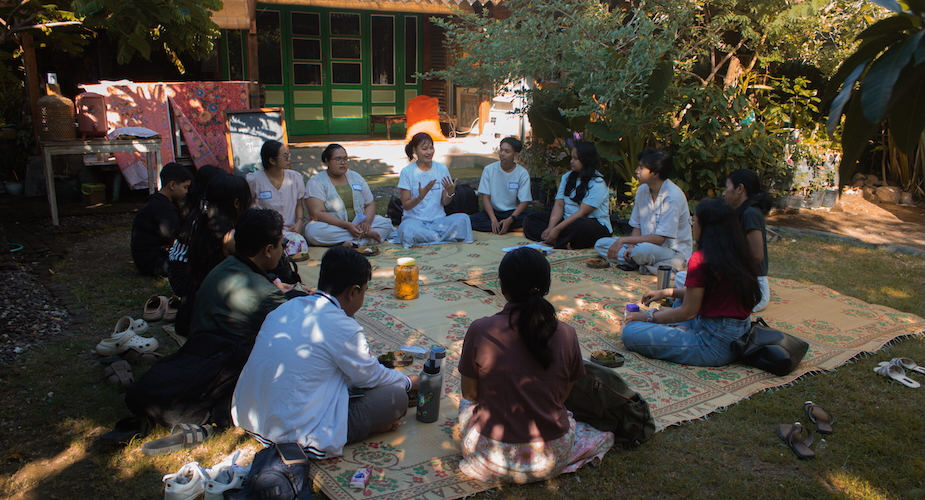
During the event, Anya, one of Nyujur’s founders, spoke about the alienation she felt after spending her school years outside Bali. When she returned to Denpasar, she felt disconnected from other young women because their social experiences were so different from hers. That feeling pushed her to build a space for sharing and dialogue about gender issues shaping young Balinese Hindu women’s everyday lives.
At the gathering, I saw how eager participants, women and men alike, were to share their experiences of inequality; from being forbidden to attend school far from home to a heavily lopsided distribution of domestic workloads. The young women came not only to reflect on their experiences but also to turn them into public narratives by sharing them with others.
I had a different experience when I joined an event run by earthshe.id, an initiative founded by three women working on sustainability issues. The event brought me together with women from a wide range of backgrounds and occupations, including a marine engineering student, a retail worker, a junior high school teacher, and a housewife.
These events showed me that when women have the time and the opportunity to choose and participate, they do not spend it only talking about themselves (though there is nothing wrong with that). They gather to meet one another, learn from each other’s experiences, and discuss what they find interesting and important.
Having the opportunity to take part in public spaces also encourages women to take on more strategic public roles. Yunda and Astrid were the Bali chairs of the 2026 International Day of Sign Languages and International Week of the Deaf. As a volunteer at the event, I watched them lead and manage this large undertaking. For them, it was a form of advocacy for the needs and rights of Bali’s Deaf community.
From these experiences, I came to understand that women’s presence in public spaces is not always about a radical feminist movement that directly threatens patriarchy. Their presence can mean something much simpler: the chance to meet and share with new people, learn new things, and do what they enjoy.
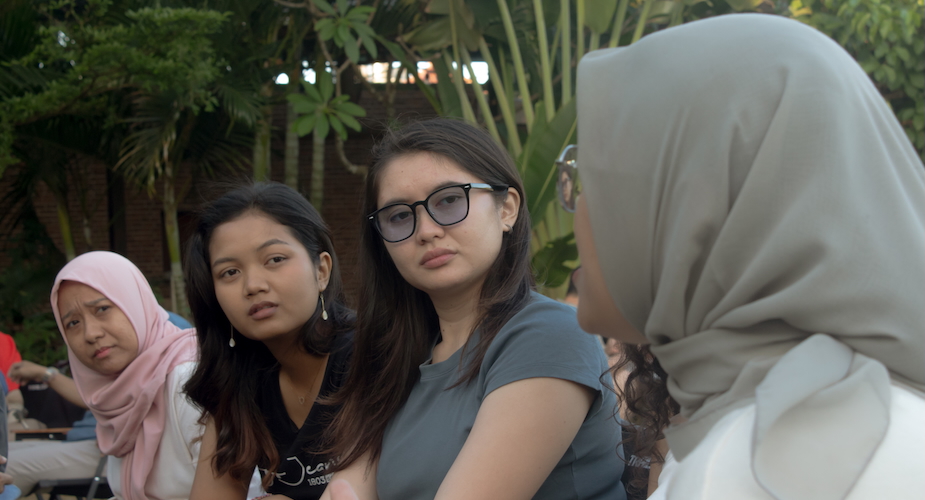
Simple as it is, when women are present in public spaces, public life is also filled with a wider range of experiences and perspectives from women’s side. Drawing on women’s experiences and knowledge, public spaces can bring forth activities, figures, and ways of seeing that may previously have gone unnoticed.
Choice, not obligation
Not every woman wants to join a community or be active in public spaces. Doing domestic work or caring for a family is also a legitimate choice, and the two need not be set against each other. What matters is not where women choose to spend their time, but whether they have that choice in the first place.
That is why unpaid domestic work should not be women’s only option. Domestic work meets the needs of everyone in a household, so the responsibility should be shared. Everyone needs clean clothes and food on the table, and the work that provides them should not automatically fall to women simply because of the kodrat we have internalised.
When domestic work is no longer seen as women’s responsibility, women will have the time, energy, and space to do other things, including showing up and taking part in public life. And with more women present, our public spaces will become more colourful, lively, and democratic.
Dyana Wulandari (putudyanawulandari@gmail.com) is a young Bali-based woman working on youth participation, culture, gender equality, and social impact. With a background in cultural programming, community research, and event coordination, she focuses on creating inclusive spaces for collaboration. She also writes and takes photographs to understand and share the social issues she cares about.
This essay is part of a mini-series focused on the stories of young people reimagining urban life in Indonesia today.