What’s truly absent is not women who organise, but the city’s recognition of their presence
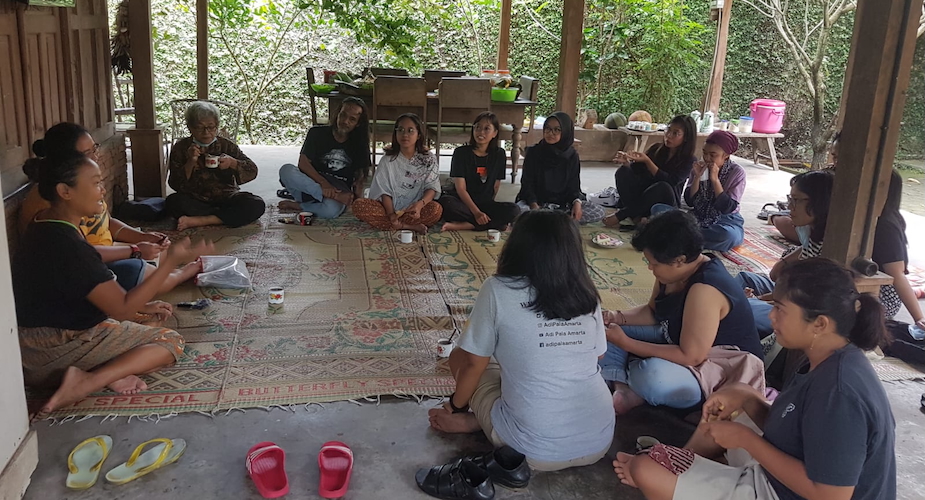
I sat in a cold coffeeshop in Solo listening to women talk about the cases of violence they were handling. They are part of the women’s movement in Solo, which has struggled for years alongside survivors of violence against women and children. They share information about referrals to psychologists, pool money to cover costs, and advocate together. There are no banners and no loud media coverage. This network continues to be nurtured through small efforts, through organisations and communities that are deeply rooted in their communities even as they receive little spotlight or recognition.
Nonetheless, this collective effort is never proportionate to the number and severity of gender-based violence cases they must serve and advocate for. Cases keep rising while government support never grows. So, when Solo styles itself an Inclusive City, who is actually being embraced?
The toll of the work
Exhaustion and frustration afflict the women who are part of this movement. Seven years of involvement in Solo’s women’s collective has taught me to recognise the exhaustion and frustration reflected on my colleagues’ faces. This line of work and fight is full of obstacles and challenges, ranging from being terrorised by perpetrators to navigating the long, winding, and uncertain path of policy advocacy.
Support workers (pendamping) are also vulnerable to secondary trauma, burnout, emotional strain from survivors’ fluctuating mental states, and guilt when case handling seems stagnant. I experienced this myself two years ago, when I accompanied a case of sexual harassment and violence involving a university student. The survivor was forced into sex by their partner, also a student. When she refused, she suffered physical violence that left their back bruised, as well as getting threats online.
Through my work with Pusat Kajian Perempuan Solo (PUKAPS) a community that educates and accompanies adolescent and student survivors of sexual violence, I have received threats from perpetrators through my personal social media accounts. Fear and trauma inevitably enveloped me too. Free professional psychological support is available through PUKAPS due to a grant received from international women’s organisations. The government provide no such funds.
My experience is not unique. Almost everyone who has devoted themselves to accompanying violence cases goes through the same. My colleague from the organisation SAVARA which supports victims of sexual assault in Solo, experienced burnout and trauma after accompanying a survivor of sexual violence. Due to limited funds and the inadequate number of safe houses in Solo, she ended up sheltering a survivor who had attempted suicide in her boarding room for two weeks. Another friend, a lawyer at Semarang Legal Aid, was stalked by a perpetrator for several months while she pursued legal advocacy for a survivor of sexual violence.
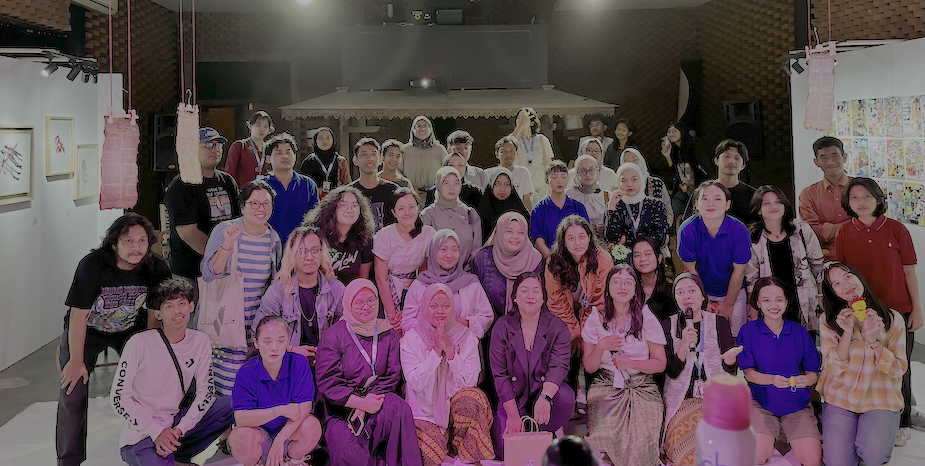
These stories show that collective work as companions to survivors of gender-based violence is no easy matter. With no guarantee of protection or safety, companions are vulnerable to mental and physical exhaustion and even financial sacrifice. So far, it is solidarity and collective awareness among ourselves that serve as the support system for enduring the obstacles of accompanying survivors.
Sisyphus’s task: A struggle without end
Organising against gender-based violence in Solo is like Sisyphus at work, pushing a boulder up a hill only to watch it roll back down. The government’s own figures show an increase year on year. In 2024, the city government recorded 173 cases of violence against women and children, and in 2025 the number rose to 190 cases. Data collected by women’s organisations such as Yayasan Kakak and Yayasan SPEK-HAM also show a growing number of cases they accompany each year.
This information can of course be read in two ways. It may not be that violence is increasing, but that people are more willing to report it. Either way, it means the absolute need for accompaniment and services is growing.
Yet as the demand for support grows, the resources available to meet it are shrinking. Budget efficiency measures are currently squeezing the fiscal space of regions across Indonesia. Solo itself has seen central transfer funds cut by around IDR 218 billion, and regional spending in the 2026 budget fell 8.9 per cent compared with the previous year. These cuts fall on every sector, so on their own they say little about how women’s issues are treated. What is more telling is how the government talks about them.
Although the government insists that the protection of women and children must not be reduced, this commitment is hard to test because the share of the budget for handling gender-based violence has never been made public. Activists and organisations fear that these efficiency measures will leave survivors’ basic services, such as medical examinations (visum), unfulfilled.
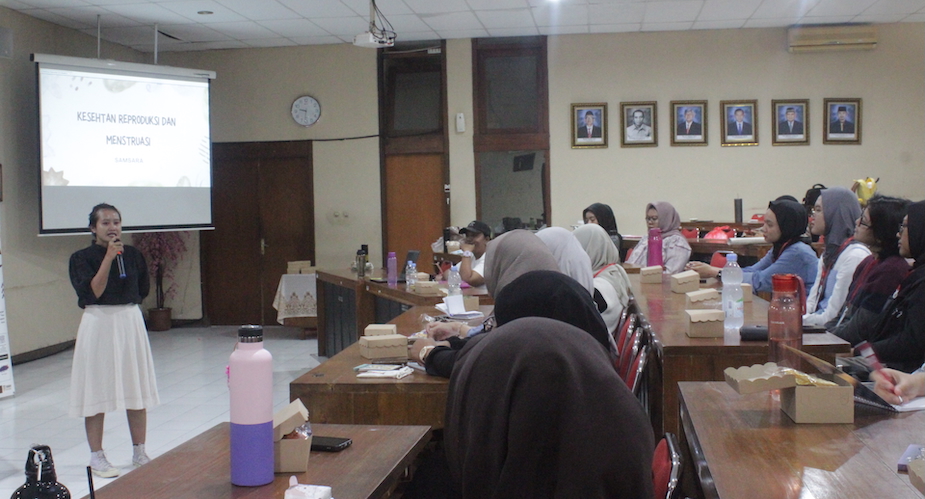
Budget opacity is not the only form of state neglect. Let alone adequate funding, the government is unwilling even to meet and hold regular discussions with women’s movements and organisations. At PUKAPS, I experienced first-hand what it feels like to be ignored. Some time ago, we tried to request an audience with the officials running Solo’s women and children protection unit. One of our board members happened to have won an award in a youth leadership competition in Solo, so we asked her to engage with several staff at the unit, in addition to sending an official letter. We simply wanted to discuss the data and field experience we had collected over years of accompanying survivors and educating residents. The request was only noted administratively, and until now, almost a year later, there has been no follow-up.
Neglect by design
This pattern of neglect, visible in a budget that is never opened to the public and in our request for an audience that was never answered, can be read as the legacy of a patriarchal culture that is rooted in society and institutionalised in the state. Women are treated as afterthoughts in the life of the city, their voices as inferior, their existence as invisible, and their work as unrecognised. As a result, the policies that emerge tend to be symbolic, with half-hearted programs and small budgets, and no potential to change who sits at the table where decisions are made.
Male dominance in spaces of power worsens and perpetuates the silencing and marginalisation of women’s issues. This piece argues that the failure of the state and its decision-making system to support women is not because women are not organised or lack capacity, but because the decision-making system itself was designed without imagining their presence.
While gender-based violence remains a problem and women’s collective movements are rarely involved in policymaking, what does an 'inclusive city’ mean for the women who live in it? How does this neglect shape their sense of belonging and the meaning they hold of the city where they grew up? Without a position at the decision-making table, the grassroots women’s movements that have been patching the gaps in services will remain outside the halls of power, knocking without the door ever being opened.
Nira Yustika (nirayustika29@gmail.com) is a Solo citizen, born and grew up in Solo. She just recently completed her master’s degree in sociology from Universitas Negeri Sebelas Maret. Yustika is one of the citizen scientists in the YUP Project, Kota Kita and is also working as education officer at Pusat Kajian Perempuan Solo (PUKAPS) that focuses on gender as well as advocacy for sexual and gender-based violence survivors.
This essay is part of a mini-series focused on the stories of young people reimagining urban life in Indonesia today.