A mini-series of essays will feature stories of urban life reimagined through the eyes of young people
Indonesian cities are often imagined through their most visible features: traffic, shopping malls and skylines alongside dense kampung, flooded roads, billboards, and the rhythms of public rallies. But behind these common tropes, a teenager was waiting for a bus, several young people just started a reading circle, or a student was frustrated by a smart-city app she had no say in designing. Cities are made of these mundane moments too.
Indonesia is now an urban nation, and whilst there is no shortage of writing about its cities the conversation remains remarkably narrow. Cities are narrated through infrastructure projects, investment, congestion, elections, housing shortages, and demographic growth. When the discussion turns more human, attention gravitates to Jakarta. This is understandable, of course, Jakarta and its surrounds form the world’s largest urban region, home to more than 42 million people.
Jakarta will always sit at the centre of how we imagine Indonesian urban life. But many of the country’s most consequential urban stories are unfolding elsewhere – in Solo, Denpasar, Pekalongan, Pontianak, Makassar, Kupang and dozens of other secondary cities whose transformations rarely get sustained attention.
Over the coming months, this mini-series of essays in Inside Indonesia will focus on stories about life in two of these cities – Solo and Denpasar – as seen through the eyes of their young residents.
The seven essays in this series are written by young co-researchers on the Youth Inclusive Digital Urban Governance or YUP project, and together they underscore a simple but underappreciated point that cities are produced through ordinary, everyday practice.
Young people in Indonesia are talked about constantly, but rarely in their roles as residents. Public debate swings between two extremes: they are the demographic bonus, the vanguard of democracy and economy, the so-called Generasi Emas 2045, or they are a source of risk and a burden to be managed. Both framings have merit, but they share a flaw. They treat young people as a category to be assessed from the outside, either as an asset to mobilise or a problem to fix. They fail to engage with young people as renters, students, gig workers, volunteers, organisers, taxpayers and neighbours, getting on with city life, whether institutions notice them or not.
We begin with a simple premise: young people don’t need to be granted a distinct voice to be worth listening to. They already have legitimate standing in these cities, the same as anyone else who lives, works and shows up in them.
The essays in this mini-series show that this standing is not merely activated at 18 years of age, or at whatever arbitrary marker the state and society determine. It is practiced every day through neighbourhoods, campuses, coastlines, community organisations, cafés, public squares, festivals, planning meetings, WhatsApp groups and the countless small encounters that make up daily life in a city.
Each essay blends observation, evidence, and personal reflection about what it means to become a citizen in a city that constantly reinvents itself. Rather than treating Indonesian cities only as sites of economic growth, infrastructure, or governance, the essays treat them as something young people actively wrestle with – of identity, belonging, care, political participation, gender, climate anxiety and knowledge itself.
Voice
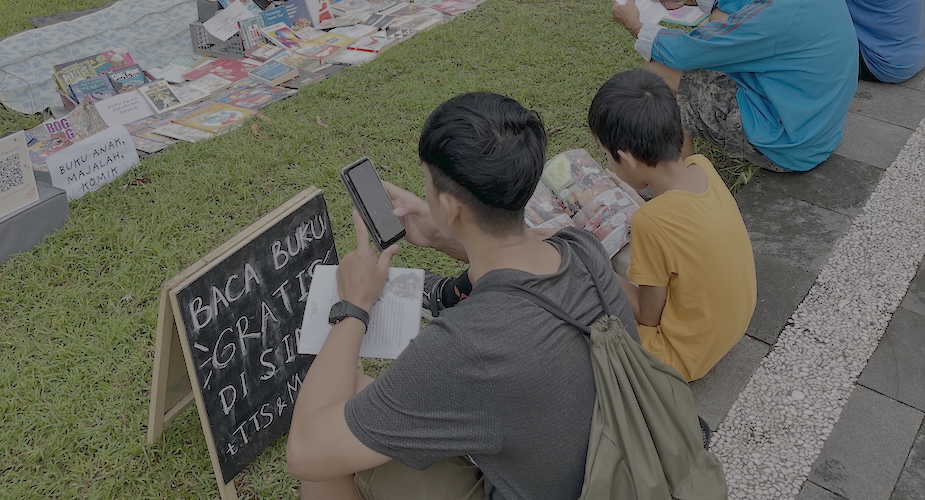
The first essay in this series is by Dinda Mahadewi, a member of a youth creative collective, opens the collection with her essay that traces a resurgence of youth-led civic initiatives in Denpasar. Looking past Bali’s image as a tourist paradise, she shows how small reading groups, discussion circles and creative projects open space for alternative political imagination. Amid youth’s collective exhaustion and anxieties, Dinda argues that democratic victory should be measured by sustained relationships, collective memory and mutual care rather than dramatic policy changes.
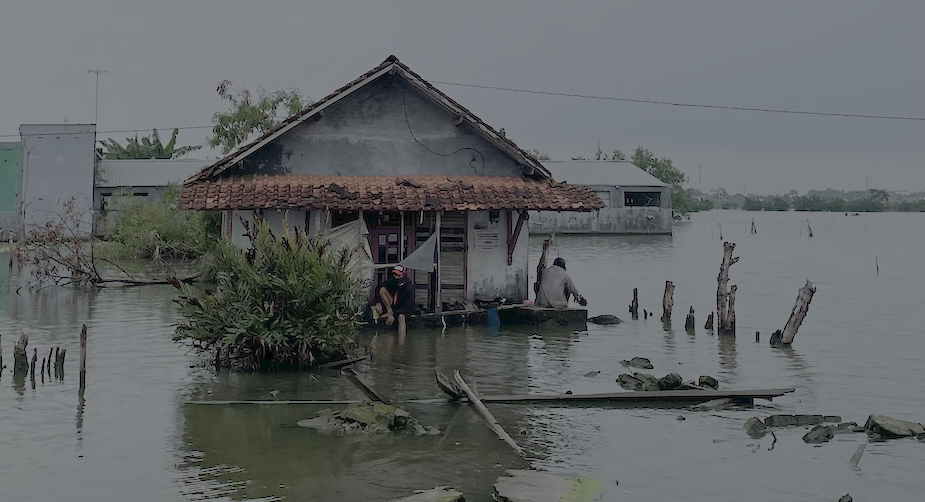
The second essay is by Faris Abqori Ramadhan, an urban planning student who writes on the ecological contradictions of Java’s north coast. He combines personal experience with planning analysis to question development models that keep pushing industrial expansion even as coastal cities sink under rising seas and land subsidence. His essay is written from the position of someone who will inherit this landscape and its ecological problems.
Gender and patriarchy emerge as animating themes in two essays. Nira Yustika, a social researcher and Education Officer at PUKAPS, a feminist organisation working across education, advocacy and creative expression, examines the gap between Solo’s active women’s organisations and the city’s formal governance. Drawing on community experience and local evidence of gender-based violence, she demonstrates how such a gap is reproduced by the municipality's deliberate overlook of women’s issues and their activism. Her essay asks what an inclusive city can really mean while organised women remain shut out of shaping it.
Dyana Putri continues the thread on gender and public space in her essay. A citizen scientist with a long-standing interest in gender and women’s activism, she looks at how women’s leadership in community initiatives, cultural events and grassroots groups is gradually reshaping patriarchal expectations about who belongs in public life. Drawing on her own involvement in film festivals, discussion forums, literacy programs and community workshops, she argues that the change isn’t coming through open confrontation but through growing visibility, which slowly shifts who is seen as having the right to speak and take up space.
In the fifth essay, Afnan Budi Pratam, who leads Civic Lab, a youth program focused on citizenship and urban governance, casts a critical eye on Solo’s celebrated smart city agenda. Reading planning documents alongside his own lived experience, he argues that technology has become a substitute for participation. He shows how young people are handed digital platforms designed by the government but rarely invited to help set the priorities behind them.
Anugrah Rawiyah Salma or Alma, who works at Kota Kita (a non-profit organisation based in Solo with expertise in urban planning and citizenship) writes on the emotional cost of growing up as Indonesian Gen Z in her essay. Moving between personal narrative, data, and observations of the wider political climate, she argues that the real challenge facing many young Indonesians isn’t apathy but exhaustion, just like what Dinda observes in her essay. While this collection celebrates young people who choose to pay attention, Alma contends that maintaining critical attentiveness in a society that increasingly penalises political awareness comes with a price tag.
The collection closes with Asri Septarizky, also of Kota Kita, turning the lens on participation in research praxis, often touted as a device to bring young people’s voices. Drawing on her own experience, she asks an uncomfortable but necessary question: can research genuinely redistribute authority when its frameworks and institutions are already fixed before young people even enter the process? Rather than celebrating participation as an unqualified good, she offers a reflexive look at what it can and can’t do.
These are all accounts from young people who have spent years paying close attention to their own cities. Read together, they argue that cities are never simply built – they are interpreted. What we choose to notice and what we let remain invisible shapes how a place is governed and imagined.
Pay enough attention to Solo and Denpasar, and it becomes clear that secondary cities are not smaller Jakartas. They are cities in their own right. And, as these essays show, so are the young people living in them, not as citizens-in-waiting, but as neighbours, activists, researchers, feminists, planners and carers, right now.
Clara Siagian (siagian.clara@gmail.com) is a postdoctoral researcher at University College London and a research affiliate with the Centre on Child Protection and Wellbeing (PUSKAPA), Universitas Indonesia.
This essay is part of a mini-series focused on the stories of young people reimagining urban life in Indonesia today.