Through small informal collectives, Balinese youth rediscover history and reclaim public spaces
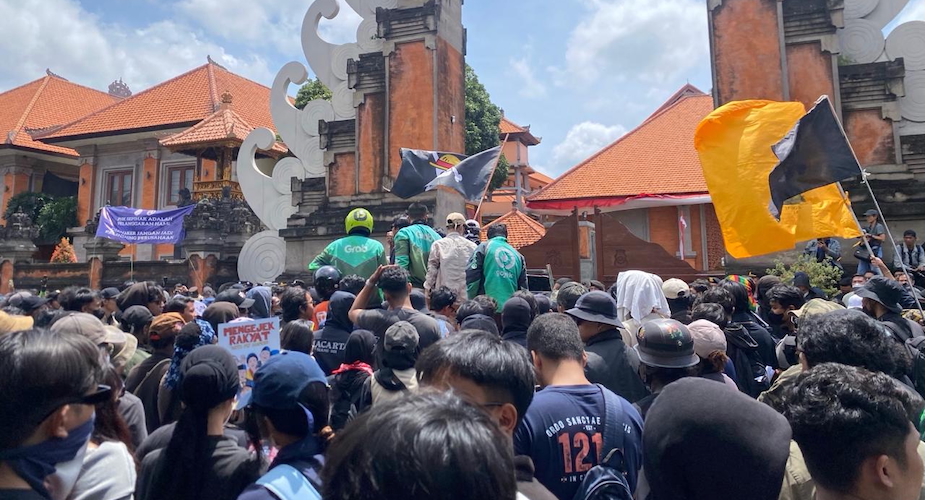
Indonesian young citizens are exhausted and feel defeated, seeing no way to escape the predicaments that seem to be handed out to them, from precarious employment to uncertain futures. Yet, fuelled by this survival fatigue, public outrage erupted into nationwide protests in August 2025 following Affan Kurniawan’s murder by police.
Balinese youth were among those who stood their ground, transforming their shared burnout into a demonstration responding to the ongoing political crises, with several people injured or imprisoned. However, the movement received a backlash. People were concerned about the impacts of these protests on Bali’s tourism reputation. And soon there was silence, and everyone went back to their normal life. This left a question: Why do people so quickly resort to silence as if nothing had happened?
Critics and protests seen as threats
Before massive tourism dominated the economy, Balinese people took to the streets to resist colonial imperialism, unfair land regulations, and foreign capital. However, the 1965 tragedy completely altered this movement. Bali became a site for systematic massacres and physical persecution.
These terrors did not stop with one generation. Through doctrines like ‘bersih diri dan bersih lingkungan’ (clean self and environment), the trauma was passed on to subsequent generations but the history, of state oppression and of resistance, were erased or euphemised. What’s left is a community who learned that to survive they must serve the New Order’s tourism agenda, and for that they learned to be friendly and to exude tranquillity.
This historical trauma has evolved into a conditioned behaviour and paradigm. Today, popular idioms like ‘taluh goreng ade hasil’ (fry an egg, you get a fried egg) are commonly used to mock protests, pushing a pragmatic belief that demonstrations yield nothing but chaos and tarnish Bali’s image. This alienation of citizenship is reinforced through systematic state intimidation when youth rallied during major international events.
This ongoing pattern proves that public fear and the shrinking of civic space continue to this day. A recent screening of Pesta Babi documentary in 2026 was surveilled and intimidated by the state apparatus. One of the organisers, TO, said, ‘Our publication put us under their radar. On the day, we faced sequential visits from state apparatus, alongside numerous threatening phone calls.’
Then, how do we define resistance in times when younger generations are robbed of their rights to know the nation's history while being threatened for speaking up?
How younger generations define resistance
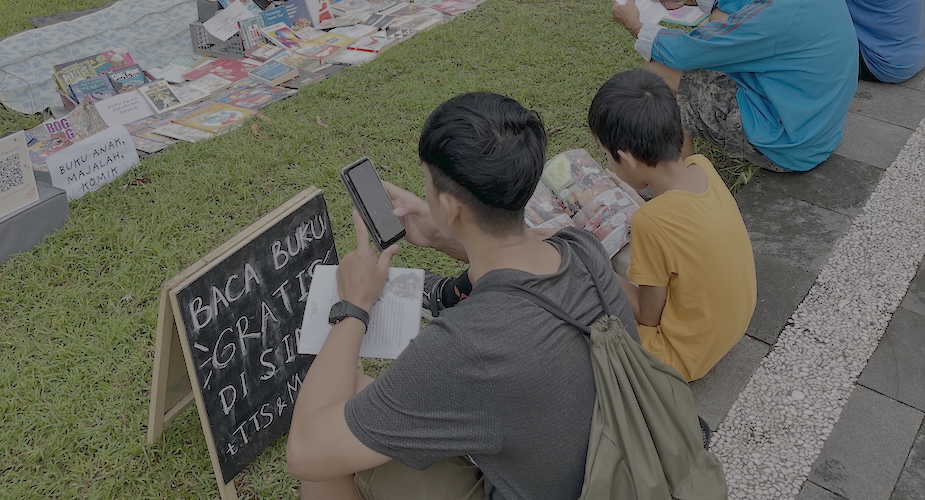
For Balinese Gen-Z, resistance is defined through smaller-scale offline events that disrupt exclusive spaces. Over the past year, a fascinating social phenomenon has flourished in Denpasar, Bali, as youth-led initiatives are starting to reclaim public spaces. These initiatives are distinct because they are completely informal, intimate, and spontaneous. They do not have strict hierarchies, heavy funding, or organisational structures. Instead, what begins with these initiatives almost always emerges from casual online interactions.
Take Rindu Dibaca, for instance, a public pop-up library collective. It started entirely from casual internet conversations among friends who were concerned with the lack of access to reading in Denpasar and wanted to normalise reading in public spaces. They realised there was a need for an open space that allowed more people to read without being limited by library hours and policies or to certain spaces or hours. So, they organise public book stalls in local parks, mostly at weekends. The pop-up attracts many passersby and individuals committed to finishing books offered by Rindu Dibaca.
Other youth collectives, while still small and informal, are decidedly political. A young activist who organises workshops on local histories TA, states, ‘Our resistance means disrupting exclusive spaces through free alternative political education in public. Knowledge must be accessible, not commercialised, intimidated, or persecuted.’ Using their tech-savviness to rediscover censored history, these workshops take alternative political learning and social connection directly to the streets and circles of friends.
While older generations dismiss these creative methods as laziness or ‘akal-akalan Gen-Z’ or Gen-Z’s ploys, young people have proudly reclaimed this condescending phrase. This akal-akalan manifests in tactics like spreading protest posters, organising public picnics, hosting free learning circles and turning public spaces into free, creative battlegrounds. These are what James Scott would call everyday forms of resistance, deployed by weaker parties to thwart the claims of institutions or the superior class that dominate public exercise of power.
Nurturing collectives and their people
The Bali Gen-Z struggle and resistance movement did not solely rely on individual efforts. They gathered support from their social circle and like-minded people to cultivate communities through digital platforms. In this sense, digital platforms do not only connect individuals; they provide spaces for shared experiences to be recognised, negotiated, and transformed into a sense of collective belonging.
Another youth initiative, Nuturang, echoes the reclaiming of public spaces, but this time the public space is Bali’s history. BA, the organiser, recounted that Nuturang started as an individual online project but gradually grew with the support and opportunities from their social circles.
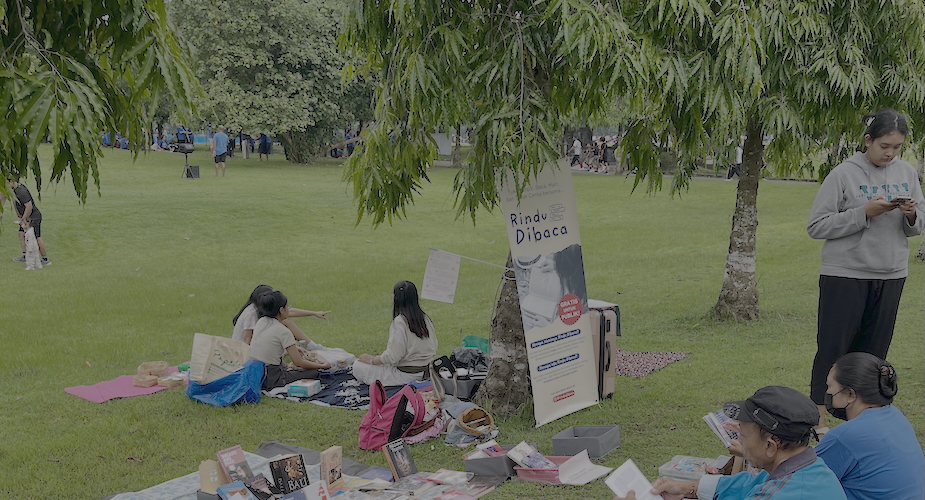
The thing these initiatives have in common is concern. What started as a street class utilising methods such as walking, a public book stall and cost-free workshops, became instruments to capture young people’s concerns and a vessel for their longing for connection to people and histories that make the city what it is today.
Nurturing these collectives comes with quiet, internal challenges. When diverse personalities clash, interpreting values like equality and inclusivity requires constant mainstreaming and deconstruction. Youth spaces can unconsciously mimic the domination they fight, as observed by a young public lawyer at Bali Legal Aid who said, ‘we sometimes exercise the same oppression as the state, cancelling people or using gossip as punishment. Basically, building our own social prison. We also consciously cherry-pick people in our movement'.
This complex contradiction is a question that young people are still trying to navigate in shaping their imagined communities.
Small wins are still a victory
While young people are exhausted, increasingly anxious about the future and intimidated by the increasing repression, many still muster some energy, time, and space to plant and nurture the seeds of resistance. These small, accessible, intimate, and modest youth collectives demonstrate that civil resistance need not always be defined by major policy shifts.
Gatherings that foster hope and build networks of mutual care transform into spaces for alternative political (un)learning and for raising awareness of young people’s rights as citizens, an effort to break the inherited chains of trauma and internalised silence.
Perhaps, resistance is a spectrum, manifested in different colours and textures. Or perhaps, it is an imperfect dance that youth are figuring out and improvising as they go, where small steps still push them forward despite the absence of a finish line.
Dinda Mahadewi (contact.dindamhdw@gmail.com) graduated from the Faculty of Law at Universitas Sebelas Maret. She lives in Bali and is interested in exploring the intersection of gender, social movements, digital presence, and translating complex issues into accessible narratives for wider audiences.
This essay is part of a mini-series focused on the stories of young people reimagining urban life in Indonesia today.