Indonesian farmers don’t need to fell forests to grow their crops
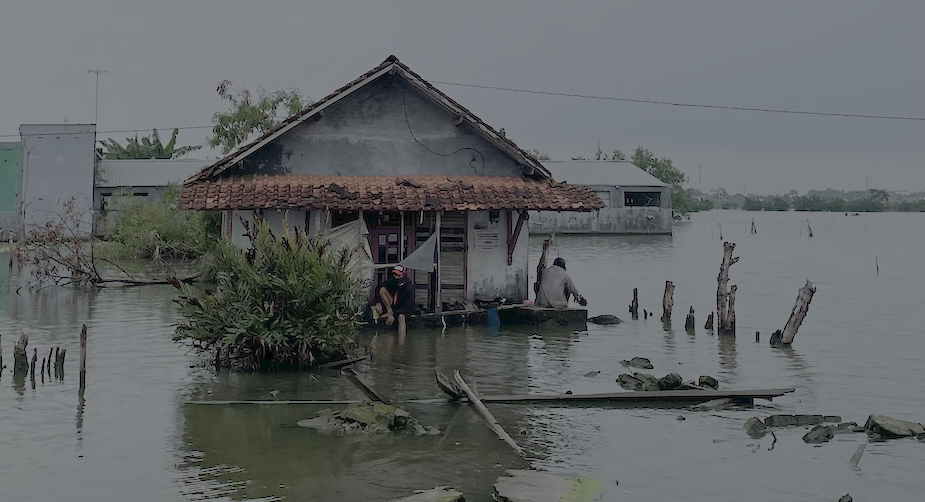
Earlier this year, a massive landslip in West Java killed almost 100 people. Two months earlier, eleven were buried alive when another hamlet disappeared. Warnings have been shouted across the decades about preventable disasters, but practical measures can be thwarted by beliefs that tragedies are inescapable. Now the dangers are being treated through science and learning, but care can collide with politics.
Last century, former general Suharto was nearing the end of his 32-year dictatorship when East Java Zoo vet Suryo Prawiroatmodjo, winner of an international award for his work on the environment, was summoned by paranoid government officials. Who was he mixing with overseas, and why did he call himself a conservationist – wasn’t that the same as Communism? A few years earlier, an army-organised genocide had butchered an estimated 500,000 real or imagined enemies of free-range capitalism. The fear of returning Reds petrified voters – and the tactic is still employed by populist politicians. Current President Prabowo Subianto has enlarged the target to include unnamed ‘foreigners’.
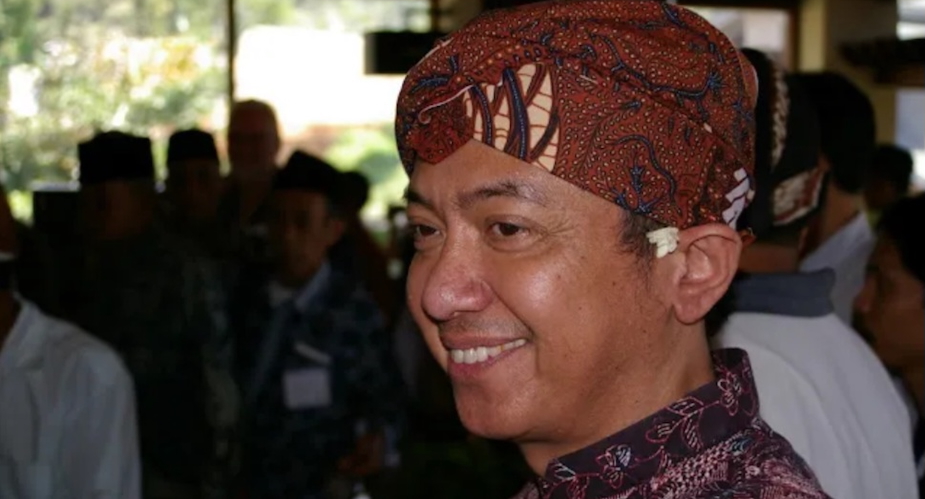
Suryo had the advantage of coming from a noble family, so was relatively immune. He explained that although both words started with ‘C’ there were differences. He went on to establish Pusat Pendidikan Lingkungan Hidup (Environmental Education Centre) alongside the sacred Mount Penanggungan, East Java, that draws overseas tourists to its slopes, mostly young backpackers.
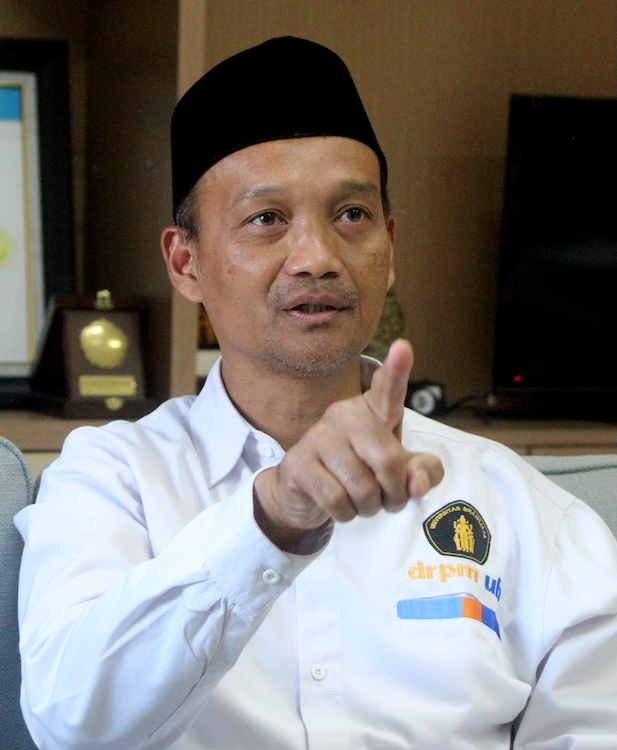
Before he died Suryo passed his mission on to a friend, Luchman Hakim. Originally from the village of Karangploso on the slopes of the nearby dormant volcano Mount Arjuno, Luchman believes his childhood on the land and the influence of his mentor Suryo pushed him into activism. He studied biology in Japan, before going on to complete his doctorate and is currently the Director of Research and Community Service at Universitas Brawijaya (UB) in Malang, East Java.
Environmental education
Luchman’s key approach is to integrate conservation with production and above all, provide environmental education for students, researchers, and also farmers and villagers who live on these precarious and vital landscapes. ‘When I came to UB we had no forestry department,’ Professor Luchman explained.
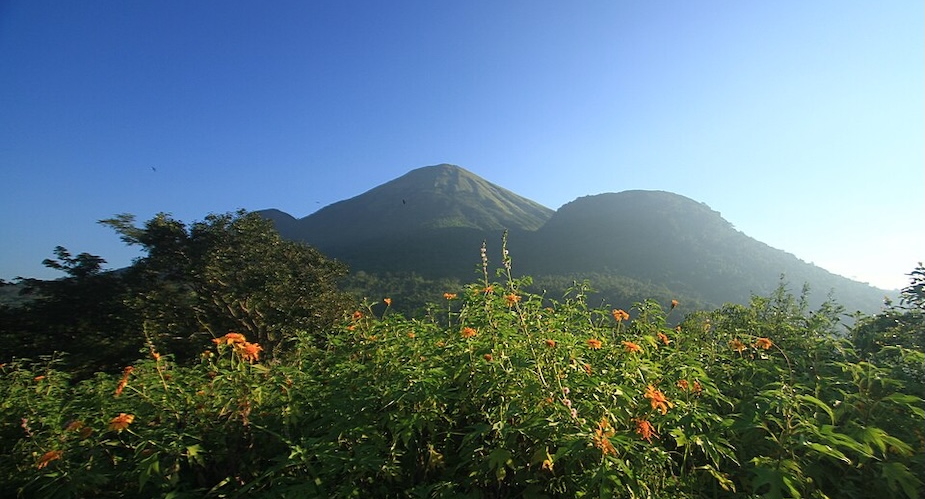
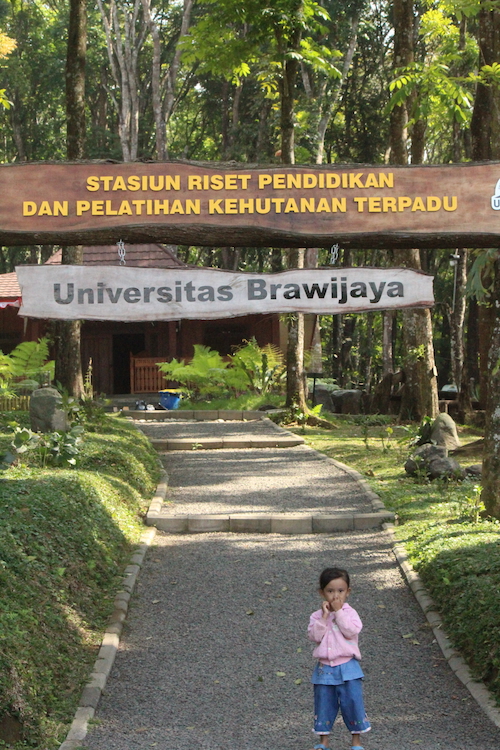
‘Along with other staff, I pushed for environmental studies. We had a 550-hectare protected forest on the slopes of Mount Arjuno transferred to us. We’ve just built a pendopo (a traditional Javanese peaked-roof timber hall) to lecture students from all disciplines, a research centre for agroforestry, environmental science, and climate change mitigation. We teach the importance of the environment and remind students of their roots. As a boy I explored the jungles and learned about animals, birds and plants. Now the youth get their views second hand from their handphones, not experience. We need to turn that around. Also to show villagers how to manage the land and plant cash crops without destroying the bush. That's hard because they’re poor.’
Avalanches are like ferry sinkings in the archipelago, common yet preventable. The illegal felling of upland trees by land-hungry farmers loosens the unstable soil, which becomes moving mud when heavy rains hit, filling rivers with fertile soil. On Arjuno, the wet season runs from November to April with rainfalls of 300 mm or more a month. ‘For conservation to be successful, everyone must be on side,’ said Luchman. ‘The farmers need to see the value of protection. They are already aware of climate change and having to adapt.’
UB’s forest research centre is surrounded by thousands of closely packed high-crown mahogany, allowing enough light onto the ground to grow coffee and chilli. Further up the mountain are pine trees, their bark scored vertically to collect resins for paints, glues and inks. There are a few honey hives. All products are sold commercially.
More than a thousand metres below is Malang, the second largest city in East Java. If land gets hit by torrential rain, slippage is unlikely as runoff is rare, according to field staffer Andy Kurniawan: ‘We get a lot of rain, most afternoons in the wet season (October to April) - but I’ve never seen rivers form.’
The soil is loose and the land creased with gullies, but there’s no sign of erosion. Likewise, the tracks into the forest built with boulders by slave labour during the Japanese occupation remain intact.
At another UB site near Banyuwangi, the port for ferries to Bali, villagers in a ‘nature clinic’ (their words) dispense jamu, herbal medicines made from roots, leaves and bark. Trails are being developed for the growing sport of trekking.
Forests burning
Elsewhere, however, forest destruction is taking place on an industrial scale, including on Kalimantan on the island of Borneo. Plantations stretching to the horizon is a distressing sight, for this is monoculture at its worst. In the week of the Republic’s 81st birthday, smoke started ‘causing thick haze that paralyses air transportation and disrupts the health of residents.’ Acute respiratory infection cases have been reported in ten cities.
Adjacent Singapore and Malaysia are said to be suffering; schools have closed along with nine national parks. It was the same story last year, and will probably feature in the next.
Late last year it seemed that Jakarta was taking forest protection seriously when soldiers raided allegedly illegal farms and confiscated close to five million hectares of palms, outraging investors. Last month the police reportedly seized 72 workers for torching the forests – presumably under orders from corporate landholders; they haven’t been arrested.
Reuters said that the scene at the plantations ‘exemplified a sweeping military-backed takeover that has sent a chill through the world's biggest palm oil producer and its 16-million-strong workforce.’
This action was more about politics than land protection because the assets were handed to a new state body, Agrinas Palma Nusantara, making it the world’s largest palm oil company.
Its publicity claimed it was designed to help Prabowo’s ambition for national food self-sufficiency, adding:
‘We appreciate the role of national media in educating the public, conveying the development of APN, and supporting transparency and openness of public information on an ongoing basis.
Together with the government and strategic stakeholders, we are ready to support the growth of an independent, highly competitive, and environmentally friendly industry for the prosperity of the Indonesian people.’
Unsurprisingly, there has been little critical comment in the nervous local press fearful of being tagged anti-development.
UB’s venture into land protection is unlikely to distress state interests unless valuable minerals are unearthed. Luchman is quietly positive that Suryo’s legacy lives on. He could be right. Locals were spotted under the majestic mahogany, voluntarily collecting wind-blown plastic from nearby housing– a sign of care and ownership.
Duncan Graham (wordstars@hotmail.com) is an Australian journalist living in East Java.