Chinese-Indonesians and the future of multiculturalism
Being ‘Chinese’ in Indonesia is now celebrated as part of the country’s cultural diversity. Twenty-eight years after the restrictions on all forms of Chinese language culture and education were lifted in Indonesia, young Chinese-Indonesians enrolled in trilingual schools have a much more robust sense of Chinese cultural identity than their parents’ generation. At these schools, other than Indonesian and English, Chinese classes are taught twice or three times weekly, with spelling tests, topical reviews and examinations held during the academic year. Since most of the students’ parents do not speak or write Chinese, they rely on private tutors or enrol their children at after-school tutorial centers such as CLC (Children Learning Chinese).
Formal Chinese language education at trilingual schools is also supplemented by many Chinese cultural events throughout the year. The most important of these events is Chinese New Year, which is celebrated in several different ways at trilingual schools. At National High Jakarta School, leading up to the national holiday, the students’ classrooms are adorned with Chinese characters, lanterns and zodiac signs of the year. The school’s primary and secondary students sing and dance at performances on a designated day to celebrate Chinese New Year usually accompanied by a lion dance.
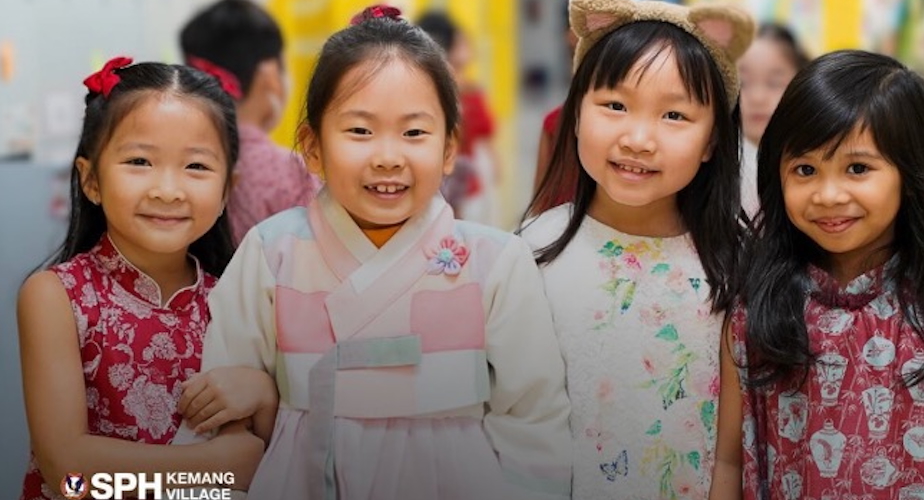
At Sekolah Pelita Harapan Kemang Village in Jakarta, where a large proportion of the student body (30-40 per cent) is made up of Koreans, Chinese New Year is referred to as the Lunar New Year. These Korean students are mostly the children of Korean expatriate families who have moved temporarily to Jakarta. They are distinct from their Chinese-Indonesian schoolmates as they often speak to one another in Korean and bring their own packed lunches to school, however they often share the same religion (Christianity). During the Lunar New Year celebration at the school, the Korean community proudly showcases their cultural heritage. Alongside performances and songs by students wearing qipao (a traditional Chinese dress), Korean mothers and children wearing hanbok (the Korean national costume) also perform their own dances and songs, accompanied by traditional Korean musical instruments such as the gayageum or a Korean zither, similar to the Chinese zither, the guzheng. These performances are a multicultural celebration of Chinese and Korean cultures at an Indonesian school.
New approaches to ‘Chinese’ culture
In 2025, Chinese New Year celebrations went beyond the trilingual schools; they were also supported by Confucian Institutes established at universities across Indonesia. One such institute is housed within the Al Azhar Islamic university in Jakarta. At the Institute, Chinese is taught by Indonesian and Mainland Chinese teachers to predominantly pribumi Muslim students.
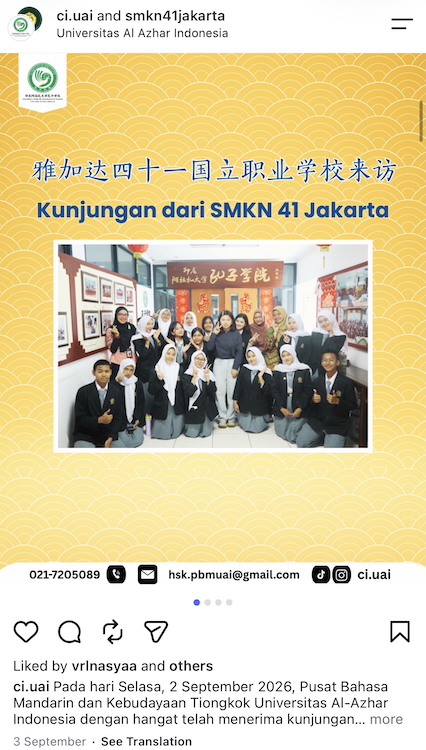
The Chinese language proficiency examinations, which determine the entry requirements for Mainland Chinese universities and for Indonesians wanting to teach Chinese at Indonesian schools, are also held at the university. During Chinese New Year, the Institute holds many cultural events referred to as the Chinese Spring Festival, showcasing Chinese paintings, musical performances featuring the guzheng, as well as dumpling-making and tea stations.
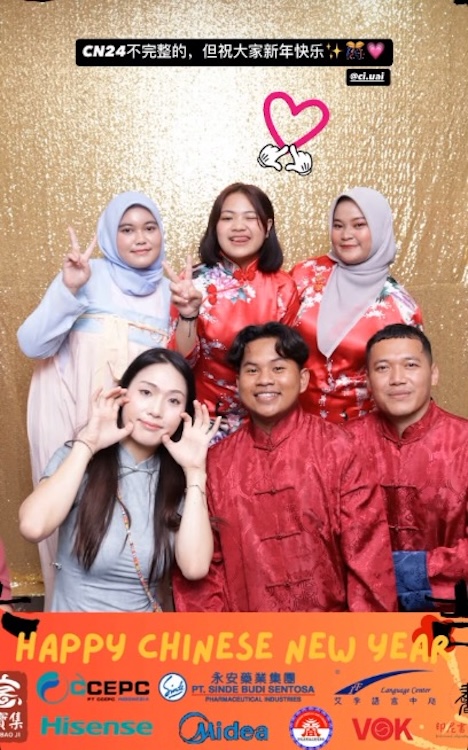
Students and staff of the Institute also participated in Chinese dance performances held at Hotel Borobudur Jakarta to mark the fifteenth day of the Lunar New Year, also referred to as cap go meh and the end of Chinese New Year celebrations. During the performances, the Institute’s students and staff wore Indonesian traditional kebaya and batik skirts or pants. A great majority of the women were also wearing matching jilbab. As they energetically danced to Chinese pop songs alongside an ethnic Chinese woman in a qipao, the audience watched a multicultural performance that transcended religion and ethnicity.
Other than Chinese New Year, the Mid-Autumn or Mooncake Festival is another important Chinese cultural event celebrated at Al Azhar Confucian Institute. The traditional culinary displays feature ‘halal’ mooncakes prepared without lard, which is often used in baking traditional mooncakes.
At NationalHigh Jakarta School, the annual Mid-Autumn celebration is more extravagant, with many stalls featuring mooncakes, dumplings, noodles and glutinous balls set up at the basketball court. The students, wearing red, also perform dances and sing Chinese songs. As the afternoon turns into evening, students carry lanterns and cross a bridge from the school to the soccer field, form where they watch a fireworks display. Although the students were taught the meaning behind the festival, including about the moon goddess, Chang-e, whose husband, Hou Yi, would offer sacrifices and admire the moon in remembrance of his wife, many of their parents do not know the true meaning of the Mid-Autumn Festival. Those who are present during the celebration enjoy the event purely as a ‘Chinese’ event with mooncakes on offer.
A globally connected generation
Today, a new generation of Chinese-Indonesians born in the post-1998 era is growing up in a cultural and academic environment that is in stark contrast to their parents’ generation. Apart from being free to celebrate Chinese cultural events, some of them are trilingual, since their parents have chosen to send them to trilingual schools. Some go on to attend universities all over the world, whilst others take their degrees at national schools graduating as lawyers, doctors and politicians.
A great majority of this younger generation have become business professionals and/or young entrepreneurs, opening various kinds of businesses, from running their own bakeries and restaurants to offering financial and digital marketing services. Some have also joined the Chinese-Indonesian business and social organisations such as PERPIT (Chinese-Indonesian Business Association) Youth and the Fujian Youth for business and social networking.
When I first researched Chinese-Indonesian organisations, aging community leaders were concerned about the younger generation’s lack of involvement. More than a decade later, the younger generation has begun to carry the torch lit by their parents and grandparents. More are recognising the importance of multicultural tolerance and moving away from the ‘exclusive’ stereotype that plagued the older generation. Being brought up in an environment free from discriminatory policies means their sense of nationalist identity as Indonesians is strengthened and they actively contribute toward charitable causes such as disaster relief fund-raising initiatives and other activities within their communities.
The younger generation's contributions are significant indicators of empathy and peaceful co-existence with other ethnic groups in Indonesia, which make up the foundation of the country’s national motto Bhineka Tunggal Ika (Unity in Diversity). They are also the building blocks in creating a truly multicultural society in Indonesia where ethnic groups may maintain their cultural identities while living together in harmony.
Aimee Dawis (aimeedawis@gmail.com) is a cultural ethnographer whose work explores the fluidity of identity, especially among the Chinese in Indonesia.