I laughed when I reached the pages on Franz Magnis-Suseno. Then the laugh died in my throat. There is something frightening beneath the comedy.
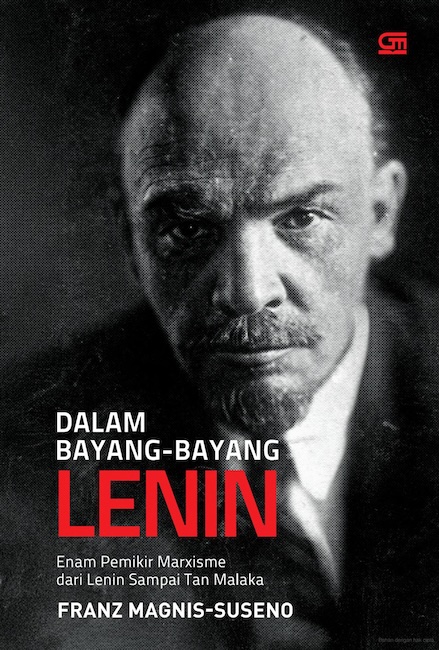
Here is the story. In Makassar, in August 2019 police and vigilantes in religious dress seized two books by Magnis-Suseno, Pemikiran Karl Marx (Karl Marx's Thought) and Dalam Bayangan Lenin (In Lenin's Shadow). They took them for communist propaganda. The books are nothing of the kind. They are sustained attacks on Marx and Lenin. Their author, a German-born Catholic priest, had already recorded in his preface that a crowd burned his Marx book back in 2001. He was furious. He had written it, he explained, precisely to refute Marxism and Leninism, since to fight an idea you must first understand it. It is a reasonable defence. It also turned out to be no protection at all.
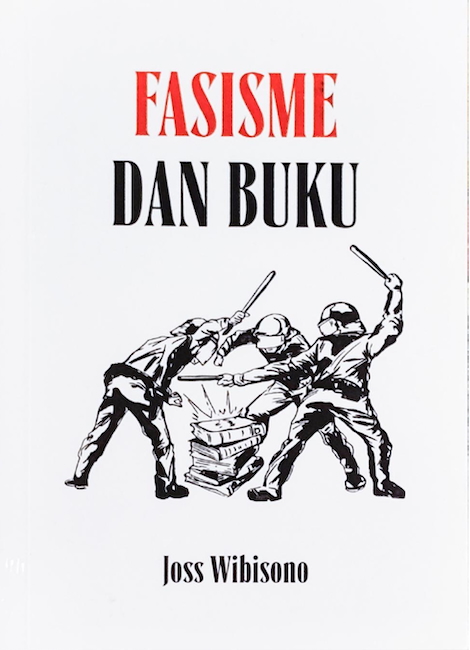
Joss Wibisono does not let the irony pass. In Fasisme dan Buku (Fascism and the Book), he proposes, with a satirical edge, that Magnis-Suseno himself be enlisted to draw up a list of Indonesian books carrying the teachings of Marx and Lenin, ‘seperti yang dilakukan oleh Wolfgang Herrmann pada zaman Hitler berkuasa di Jerman dulu’ (‘as Wolfgang Herrmann did back when Hitler ruled Germany’). The raiders would then have a reliable index and would never again seize a book by the priest. ‘Moga-moga sang rohaniwan ini bersedia untuk berperan sebagai Wolfgang Herrmann,’ he needles (‘one hopes the reverend will agree to play Wolfgang Herrmann’), since the two men are equally given to denouncing the left.
The barb is cruel. A serious question sits inside it. Why would anyone bother to attack an idea that has already been gagged? The Provisional People's Consultative Assembly Decree No. XXV of 1966, the notorious TAP MPRS XXV, banned the spread of Marxism and Leninism. Marx and Lenin cannot legally circulate in Indonesia. So what is the use of a critique of thinkers already buried alive?
Wibisono is blunt. Such a critique, he writes, can even be cowardly, no better than going after a man already gagged: ‘Layaknya bertinju melawan seseorang yang diikat kedua tangannya’ (‘like boxing someone whose hands are tied’). The line landed hard for me and I agree with him. Magnis-Suseno ought first to have demanded the repeal of TAP MPRS XXV, so that Marx and Lenin could be read, and only then published his rebuttal. Readers could then weigh the critique for themselves against the originals. As things stand, the banned books may not circulate while the book attacking them may. ‘Betapa timpang!’ Wibisono protests (‘How lopsided!’), and he is right.
The comparison with Nazi Germany is bold, perhaps too bold for some readers. Yet Wibisono knows what he is doing, and the care shows. Wolfgang Herrmann, the Nazi librarian who drew up the blacklist of ‘un-German’ books, at least read them before banning them. He compiled his index on his own initiative, as a librarian in Berlin, and he understood what he was condemning. He classified. He knew the contents. He was, in the regime's eyes, a useful pair of hands, the kind a government can later disown as a rogue element should the dirty work go wrong. Wibisono notes that the New Order practised the same trick of scapegoating its own functionaries.
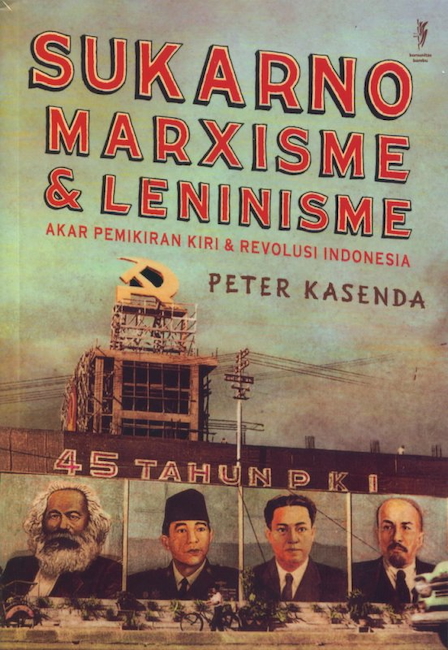
Set the Indonesian police beside Herrmann. They plainly do not read the books they confiscate. At most they read the titles. Peter Kasenda's Sukarno, Marxisme dan Leninisme, seized by police in Probolinggo, is in fact far more about Sukarno than about either ideology. Who cares? The cover carried the words marxisme and leninisme. That was enough. Confiscate it.
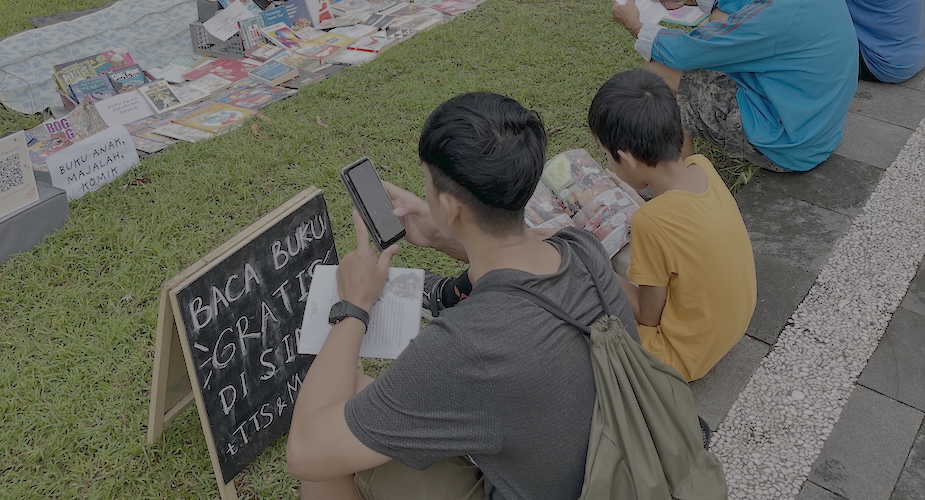
The raids were not isolated. Wibisono lays them out as a sequence running from late 2018 into 2019, in Pare near Kediri, then on a single day in Padang and Tarakan, then Probolinggo, then Makassar. In Probolinggo two young volunteers of a mobile reading project were detained and questioned before their books were taken, four titles in all, three on Communist Party leader DN Aidit and one on Sukarno. Earlier, after a meeting with parliament, the Attorney General had floated a nationwide sweep of communist books. In Makassar the raiders were not police at all but a self-styled Islamic brigade who carried off a pile of books from a bookshop without paying, and certainly without reading. The towns changed. The reflex did not.
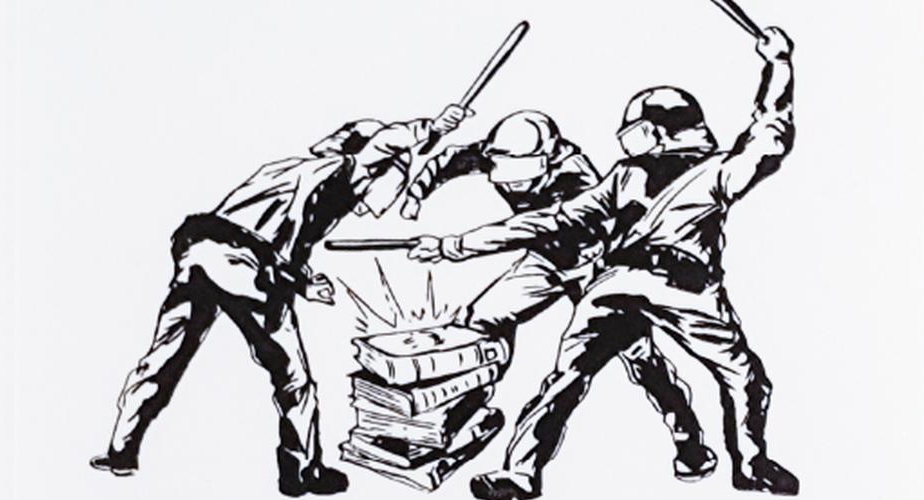
Here Wibisono lands his sharpest point, and for me it is the heart of the book. ‘Di sini tampak sesuatu yang ganjil,’ he writes (‘Something strange shows itself here’): the literacy campaigners whose whole purpose is to make people fond of reading must face an apparatus of power that does not read at all. The raiders parade their ignorance, possibly with pride, as people who have not opened the books and have no intention of doing so. A movement built to spread reading is blocked by power that has no interest in what is on the page. I have spent enough years in front of classrooms to find this the bitterest joke in the whole book. We coax students toward the printed word; the state shows up to cart it away.
This stupidity, Wibisono argues, is an inheritance from the dictatorship, and here the German parallel sharpens rather than softens. The Nazi machine was systematic. A pro-Nazi student union ran a four-week campaign against the ‘un-German spirit,’ complete with twelve theses, that ended in coordinated bonfires. On 10 May 1933, in Berlin and twenty other cities, the works of some 251 authors went into the flames. Nazi propaganda minister Joseph Goebbels arrived to give a speech, howling against Jews and communists before a crowd Wibisono cites as around 70,000, while roughly 20,000 books burned. Indonesia's regime needed no bonfire. It changed the spelling. By reforming orthography, Wibisono writes, the dictatorship showed itself ‘lebih cerdik sekaligus lebih licik lagi’ (‘more clever, and at the same time more cunning’), since the young would no longer trouble with books set in the old system. The ideas in those older books were quietly forgotten. No fire required.
The methods differ in another telling way. Hitler announced his denationalisations openly, stripping enemies of citizenship and daring the world to object. The New Order was sly. It never proclaimed any such policy, Wibisono points out, because it feared the United Nations and the Universal Declaration of Human Rights, which forbids rendering a person stateless. Instead it simply declined to renew the passports of Indonesians stranded abroad, most of them students, after putting them through a screening. No announcement, no name for the act, just a quiet door closing. The result was the same. People could not come home.
There is something more disturbing still, and it explains why the two countries part ways. The Nazis lost the war, and their ideology was buried with them. The party was outlawed, and anything that smelt of Nazism became taboo. Germany built a whole culture of reckoning with the past, what it calls Vergangenheitsbewältigung. Indonesia? The New Order collapsed because it rotted from within, undone by monetary crisis and corruption, not because a stronger alternative defeated it. So its ideology was never interred. ‘Tersingkirnya rezim diktator tidak serta merta berarti lenyapnya ideologi rezim kanan ini,’ Wibisono writes (‘the removal of the dictatorship does not at once mean the disappearance of this right-wing regime's ideology’), and the evidence is all around us.
Abdurrahman Wahid, better known as Gus Dur, tried to repeal TAP MPRS XXV and failed under pressure from the military. Megawati Soekarnoputri did not dare make 21 May, the day Suharto fell, a national day of reckoning. Indonesia has no equivalent of Germany's day of liberation.
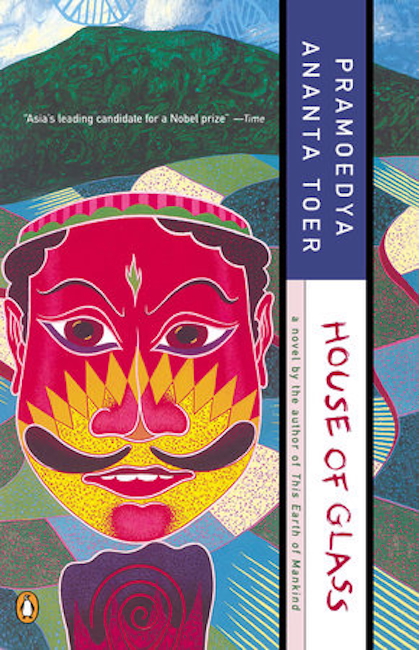
The most generative move in the book is a turn outward, to what Germans call exile literature, Exilliteratur. Writers driven out by Hitler kept working abroad and several of them, strikingly, wrote about this archipelago. Bertolt Brecht produced the song Surabaya Johnny, set to music by Kurt Weill. Vicki Baum, who had travelled to Bali to visit the painter Walter Spies, wrote the novel Liebe und Tod auf Bali (Love and Death in Bali), published in Amsterdam in 1937. Pramoedya Ananta Toer wrote his Buru Quartet in exile too, though his was an internal exile, on the prison island of Buru.
Amsterdam is the hinge of the comparison. Dutch publishers such as Querido and Allert de Lange kept the banned German writers in print while Hitler tried to erase them. Decades later, the Amsterdam imprint Manus Amici, founded by the exiled journalist Soeraedi Tahsin, a former editor of the daily Bintang Timur whom Sukarno had sent to Mali as ambassador, carried Pramoedya into Dutch translation. Without Amsterdam, Wibisono suggests, the world might never have met the author of the Buru Quartet. Censorship is broken, in the end, not by counter-censorship but by publishing.
The fates of the exiles diverge in a way that maps neatly onto the two regimes. Brecht went home, returning to East Berlin after the war and founding the Berliner Ensemble with Helene Weigel; his disgust at the anti-communist fever of McCarthy's America helped push him back. Baum stayed, took American citizenship, and never lived in Germany again. Indonesia's exiles, for the most part, could not go home at all. A few returned to visit once the strongman was gone, but the anti-left politics he left behind made permanent return impossible, and writers such as Utuy Tatang Sontani and Agam Wispi died in exile. Wibisono notes that Agam Wispi had already pointed to the German parallel, citing Anna Seghers and Brecht, in a 1992 interview, an opening no one took up until now.
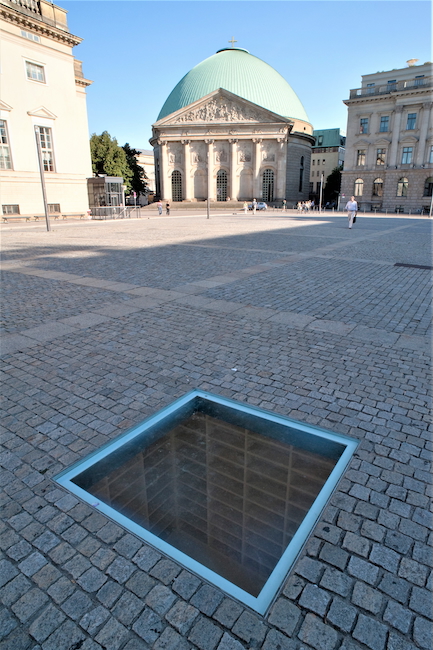
The book closes on Heinrich Heine. Wibisono quotes the three lines carved into the memorial at Berlin's Bebelplatz, the square where the books burned, and renders them in Indonesian: ‘Ini barulah awal belaka / di sana tatkala orang membakar buku / pada akhirnya orang juga membakar manusia’ (‘This is only the beginning; where people burn books, in the end they burn people too’). Heine wrote the lines in 1820. It took 125 years for the prophecy to be fulfilled, in the Holocaust and its six million dead. The memorial itself, Micha Ullman's sunken room of empty white shelves beneath a glass plate in the cobblestones, has stood there since 1995.
And Indonesia? The book reaches for the figure of three million, the toll once boasted of by one of the killings' own executioners and, by grim coincidence, the membership the Communist Party had claimed for itself. Whatever the real number, and credible estimates run from several hundred thousand to well over a million, the mass killings of 1965 and 1966 have no memorial at all. ‘Kapankah Indonesia memiliki monumen untuk mengenang korban-korban rezim diktator?’ Wibisono asks at the close (‘When will Indonesia have a monument to remember the victims of the dictatorship?’). The question hangs there. It hurts because it has no answer.
That, finally, is why this slim book matters. Fasisme dan Buku is not only a catalogue of official folly. It is an argument that fascism in Indonesia is unfinished business, and that the banning of books is among its earliest symptoms. The digital age has made the raids look more absurd than ever. An e-book travels anywhere in seconds, and you cannot raid a file. Yet absurdity has never stopped an anti-intellectual regime, as Wibisono dryly observes. They will go on confiscating books they have never opened.
Wibisono has read both his subjects, Germany and Indonesia, with real care, and the comparison holds because of it. The people who raid the books have read neither. Stupidity, it turns out, is universal. It crosses borders and centuries without effort. The least the rest of us can do is keep reading, and keep saying so out loud.
Fasisme dan Buku, by Joss Wibisono. Tanda Baca, 2026.
Rony K. Pratama (ronykpratama@staff.uns.ac.id) teaches applied communication, data literacy, and new media journalism at Universitas Sebelas Maret, Surakarta.