The rush to create location 'snapshots' for social media has come at a cost
'1001 Instagrammable spots'. If you lived in Indonesia during President Joko Widodo’s first term (2014–2019), you certainly knew that phrase. Arief Yahya, Tourism Minister at the time, coined and promoted the phrase to encourage the development of tourist destinations centred around photo spots as a strategy to meet the president's target of 20 million foreign tourists.
As a professional travel writer since 2013, I came of age in the industry during the very period when the Minister was loudly championing that visual gimmickry. Being a staunch idealist, I naturally refused to simply go along with the Ministry’s trend – even though many travel bloggers and influencers were getting involved at the time.
The spirit of travel that I experienced and documented on my personal blog could be described as 'counter-current'. I had no desire to merely recount – let alone glorify – a place's beauty.
When traveling to various regions – whether for editorial assignments or simply to hunt for story material – I often felt weary, jaded and exhausted by the jarring, artificial sights that assaulted my eyes. A 'barrage' of artificial installations had taken over many tourist destinations, particularly those set in nature. These features typically included oversized, multi-coloured signs displaying the location's name. Sometimes, elements like swings, heart-shaped signs, or giant boat replicas were added, thereby diminishing the site's authenticity and natural beauty.
And that wasn't even half of it. I frequently encounter miniature versions of ‘Europe’ across many regencies in Java – ranging from the Arc de Triomphe in Kediri (East Java) and Stonehenge in Yogyakarta to an Eiffel Tower sharing a cramped space with a Merlion statue and the Kaaba in Madiun (East Java).
Whenever I come across such places, I am always left with a host of questions. Who, exactly, is this kind of tourism development for? Do we really need these artificial novelties just to draw revenue from visitors?
What’s wrong with tourism development in Indonesia?
It is a fascinating yet heartbreaking fact that when I revisit some of these places, many have ultimately collapsed – bankrupt and abandoned. Tourists, too, have come to realise they are bored because every place feels the same. The authenticity of local cultural narratives, history and unique natural features – elements that should be potential strengths – are overshadowed by visual gimmicks that offer only fleeting appeal.
Nurdin Razak – an ecotourism expert, founder of the Indonesia Ecotourism Institute and a resident living on the edge of Baluran National Park (who is also my mentor) – offered a stinging observation.
'That tourism trend reveals a woeful lack of pride and creativity among Indonesians when creating tourist spots. They simply imitate others rather than taking pride in their own villages or regions by highlighting their local identity,' Nurdin said. 'Yet, this local character is vital; it represents the sense of rootedness we must preserve as a great nation.'
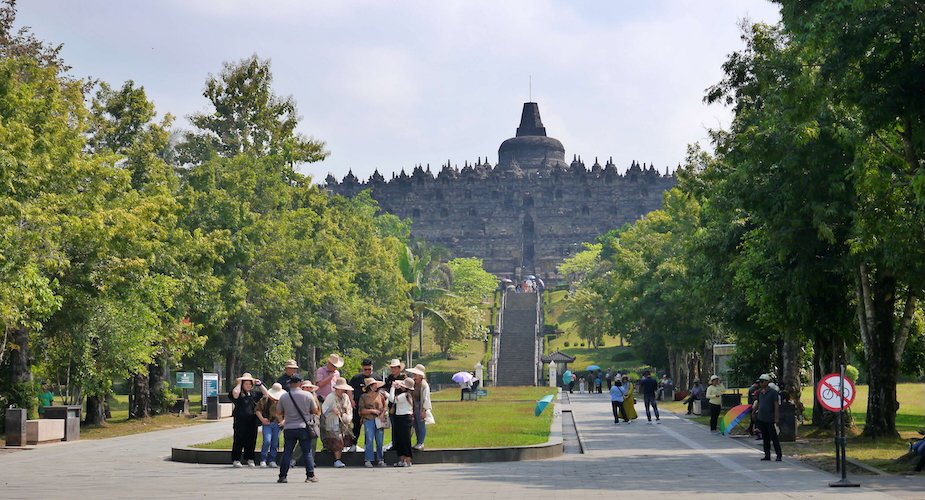
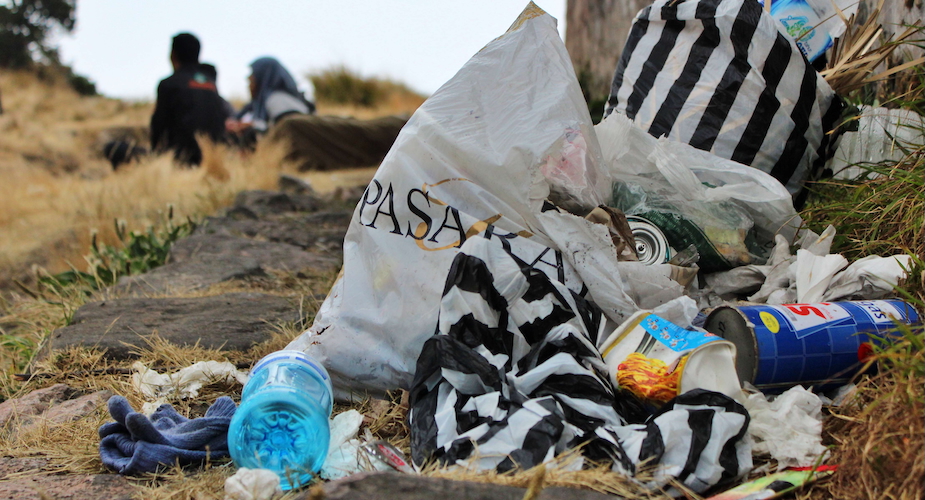
Mindless imitation, exploitation and a loss of local context – I must be honest, this is the face of our tourism industry. And that is without even touching upon issues like illegal levies, unregulated parking, litter and uncontrolled visitor numbers – all of which are consequences of what we know as 'overtourism'.
When the Ministry of Tourism launched the '10 New Balis' program, we knew it was a case of mindless imitation. The 'New Bali' label undermined the autonomy and confidence of local regions to develop their own unique resources. Even Bali itself – whose name has been 'borrowed' – has struggled for years to manage its own tourism issues. Overtourism in Bali is a constant topic of discussion, from mass media to academic research. Far from prospering, the local community has instead been marginalised, while the quality of life and the environment have deteriorated. We have frequently seen Bali battered by floods and plagued by piles of waste in tourist areas.
Criticism of Bali’s tourism growth should apply equally to the '10 New Balis' and other regions too. Nurdin Razak often notes that this phenomenon arises because people prefer chasing 'quick money' – prioritising short-term profit – over long-term sustainability.
Beyond Bali: Lessons from Borobudur
I have lived for nearly five years in Magelang, a regency neighbouring Yogyakarta. For the past two years, I have resided in Candirejo, a tourism village located about three kilometres from Borobudur Temple. This world’s largest Buddhist temple is a source of pride for the people of Magelang – though, unfortunately, many still mistakenly believe it is located in Yogyakarta.
For me, beyond its magical allure, the rural area surrounding Borobudur Temple offers a life that is truly calm, peaceful and unpretentious – an ideal setting for someone like me whose work involves a great deal of writing. In Candirejo and several neighbouring tourism villages, community-based tourism activities are thriving in a healthy manner.
Beneath this tranquillity I observe a long-standing anxiety among the community regarding the survival of their culture and their land. This is because their relatively 'slow' way of life is being forced to keep pace with the rapid growth of tourism demanded by the government – especially after the area was designated as one of five Super-Priority Destinations by President Joko Widodo in 2019. The other four destinations are Lake Toba (North Sumatra), Mandalika (West Nusa Tenggara), Labuan Bajo (East Nusa Tenggara) and Likupang (North Sulawesi).
At times, I feel that my moral stance – when authoring stories or creating educational content about sustainable and responsible travel – clashes with, or even runs counter to, the interests of the state and the forces of capitalism. An area where tourism activity ought to be limited is instead being promoted to attract massive numbers of visitors.
The structural fragility of Borobudur Temple is not a new issue. The quota allowing thousands of people to climb the temple daily seems excessive. Muhammad Yusuf, an academic from Universitas Gadjah Mada, along with his research team, has released a study recommending a maximum limit of 300 visitors per day for the temple. The commercial ambitions and profit-driven approach of PT Taman Wisata Candi (a subsidiary of a state-owned enterprise) clearly conflict with – and lack integration with – the preservation plan of the Borobudur Conservation Agency.
A look back at the New Order era reveals that the development of the Borobudur Temple area in its current form displaced numerous settlements and marginalised local communities. To this day, the benefits of Borobudur Temple – as well as the surrounding five-star hotels and elite resorts – have yet to be significantly felt by the local population.
I have spoken on several occasions with local cultural figures and environmental activists in the Borobudur area. They argue that much like the situation in Bali, the water source crises and environmental issues plaguing Borobudur stem from tourism development imposed by Jakarta – a reference to the seat of government officials and the Ministry of Tourism.
Even the grand Vesak celebrations are no exception. A prominent Buddhist figure once told me that the organisation of Vesak and the lantern-release ceremonies at Borobudur have become overly commercialised, straying far from the noble Buddhist values of simplicity and compassion. In June 2023, I published a brief but critical report that presents the Buddhist viewpoint from the grassroots level.
Time to shift towards regenerative tourism
In a 2023 virtual public lecture, Myra Puspasari Gunawan criticised the government's tourism development paradigm. The tourism planning academic and researcher from the Bandung Institute of Technology (ITB) cited several destinations included in the Super-Priority Destinations and 10 New Balis programs – including Borobudur.
She argued that, rather than fostering prosperity, tourism development based on such concepts leads to 'tourism leakage' – a situation where tourism revenue fails to benefit local communities, flowing instead to foreign entities or major investors. This is the result of policies that are neither effective nor efficient.
According to Myra, shifting mindsets, enhancing human resource capacity and governance improvements are fundamental to transforming Indonesia's tourism sector. She emphasised the importance of planning that prioritises a people-centred economy, ensuring tourism truly delivers social justice for residents.
This aligns with the conceptual views of Australian academics and researchers Loretta Bellato and Anna Pollock. They propose a new paradigm known as 'regenerative tourism'. This approach seeks to go beyond the standard sustainable tourism models defined by UN Tourism, radically shifting the focus from quantity to quality.
Regenerative tourism development places greater emphasis on environmental carrying capacity and positions local communities as key actors and decision makers rather than mere objects. There is absolutely no room for the worship of capitalism within this paradigm.
So, when will the reset happen?
As long as ministerial appointments are driven by political patronage rather than meritocracy and the mindset persists that tourism is a cure-all for every societal ill, Indonesia’s tourism sector will go nowhere. And so, my task, moral duty and responsibility as a travel writer must continue.
Rifqy Faiza Rahman is a travel writer and content strategist for TelusuRI, interested in ecotourism, conservation and Indigenous communities (Masyarakat Adat). Throughout his writing career, he has published numerous articles (mostly in Indonesian) in magazines and travel media. He is currently pursuing a master's degree in the Department of Anthropology, Universitas Gadjah Mada.