
Lessons from Aceh’s Smoke-Free Area policy
With one of the highest smoking prevalence rates in the world, the challenge issued to Indonesia on World No Tobacco Day (WNTD) is becoming increasingly urgent. Observed on 31 May, WNTD offers a moment to reflect on the implementation of various tobacco control efforts. The theme this year is ‘Unmasking the appeal – countering nicotine and tobacco addiction’.
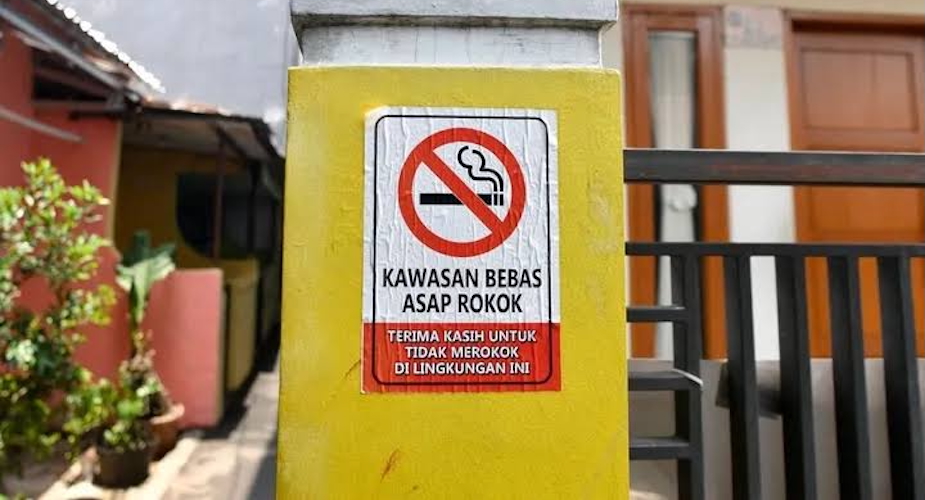
Since 2012, the obligation to establish Smoke-Free Areas (Kawasan Tanpa Rokok/KTR) across Indonesia’s provinces and regions has been a key national tobacco control intervention. Local governments are tasked with establishing smoke-free policies and ensuring their effective implementation, monitoring and enforcement across nine designated areas. These include healthcare facilities; formal and informal educational institutions; children's activity areas and places of worship but also extend to public transportation, sports facilities, workplaces, public areas and other places designated by the relevant authority.
Following the rapid adoption of Smoke-Free Area regulations in Aceh – the site of our research– the province was once something of a success story. Using issue frame analysis, we found that the debate over the regulation progressed through several distinct perspectives, including public health and safety, professional responsibility, economic implications and political feasibility. However, these supportive arguments alone were insufficient to drive policy change. Although strong pro–smoke-free area (SFA) frames had existed for years, they did not translate into meaningful legislative action.
The policy landscape shifted in 2019 with the emergence of a legislative policy champion. This momentum was further strengthened by encouragement from the national government and, importantly, by aligning the regulation with Islamic principles and responsibilities. When political leadership, institutional support, favourable timing and locally relevant framing came together, the Qanun was enacted within just eight months.
This case highlights that successful policy-making depends on more than robust evidence or persuasive arguments. Leadership, institutional support and political timing all play critical roles. Equally important, policy messages are far more likely to gain traction when they align with local cultural, political and religious values.
Unfortunately, when it came to implementation of the policy, the story did not end so well.
Countering the ‘false appeal’ of cigarettes
The World Health Organisation defines the ‘false appeal’ of cigarettes as the artificial attractiveness created by the tobacco and nicotine industry to make harmful products appear desirable, modern or harmless, especially to young people. In 2026 the WNTD theme highlights the importance of exposing tobacco industry strategies that make smoking appear attractive — especially to young people. In this context, strong Smoke-Free Area implementation is one of the most effective tools for ‘unmasking’ that appeal. When Smoke-Free Areas are implemented comprehensively — without cigarette advertising in public spaces, without smoke exposure in public places and with consistent enforcement — the normalisation of smoking gradually declines. Cigarettes will no longer feature as part of an ‘ordinary’ or even ‘cool’ lifestyle, but rather as a restricted behaviour because of its risks to public health.
Conversely, when Smoke-Free Area implementation is weak, public spaces become filled with indirect promotions and visual exposure that reinforce the appeal of smoking. Children and adolescents remain easy targets because they continue to see smoking as something normal and socially accepted.
This is where the broader relevance of Smoke-Free Areas lies: not only in protecting people from second hand smoke exposure, but also as a structural strategy to break the chain of nicotine attraction from an early age.
A policy that ‘moved quickly’
Nationally, the obligation to establish Smoke-Free Areas has existed since 2012, but Aceh did not enact Qanun No. 4 on Smoke-Free Areas until 2020. Once underway, however, the legislative drafting and enactment process moved quickly, taking only around eight months.
Our research shows that this acceleration was not coincidental, but due to the convergence of several key factors: the presence of policy champions (key actors with authority); encouragement from the central government and the ability to frame Smoke-Free Areas as both a public health responsibility and a moral obligation. Religious legitimacy — through the principle of protecting life within the framework of maqasid sharia (the higher purposes and underlying wisdom behind Islamic law)— also strengthened the policy argument. Our study concluded that when the right message is delivered by the right actors in the right context, policy change can happen quickly.
Implementation is not simple
But problems emerged after the regulation was passed. Based on our observations over the last five years, the implementation of Smoke-Free Areas in Aceh has not been optimal. One key reason was a change in the principal actors supporting the measures. When those who had initially advocated the policy ceased to be in strategic positions, the political momentum to implement the policy diminished. This demonstrates that policy success depends not only on regulation itself, but also on leadership continuity.
Another reason for the failure to implement the policy includes the fact that provincial regulations have not been fully translated into district and municipal regulations. In Indonesia’s decentralised system, administrative authority — including supervision and enforcement — rests largely with local government. As a consequence, many Smoke-Free Area provisions are difficult to enforce. One of the clearest examples of this is the prohibition of outdoor cigarette advertising. Billboards and advertisements fall under the jurisdiction of district and municipal governments and often serve as a source of local revenue. Without aligned local regulations, such bans are difficult to implement.
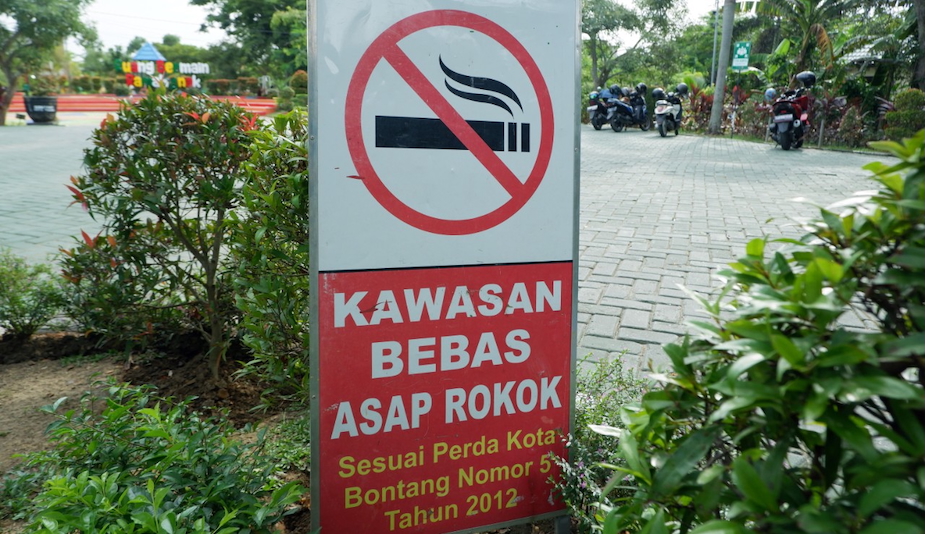
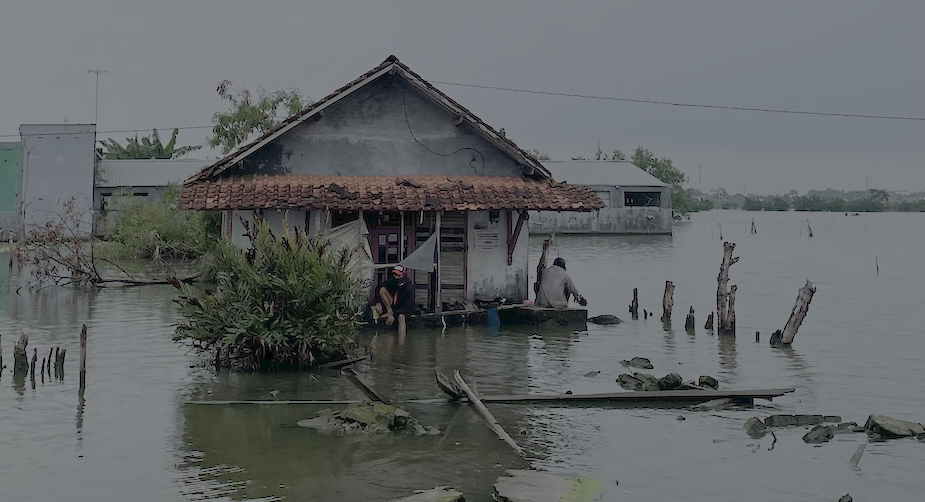
We also discovered that this issue becomes even more critical in a province like Aceh and other regions that are prone to natural disasters. During emergencies, people often take shelter in public spaces such as mosques, schools or evacuation centres — places that should ideally remain smoke-free. When Smoke-Free Area implementation stagnates, protection in these spaces cannot be guaranteed. This may trigger a ‘secondary crisis’ of increased risks of physical and mental health problems due to exposure to cigarette smoke, especially among vulnerable societal groups such as children and women.
A tangible form of public health protection
Aceh’s experience provides an important lesson: policy success does not end with enactment. Regulations must function as legal frameworks that are truly operational in practice.
This means that Smoke-Free Area policies need to be evaluated comprehensively — not only to ensure that regulations exist, but also that they can be implemented. This means ensuring a appropriate measures are in place including, harmonisation of regulations between provincial and district/municipal governments; strengthening law enforcement mechanisms; ensuring consistent political support across leadership periods and adapting policies to local contexts, including disaster conditions.
The primary goal of Smoke-Free Areas is not merely to fulfil regulatory mandates, but to protect communities from the dangers of cigarette smoke. Within the context of this year’s WNTD, effective Smoke-Free Areas also help ‘unmask’ the appeal of smoking — so that younger generations no longer see it as something worth imitating, but as a risk that should be avoided.
Rizanna Rosemary, Irwa Zakarsi, Fizzy Andriani, and Lisa Andrianti are researchers affiliated with the Indonesian Alliance of Communication Scholars for Tobacco Control (AAKIPT), collaborating with Elisabeth Kramer (UNSW) on research and publications supported by the Sydney Southeast Asia Centre (SSEAC).