The attack on Andrie Yunus exposed fractures in Indonesia’s spy agencies
The acid attack against human rights defender and Deputy Coordinator of KontraS (Commission for the Disappeared and Victims of Violence) Andrie Yunus on 12 March 2026, once again highlights the failure to protect human rights activists and advocates in Indonesia. The attack and the investigation that followed further underscores their chronic vulnerability even when their work is constitutionally protected.
Andrie Yunus is a prominent human rights defender. As Deputy Coordinator of KontraS, he was among the most vocal opponents of the revision of the Indonesian Military (Tentara Nasional Indonesia, TNI) Law, including by disrupting the behind-closed-doors discussions on the TNI Bill at the Fairmont Hotel and later testifying before the Constitutional Court during the judicial review of the law. The attack occurred shortly after these actions, fuelling widespread suspicion that his activism against the TNI Law reforms made him a target.
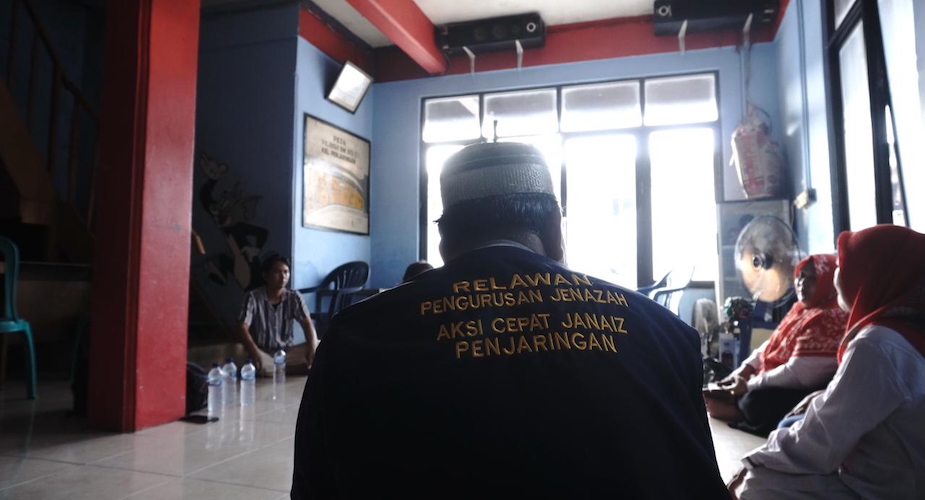
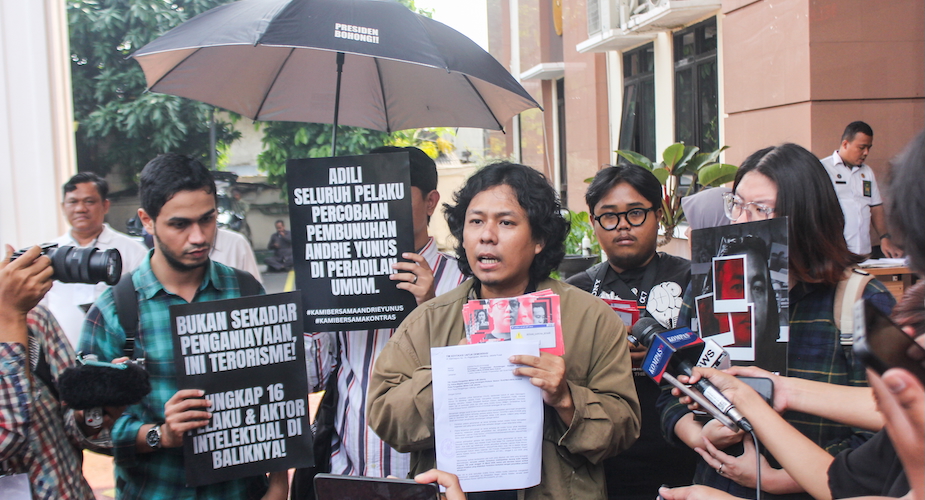
During the trial in the Military Court in late April, prosecutors accused the four suspects of carrying out and coordinating the attack on Andrie due to their personal vendetta against him. The fact that they are active military personnel within its Strategic Intelligence Agency (Badan Intelijen Strategis, BAIS) has undoubtedly raised questions about the activities of the intelligence wing of the TNI. It is plausible that the number of suspects in this case could stretch beyond four; the initial finding by the Advocacy Team for Democracy (Tim Advokasi Untuk Demokrasi, TAUD) alleged that as many as 16 individuals are part of what was a structured operation to murder Andrie. The trial concluded in June, with the four accused found guilty of carrying out the attack and sentenced to prison terms between one and half to three years.
The attack on Andrie represents the culmination of decades-long tensions between BAIS and KontraS. In 2006, then BAIS head Maj Gen Syafnil Armen claimed that several civil society organisations – including ELSAM (Institute for Community Studies and Advocacy), Imparsial (Indonesian Human Rights Monitor) and KontraS – were radical groups. It is noteworthy that that these organisations actively promote reform in security sector reform and the protection of human rights.
Frequent phenomenon
Since the reformasi era, attacks against activists and advocates in Indonesia have occurred with some frequency, attracting national attention. In April 2017, Novel Baswedan, then a senior investigator at the Corruption Eradication Commission (Komisi Pemberantasan Korupsi, KPK) had acid thrown in his face. The attack was carried out by two officers from the Indonesian National Police (Polri).
In October 2019 Golfrid Siregar, an environmental activist, was found dead under mysterious circumstances after years-long campaign against palm oil companies in North Sumatera; and in July 2010, politician Tama S Langkun, a former anti-corruption official who exposed the inflated bank accounts of several Polri members, was beaten and stabbed.
Perhaps the most (in)famous of all attacks on human rights defenders was the assassination of KontraS founder and notable human rights activist Munir Said Thalib in September 2004, aboard a Garuda Indonesia flight to Amsterdam. Garuda pilot Pollycarpus B Priyanto was tried and found guilty of the murder, whilst allegedly acting as an agent of the National Intelligence Agency (Badan Intelijen Indonesia, BIN).
Lack of protection and abuse of power
This history highlights a paradox in our understanding of Indonesia’s so-called ‘successful democratisation’. Following the fall of Suharto’s authoritarian regime, despite notable reforms to the institutions of governing politics and law and order, violence against activists has remained a feature in Indonesia. All too often, those critical of government policies or who champion the protection of certain groups are targeted for attack, sometimes with deadly consequences.
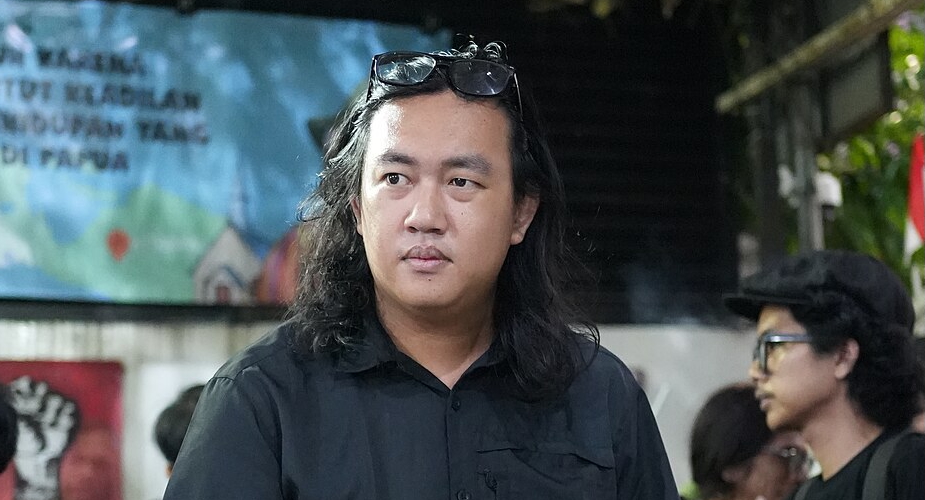
Andrie’s case is the latest reminder that speaking out critically against injustice and corruption still carries risk in Indonesia. This includes the absence of robust regulations to protect public defenders, many of whom are also activists/advocates and providers of structural legal aid. For over 15 years and three consecutive terms of administration, key revisions to the Advocates Law that would ensure the safety of lawyers as they execute their duties, has remained on the agenda of the National Legislative Program (Prolegnas), without deliberation.
The revision of this law is all the more urgent given that over the past five years, at least 15 public defenders have been criminalised or targeted by attacks due to their frequent handling of sensitive cases. This is also despite the existence of Legal Aid Law, which explicitly mandates the protection of legal aid providers.
Legal uncertainty and a public stunt
Andrie’s case also points towards the misuse of power by those from within the state’s intelligence bodies. The role of such institutions is to serve as a frontline of defence and an early warning system against threats to public safety or the state itself. The acts of the four intelligence officers sentenced in relation to Adrie’s case raise questions about the agency’s function including whether the actions of these military personnel are related to the function of intelligence? Simply put, were they working under orders of more senior figures within BAIS or beyond?
The slow and complex handling of this the case was itself highly unusual. From the beginning, Polri and TNI provided conflicting information about the suspects, and whilst the case was initially handled according to normal police procedure (Polri), the military police demanded the police transfer the investigation over to them on 19 March 2026, only six days after the police opened the investigation on 13 March 2026.
A lack of transparency around the investigation was made worse by discrepancies in the number of suspects and the inconsistency of the suspects’ photographs between those produced by Polri/TNI and by civil society organisations. This was reflected in the differing statements issued by the TNI and the Polri during their respective press conferences on 18 March 2026. While the Polri identified two alleged suspects, with the initials BHC and MAK, the TNI identified four alleged suspects, with the initials NDP, SL, BHW, and ES.
Preliminary evidence gathered independently by TAUD, including 37 CCTV recordings and a used bottle believed to have stored the acid, appears to have been largely overlooked. During the military trial, the military prosecutor examined only the CCTV footage directly relating to the four defendants, without reviewing footage from other CCTV locations which, according to TAUD, implicated at least 16 alleged perpetrators involved in the acid attack against Andrie Yunus.
When the then head of BAIS, Lieutenant General Yudi Abrimantyo finally resigned, it came after a significant delay. The TNI described it as a ‘handover’. The impression given was that his resignation was merely a formality intended to defuse the political situation. According to the prevailing regulation, the head of BAIS reports directly to the TNI Commander and is accountable to him, with day-to-day operations coordinated by the Chief of the General Staff. In terms of both criminal and command accountability, no serious and transparent steps have yet been taken to clarify the responsibility of Abrimantyo’s superiors in relation to the attack on Andrie.
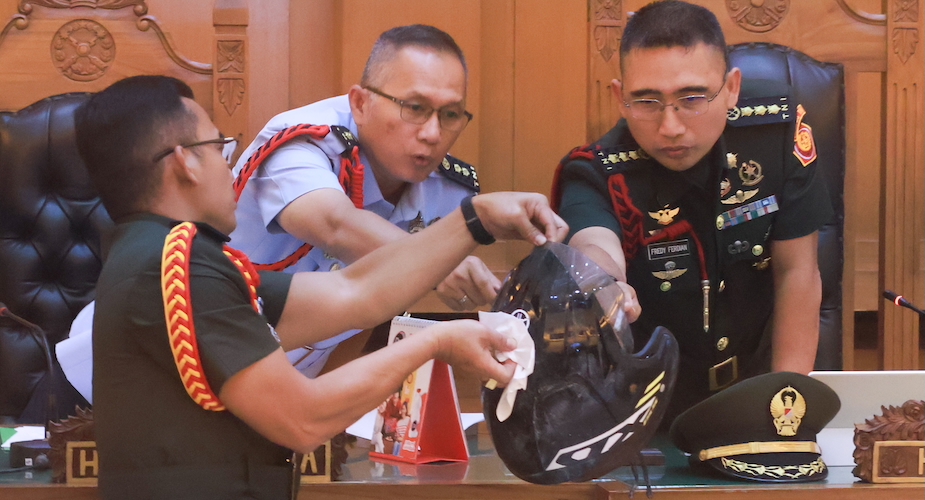
The public stunts did not stop there. From the very beginning, the military trial appeared to be merely performative, rather than a genuinely professional legal proceeding. This was reflected in the way evidence was presented and displayed to the public (without gloves or adequate handling equipment), as well as in unusual remarks made by the judges, such as questioning the defendants about how they poured the acid. The impression was further reinforced when the panel of judges requested that the military prosecutor forcibly bring Andrie Yunus to the courtroom. On 18 May 2026, the controversy escalated further when TAUD filed an ethics complaint against the panel of judges with the Supervisory Chamber of the Supreme Court over alleged ethical violations during the proceedings.
Disorganised intelligence coordination
Aside from the criminal investigation, this case serves as a test of the credibility of Indonesia’s intelligence agencies in carrying out their mandated functions. The measure of intelligence performance is ultimately in its legal compliance, the proportionality of its actions, and level of propriety in conducting covert operations. If Indonesia is to live up to its claims to be a democratic country that upholds multi-layered oversight in the intelligence sector, this case must be addressed and resolved fairly and transparently. It should be a turning point in the management of Indonesia’s intelligence operations in the future.
Conflicting statements from Polri and TNI about the investigation into the attack on Andrie indicates that intelligence coordination between the security agencies is not functioning as it should. Tasked with coordinating national intelligence operations, BIN has made no public statements on the case.
In late March, in response to the high level of public outrage about this case, Commission I of the House of Representatives (DPR) responsible for oversight of defence, foreign affairs, communications and informatics and intelligence, established the Intelligence Oversight Board (Tim Pengawas, Timwas). Whilst the creation of the board was a move in the right direction it has yet to take any concrete steps, such as providing updates on the progress of its investigative team. Given that the military trial has now concluded, it would seem overly optimistic to expect the new body to make transparency of its investigation a priority. Without it, this well-intentioned initiative risks appearing as yet another stunt.
As mandated by the National Intelligence code of ethics (BIN Regulation No. 7 of 2017 on National Intelligence Ethics Code) the government should immediately establish an Ad Hoc Intelligence Ethics Council. The establishment of an Ethics Council can ensure accountability mechanisms are in place and mechanisms to punish intelligence personnel who violate the code of ethics.
It is also crucial to establish an independent joint fact-finding team into the attack on Andrie Yunus comprising experts and representatives from CSOs, government officials, law enforcement and other stakeholders in order to provide balanced reporting to the public.
At this point, the choice lies in the hands of the government: whether to treat the case of Andrie Yunus in the same way as those of Novel Baswedan, Tama S Langkun, Golfrid Siregar and Munir Said Thalib, or to take a different path. For its part, the Indonesian public are increasingly attuned to recognising and calling out public stunts in place of real accountability. They are demanding concrete action against those who carry out these crimes, justice for victims, transparency and deep institutional change.
Yokie R Isjchwansyah (isjchwansyah@gmail.com) is a Research Fellow for Security Sector Reform at AMAR Law Firm & Public Interest Law Office. Airlangga Julio (airlangga@amarlawpilo.com) is a Senior Associate at AMAR Law Firm & Public Interest Law Office and Andrie Yunus’s attorney from the Advocacy Team for Democracy (TAUD). For more about their work visit here.