No single voice can speak for the Seko people. That is exactly the point.
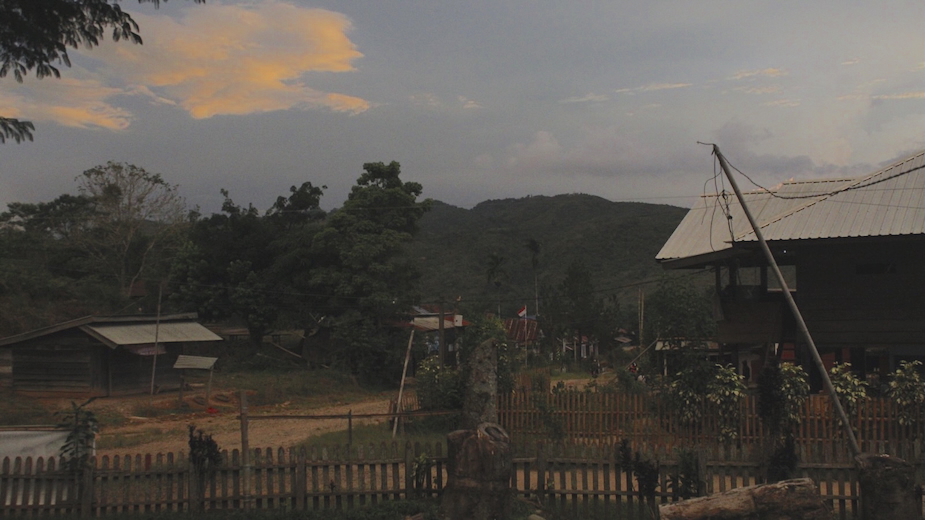
The night I arrived in Seko in South Sulawesi’s North Luwu regency, most of the hillside was dark. A few houses glowed faintly – the village runs on small water turbines, and the power reaches some homes more reliably than others. To'Bara, the community's customary leader, received me in one of the dimly lit ones, a wooden house that carried the warm, fermented smell of cacao. The highlands here are cacao country; the scent clings to everything. We talked for a long time. At some point I asked him how the Seko people make decisions – the big ones, the ones that matter. He set down his glass and answered without hesitation.
‘We must do Mukobu’, he said. ‘We involve the three hearth stones. Without that, any decision is lame.’
I did not fully understand him then, but over the days that followed, as I sat in on community gatherings and listened to elders debate everything from land disputes to government proposals, the meaning of that phrase slowly came into focus.
'Mukobu' is the Seko word for collective deliberation. It is the process by which every significant decision affecting community life must pass through a forum of three distinct voices: adat (customary tradition), religion and local government. No single voice can outvote the others. No leader – not even To'Bara himself – can give a unilateral yes or no on matters that affect the community. The decision belongs to everyone, or it belongs to no one.
Three stones
To understand why this matters, you need to picture a traditional Seko kitchen. The cooking pot rests on three large stones arranged over the fire. Remove one stone and the pot tips. The contents spill. Nothing gets cooked.
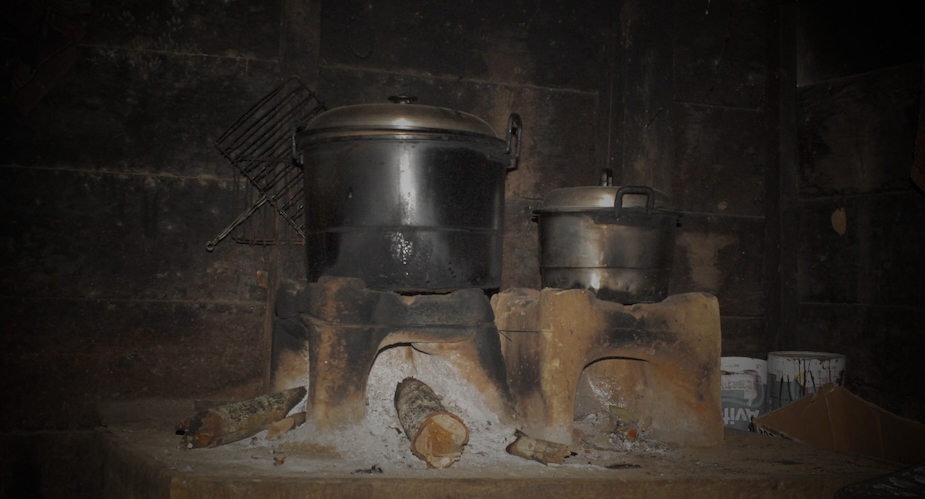
This is not merely a metaphor the Seko uses to explain Mukobu. It is the image they grew up with, the thing that makes the logic of the system feel as obvious as gravity. In practice, the three stones are three institutions. The adat pillar carries responsibility for ancestral law, land rights and the social fabric that holds the community together. The religious pillar brings moral and spiritual guidance. The village government handles administrative matters and the formal interface with the state.
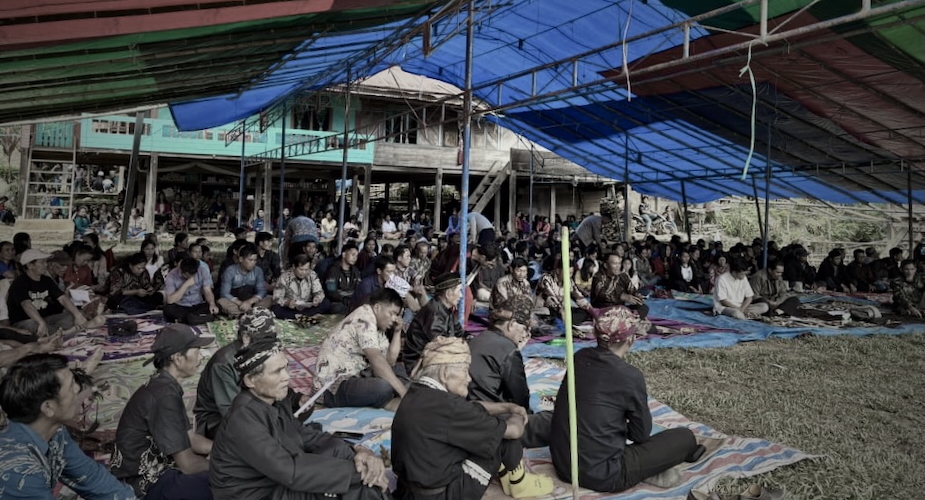
When Mukobu is convened representatives of all three sit together on woven mats, in a circle, without hierarchy. For larger deliberations involving the broader Seko region – which spans Seko Padang, Seko Tengah and Seko Lemo – gatherings are held at the Rasang Pukobuang, the traditional assembly hall.
The process is slow by design. There are no vote counts. Agreement is reached through sustained conversation sometimes lasting hours, sometimes reconvening over several days. The mat, as locals say, does not get rolled up until every voice has been heard and every doubt has been addressed. ‘Mukobu makes the decision together’, To'Bara told me, ‘and makes the responsibility the same. That is the whole point’.
Who leads?
One of the more surprising things about Seko society is that its egalitarianism extends even to leadership succession. The community does recognise lineage. Families known as rapu tobara – leader clans – carry a certain status. But that status does not automatically produce a leader. Authority must be conferred through Mukobu. The community deliberates, reaches consensus, and installs a leader collectively. The position is earned through recognition, not inherited by right.
The same logic applies when rules are broken. Mukobu also functions as a customary court. When a social transgression occurs, the forum convenes to hear the case and determine a sanction – known as labu. For territory-wide matters, To'Bara attends as the adat representative. For disputes within a single village, that seat belongs to the Matua Lipu – a village-level customary figure who carries the same representative role at a smaller scale. Some cases are straightforward, the penalties already established by adat, and the ruling is swift. Others require extended deliberation. Either way, the outcome carries the weight of collective agreement, which gives it a moral authority that a top-down ruling simply cannot match.
A wall outsiders cannot climb
In recent years, the Seko highlands have attracted growing interest from outside investors and development agencies. Communities like this one, with large territories of customary land, often find themselves targeted by projects whose proponents prefer to work quickly and quietly – approaching a few key individuals in private meetings, extracting signatures, presenting the community with a done deal.
That strategy does not work in Seko. ‘If the decision does not come from Mukobu, it is not valid’, To'Bara explained to me. ‘A one-sided decision makes everything lame’.
Any outsider who wants something from Seko land must bring their proposal before the full forum. They must sit on the mat. They must state their intentions openly. They must answer questions from all three pillars and wait for a collective response. There are no shortcuts and no back channels. Not a single customary leader, village official or religious figure has the individual authority to commit community land to anything. The system makes that structurally impossible.
This is what makes Mukobu so effective as a form of protection. Its strength does not depend on any one person’s integrity or courage. It is baked into the process itself. Transparency is not an aspiration – it is a requirement.
A living system, not a fixed one
There is a tendency in development discourse to treat indigenous governance as something quaint: worthy of respect, perhaps, but not quite up to the demands of the modern world. Mukobu challenges that assumption – but not in the way one might expect.
It would be tempting to describe Mukobu as an ancient system that predates the Indonesian state, but the three-pillar structure as it exists today is probably not that old. Organised Islam and Christianity only reached Seko about a century ago. The Indonesian republic’s administrative presence came later still. What appears to have happened is something more interesting: as each new institution arrived and became a real force in people's lives, Mukobu absorbed it. The religion pillar and the government pillar were not always there. They were added because the logic of the system demanded it – if an institution holds genuine authority over the community, it needs a seat on the mat.
This raises an uncomfortable question. What did Mukobu look like before any of this? And what happens if the balance shifts again? Those questions remain open.
What does seem durable is the core principle underneath the structure: that no decision affecting everyone can be made by anyone alone. The three pillars are, in a sense, the current expression of that principle – not its origin.
On my last evening in Seko, I sat again with To'Bara under the turbine’s dim light – steady enough to see by, no more. He seemed unbothered by the question of whether the outside world recognised the sophistication of what his community had built.
‘We have always done it this way’, he said. ‘We will keep doing it’.
Outside, the night insects were loud. The pot, it seemed, was not going to tip any time soon. But the stones beneath it have shifted before. And they may shift again.
Indira Zahra Mustika (indirazahramustika1504@mail.ugm.ac.id) graduated in Social Development and Welfare from Universitas Gadjah Mada. Her research focuses on indigenous governance and land rights in Indonesia.