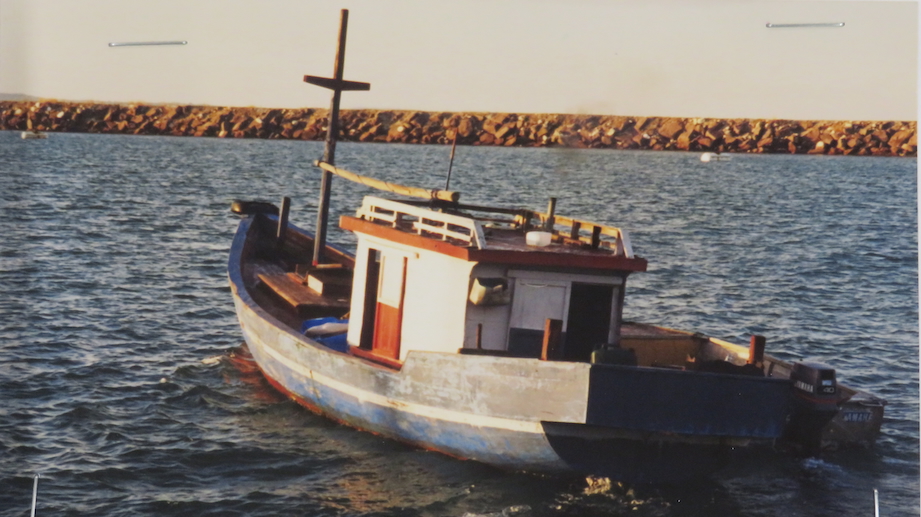
The Tasi Diak (Good Sea) was spotted from the air only after a tip-off from Aussie and Timorese activists plotting its progress. Although the boat had no communications equipment, its Darwin-based support crew knew what was happening before the Coastguard pulled alongside the small vessel.
Seventeen adults and one baby had spent almost a week crossing the Timor Sea from Indonesian-occupied East Timor, hoping the maps in their two-dimensional school atlas made sense on the high seas. Several of the passengers on the boat were victims of torture at the hands of Indonesian troops for the crime of peacefully protesting their brutal occupation.
The escapees preferred to risk drowning at sea rather than face more persecution or even death in their occupied homeland. Those on board the Tasi Diak had immense courage and great faith in their Maromak (God).
Inadvertently, their quest to reach a place of safety pushed Australia out of its haughty complacency. The Tasi Diak passengers hoped to find both a safe asylum and a platform to tell of their people's plight. With the publication of this account of their journey from East Timor to Australia in The Good Sea by Vannessa Hearman - they got both, and deserve the recognition they are now receiving.
The risk taken
On the 24 May 1995, as the Tasi Diak pulled away from a beach near the capital Dili, a Catholic priest gave them crucifixes as a parting gift. Should their mission fail, he promised to scatter flowers on the sea to commemorate their ‘sacrifice for the East Timorese people’.
His harsh farewell reinforced the risks. The hull was leaking. Only one man had experience with boats. Most couldn't swim, and there were no life jackets. Supplies soon ran out or spoiled.
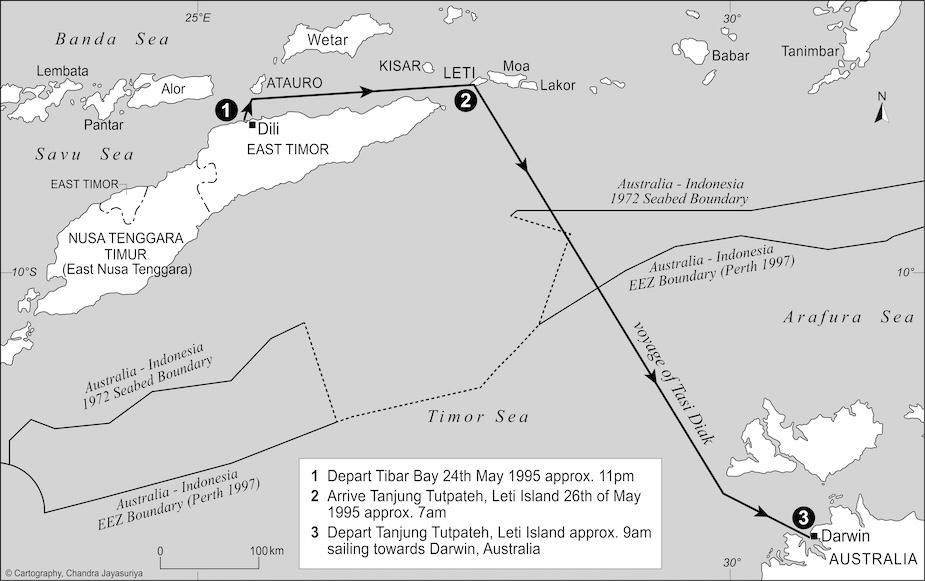
The blossoms stayed on the branches; almost a week later, a DARWIN AUSTRALIA sign loomed out of the pre-dawn gloom – ‘our life is safe now’, breathed one of the two women aboard the Tasi Diak. But what next? A common view of Australia in Timor at that time was of a just and friendly nation, though they also knew that attitudes were hardening in Canberra for fear of offending Indonesian generals and Australian voters. Would the arrivals be deported?
Their new hosts were startled by the Tasi Diak and its determined human cargo.
The Timorese feared for their lives but stuck to their purpose – to find peace and spread understanding. Once the astonished Australians learned of the voyage and its possible consequences, they feared for their own futures too. If this ‘knockabout’ group could penetrate Fortress Australia, how much easier for armed fleets? One craft today meant thousands on their way tomorrow, was the cry of some so-called ‘experts’.
The reality was that the Tasi Diak would be the only self-initiated boat arrival from East Timor during the 24-year Indonesian occupation; one other boat was intercepted by the Indonesians in November 1995.
Reactions to the arrival of the Tasi Diak shattered Australia’s reputation for compassion. The Timorese were not seeking welfare nor threatening jobs held by decent, hard-working genuine Aussies as claimed by the tabloids, but simply freedom from Jakarta's brutality.
For Australia’s xenophobes, the boats had to be stopped. The truth was absent. There were no more boats on the horizon, but the invasion fantasy energised compulsory detention laws, which stained our reputation for compassion.
This was partly recovered when Australia backed the 1999 Referendum results, in which East Timorese voted overwhelmingly for their independence. Our military then led the international peacekeeping operation as the retreating Indonesian military and its savage militias ran a vengeful scorched earth campaign, reportedly destroying seventy per cent of the new nation's buildings.
Exposing the horror
Tasi Diak's arrival in Australia four years earlier had revealed the horrors of the decades-long occupation. Hit squads, including one led by Prabowo Subianto, now Indonesia's eighth President, razed villages, executed resistors and forced thousands into the hills and death by starvation. Estimates of close to 200,000 deaths are widely accepted. Killings were often gratuitous. About 250 unarmed independence protestors were shot when troops opened fire at the Santa Cruz Cemetery in 1991. It was a massacre. During the occupation, thousands of Timorese children were kidnapped by Indonesian soldiers and taken back to Java.
As a mollification, in 1996 the occupiers built the 27-metre copper statue Cristo Rei (Christ the King) overlooking the Bay of Dili. It is a symbol of an occupying force's inability to understand the locals. The people were Catholics on their knees, but Timorese in their hearts. Their roots are spiritually anchored. Motherland was more than a concept; it was a fact.
Another struggle for freedom
For Australia's bigots such details mattered little: the hordes were hungry and brown-skinned. They were also Asians. Hearman's book highlights the link between Australia’s response to those seeking asylum then and now.
The newcomers were moved to the isolated Curtin detention centre 2,600 km from Perth, Western Australia, built to deter illegal arrivals and keep their supporters away. By then they'd been galvanised by the support they had received from many fair-minded Australians. Through complex legal manoeuvres, the Timorese lobbied to be moved to Darwin closer to their supporters, but the government refused their requests and kept them in the makeshift Curtin facility along with Vietnamese, Cambodians and others who had arrived by boat. There were also hundreds of Indonesians and Timorese who'd flown to Australia on student and visitor visas and then claimed asylum.
As Hearman recounts, when some bored prisoners attacked the guards the Timorese helped to protect them. Frustrated at the delays, they staged a hunger strike. Public sympathy was growing. At the time, an acting Indonesian ambassador declared the Santa Cruz shootings of four years earlier to have been a ‘proper’ response. His disgusting comments boosted public support for the asylum seekers. Some lawyers reckoned the refugees couldn't claim this status because they were citizens of Portugal. The courts thought otherwise. After almost two months behind barbed wire, Curtin's gates were unlocked.
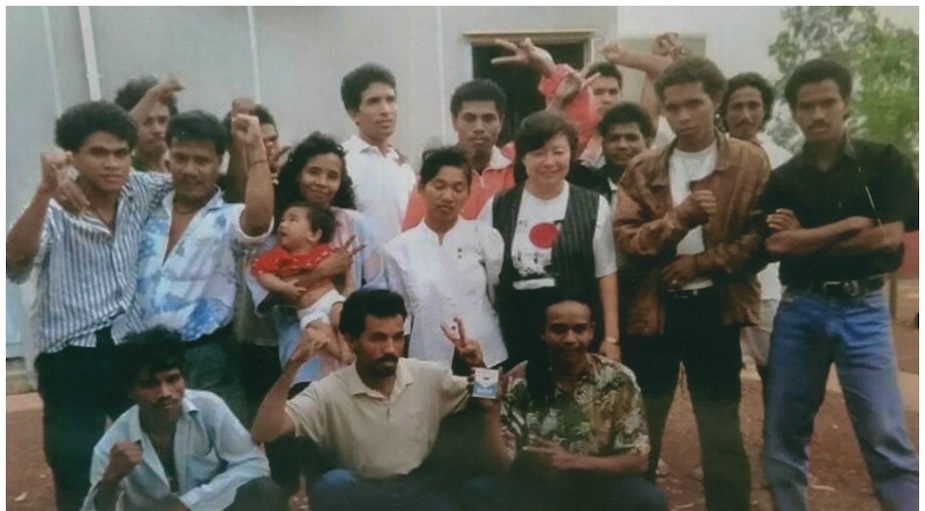
A chapter in the Good Sea focused on the release of the asylum seekers, provides insight into how responses to this case affected Indonesia-Australia relations. This was big news, and the world was now increasingly critical of Indonesia. Just a year before the Tasi Diak had embarked on its voyage, Australia’s then-Prime Minister Paul Keating had labelled this Australia's most important relationship. The Tasi Diak reminded Australians of the tragedies of Timor. The escapees’ bravery with two women and a baby caught the public’s sympathy, and the government relaxed its position, but for long.
Hearman has provided a detailed and rigorous account that should withstand any critics. In facing the historian’s dilemma: what to leave out or include, she favoured the latter. The author has followed the lives of those who’ve remained in Australia, many of whom have made significant contributions to culture and to public debate on migration and our place in the world - where we think we are and where we want to be.
One of the passengers on the Tasi Diak was the talented educator, Jose da Costa. He was just 18 years old. His father had been tortured and murdered and his family bombed and forced to flee their home. The former ‘clandestine activist’ is now a filmmaker and artist. He and his mates have enhanced multiculturalism. Australia is better for their presence.
There’s little knowledge or memory today of Tasi Diak’s arrival. And yet, for this reader, its story has a direct line through to the 1999 Referendum, the independence of Timor Leste and the ignorance of the Australian political right once again threatening our future relationships in Southeast Asia. As Australia faces a vastly changed world, we must increasingly look to our region. This is why this book is so critical right now.
Hearman hopes that the book ‘demonstrates that the relationship between Australia and Timor Leste can be both ethical and humane in the hands of ordinary people.’ Like those on the Tasi Diak and their supporters, they're the folk of legends.
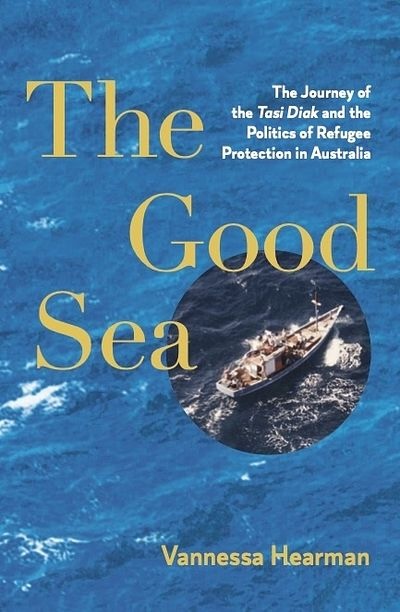
Vannessa Hearman, The Good Sea: The Journey of the Tasi Diak and the Politics of Refugee Protection in Australia, MUP, Carlton, 2026
Duncan Graham (wordstars@hotmail.com) is an Australian journalist living in East Java.