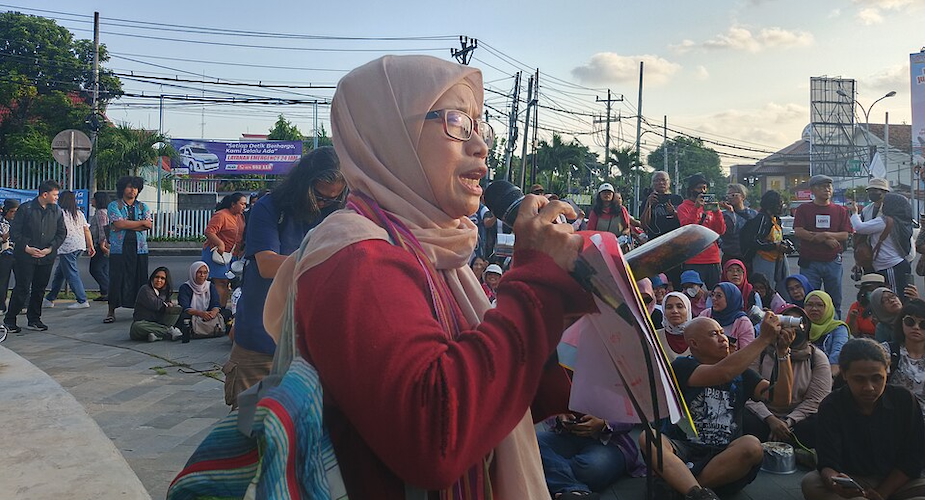
NGOs workers find solace in their cause and each other as they continue their struggles for reform
In December 2025 an essay published by Maple Media showcasing the narrative of the ‘bankrupt activist’ quickly went viral and sparked conversation within the non-government organisation (NGO) and activist community. The essay argued that the idea of bankruptcy in this context has two meanings: firstly, the state attempts to make activists ‘non-existent’, and secondly, when fellow activists are subjected to such surveillance and punitive practices, the NGOs themselves are forced to take care of these ‘policed’ activists. Ultimately, the objective is to make conditions so difficult that both the organisations and the individuals within them are forced to burnout.
On 12 March 2026, three months after the article was published, the Deputy Coordinator of KontraS, Andrie Yunus, was attacked with acid in Jakarta. The attack has made NGO workers and activists more aware than ever that their work is subject to policing by the state. Deemed ‘disobedient civilians’ by the authorities, activists are subjected to government surveillance, which has rendered them criminals and framed their work as a threat to national stability and security.
A watching state
Andrie Yunus’ recent campaign work at KontraS focused on revoking the draft TNI Law, which would have expanded the military’s role into civilian spheres, including the Office of the Attorney General and the Ministry of Fisheries. The law was drafted behind closed doors, with a key stakeholder meeting held not at the offices of the House of Representatives (DPR, Dewan Perwakilan Rakyat), but in a hotel.
On 15 March 2025, just under a year before he was attacked, Andrie Yunus and his small team led a protest to interrupt this meeting, demand transparency and rejection of the revisions. In an article I wrote about the protest, I pointed to KontraS’ action as an adaptive and creative campaign to ensure virality. The action was heavily reported across both traditional news outlets and on social media. In June 2025 the Indonesia Legal Aid Foundation (YLBHI) and their coalitions issued a subpoena to the Mahkamah Konstitusi (MK, Constitutional Court) on the basis that the process lacked transparency and was unconstitutional. The MK rejected the petition in September 2025.

In the face of such ‘failed’ advocacy, it is perhaps no surprise that NGOs workers in Indonesia report experiencing burnout in high numbers, and that the burden of repeated failures to achieve policy reforms or to revoke existing bad policies are cited as key reasons. At the same time, it is also the case that advocacy wins provide them with motivation to keep going.
In Discipline and Punish Foucault presents the idea of the state as punitive and engaged in policing their civil society groups. Using the metaphor of a panopticon, a central watch tower, he argues the state is watching over those who are deemed ‘disobedient’ and enacts public punishment. This prompts the theory of governmentality where the state’s capacity to govern civilians ensures that they are not ‘rocking the boat’. This manifests in rejected proposals, repeated advocacy failures and the government choosing another policy instrument altogether.
This type of environment prompts civil society actors to improve their capacity to respond to such prevailing and intrusive state power. This includes the ability to adapt and pivot their approach as well as to rest when advocacy actions are no longer possible, thereby maintaining some form of agency in a heavily policed state.
In the trenches
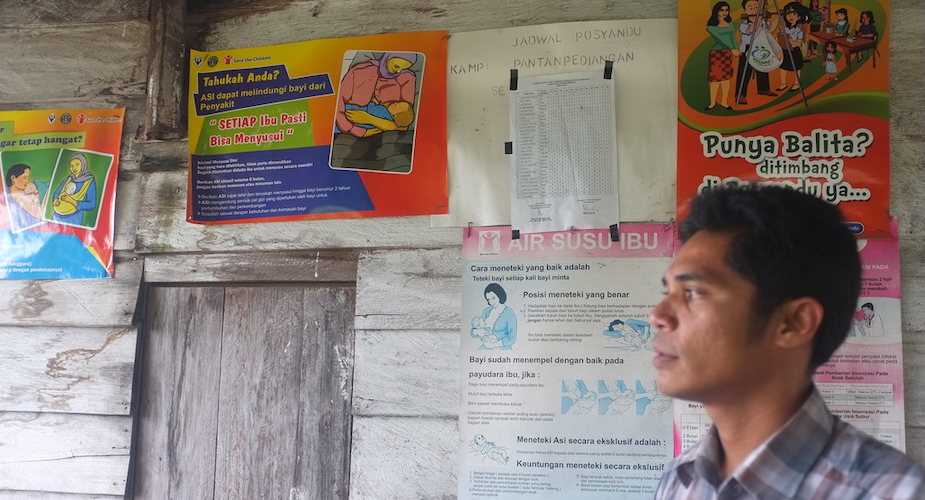
My research focuses on the experiences of NGO workers providing research and analysis to the government to inform and draft evidence-based healthcare policy in Indonesia. Specifically, my participants are from NGOs who provided policy advice in relation to the sugar-sweetened beverage (SSB) taxes (PP 28/2024) and a smoke-free arena policy, which includes initiatives such as banning the selling of cigarettes around schools. In each case, the NGOs are given just three days to provide input through the public hearing process. The three-day window is punitive and punishing. ‘We really do not sleep, Mbak, just to give the competing DIM (Daftar Inventaris Masalah, Inventory List of Problems) to the Ministry, a participant explained to me.
This exhaustion and emotional fatigue extend beyond the creation of the regulation. In the case of the sugar taxes, the central government is mandated to enact taxes but until now regulations outlining this process have not been issued by the Ministry of Finance. ‘We have reached a point where we are so frustrated!! We don’t care if our political connection with the Health Ministry is weakened because now we mobilise the masses, do public campaigning to disseminate our counterarguments,’ one of them told me.
Another participant noted that the Free Meal Program (MBG, Makan Bergizi Gratis) introduced in 2025, has also made it harder for them to campaign directly to the government for the SSB taxes. Citizens reported to MBG Watch (a platform to report complaints and mishandling of the program) that Ultra Processed Foods (UPF) containing high levels of sugar are being included in meals. The use of processed and sugary foods is regularly reported to this platform, signalling that they remain unread or at least unacknowledged. Instead, NGOs have turned to awareness raising and public protest as ‘the last thing we can do’. The adaptive capacity of civil society actors to keep going is a form of resistance and an evolving capacity that enables them to remain legitimate and relevant in the policy arena.
The Ministry of Finance’s announcement in December 2025 of a delay in the SSB tax rollout, caused further anger among my participants. ‘We did not have a choice. We just have to subpoena the Ministry’, one told me. The organisation’s leader added, ‘some of them cried to me but I told them what is the point in crying,’ whilst another explained, ‘well Mbak, we just don’t have time to cry, we sent a press release straight away, it’s kind of expected’.
While such emotions are freely expressed within the group, they do not diminish their resistance. In the face of these challenges, I was surprised to find no signs of the burnout I had expected—such as feeling disillusioned or pausing their advocacy work. Although the organisation’s leaders regularly encourage members to rest and to take extended breaks during Christmas and Eid al-Fitr, many choose to continue their work instead.
For some of my participants, a form of ‘rest’ can manifest as shifting their focus from one battle to another, while for others, ‘rest’ involves directing their advocacy toward a stakeholder they deem more cooperative, such as the local government. ‘Yes, we get tired, but somehow, we believe other channels could be pursued. This is where we get excited’, one participant explained. When the central government seeks to delegitimise their work, they look for and target alternative stakeholders as a channel to reinvigorate the cause.
Taking care of each other
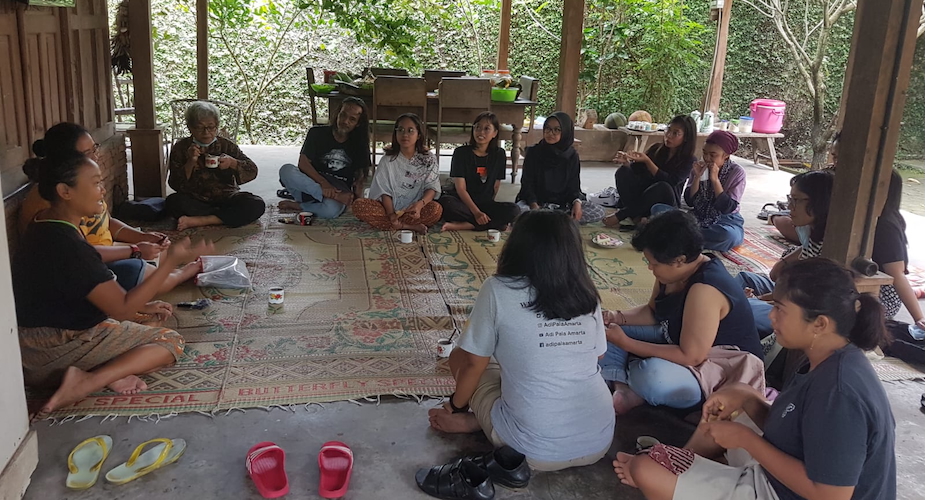
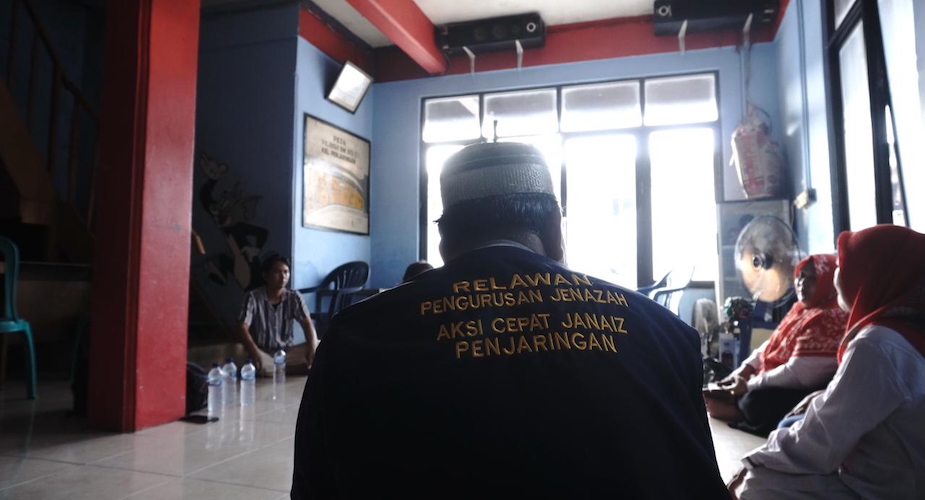
NGO workers and activists also talk about the importance of coalition building with fellow workers and ‘saling jaga,’ or taking care of each other. For example, recent statements made by politicians and others about so-called ‘antek aseng’ (foreign agent) threats in relation to the work of some NGOs, including specific attacks on the Center of Economic and Law Studies (CELIOS), saw a unified response from NGOs and activists. Those directly under attack chose to speak out while fellow activists showed their solidarity and, in the process, were themselves attacked online. In this case, as in others, the spirit and culture of ‘saling jaga’ and ‘gotong royong’ were on display with many calling out malicious commentary and highlighting misinformation.
When one individual or organisation is targeted, NGOs and activists quickly find ways to showcase their solidarity and harness their power. This creates a pathway for those engaged in these struggles to slow down and pace themselves following a government attack. It allows them to recalibrate their work and once again adjust their advocacy strategy. Rest is possible when they ‘jaga satu sama lain’ or take care of each other.
Amanda Tan (amanda.tan1@monash.edu) is a PhD candidate in Public Policy at Monash University Indonesia. Her research examines the role of NGOs, think-tank and peak body organisations in developing policy capacity to analyse, narrate and disseminate evidence during the populist movement in Indonesia.