A child abduction in the Central Javanese hinterland
What began as a usual day for rice farmer Sono quickly turned into a living hell from which he and his family could not escape. In a remote village in the agricultural hinterland of Central Java, Sono’s 4-year-old son, Bima, was at home with his grandmother while his parents worked in the rice-fields. Upon his parents’ return home late morning, Bima was nowhere to be found. The tight-knit village community soon banded together in search of the young child. As hours passed, the police were called in to embark on a massive search party covering the wider village area and river systems beyond. After days of continuous searching, Sono’s neighbours quickly placed blame on Wewe Gombel.
Wewe Gombel and jinn as suspects
In Central Javanese ghost-lore, Wewe Gombel is the ghost of a restless old woman with frightening features who roams at dusk in search of young children to abduct. However, Sono did not believe Wewe Gombel was responsible for his son’s disappearance which occurred in the morning. Highly frustrated, he soon turned to the services of local kyai Muslim leaders and other figures in possession of shamanic knowledge, known as dukun, in the hope that they could offer much needed answers via the world of Islamically understood jinn rather than chasing nocturnal Javanese ghosts like Wewe Gombel.
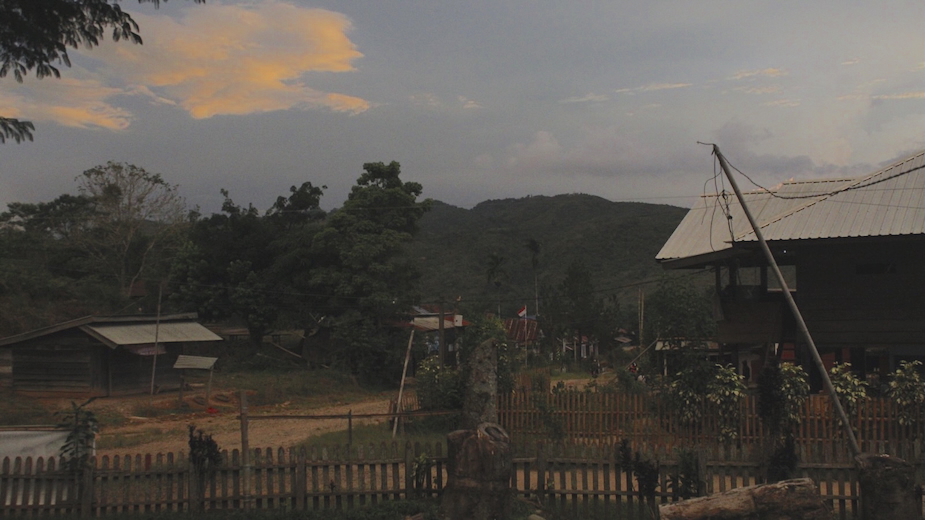
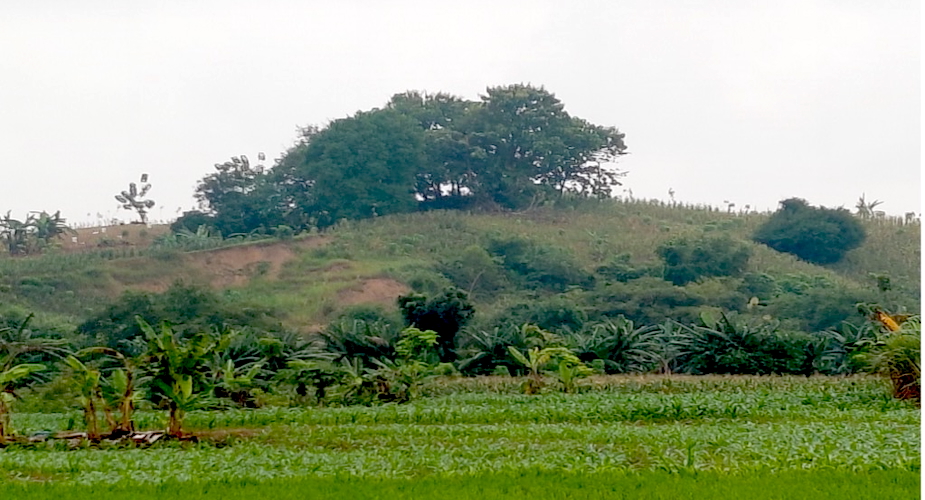
Several kyai and dukun with whom Sono consulted came to the understanding that Bima was abducted by a jinn who locals believe resides in a sacred grove on a hill not far from Sono’s rice-fields. This small grove is one of few tree patches the eye can see for miles over a vast landscape featuring rolling hills used for corn and sugarcane farming. Such a space is both revered and feared by locals because it is believed to be the home of a family of powerful jinn.
In Indonesian culture, varieties of jinn kingdoms and communities are understood to populate natural spaces, usually set apart from human habitats. Most villages have areas known to be populated by jinn, either jinn families or individuals residing in trees, rivers, water springs and rocks, or hierarchical jinn kingdoms spanning wide areas. Jinn and humans may clash, for example, when a human unknowingly builds a house on a jinn pathway through a village. Sometimes a brave farmer seeking to expand their plantation will attempt to kill large trees populated by jinn, but for the most part they are left alone out of fear that the jinn will seek revenge.
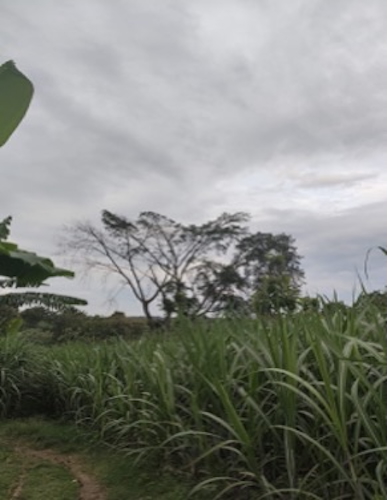
Often, I see such majestic trees half-burnt after numerous attempts to get rid of them, but they manage to survive which only enhances people’s understanding of them as powerful jinn homes. The sacred grove in Bima’s story has had its branches cut several times and neighbouring trees poisoned but farmers do not dare to touch the sacred tree at the grove’s centre.
The world of jinn is as complex as that of our human world, consisting of good and bad characters known to interfere with human life, sometimes with disastrous impact. A jinn disturbance in one’s life can wreak havoc, particularly when it turns romantic. Jinn-human love stories mostly concern human men with female jinn lovers but stories about women lovers of male jinn are not unheard of. Over the twenty-year period I have spent living in Java, Lombok and Kalimantan, I have heard many stories in village communities about romantic partnerships between humans and jinn, some of which develop into marriage, pregnancy and birthing jinn-human children, and others that end with the jinn murdering his or her human lover in order to unite in the unseen realm.
In popular practice, however, humans often seek the services of jinn to help them acquire wealth, love or prowess. Jinn may appear violently in dreams causing insomnia or linger during the night for sexual purposes, which is why men and especially women are advised to sleep with underwear and bedclothes fully covering the body. They further transgress boundaries by entering human bodies in spirit possessions or seek to cause harm through black magic sent by an enemy they have befriended. But Bima’s alleged ‘otherworldly abduction’ did not fit neatly into the typical order of things concerning jinn and human interactions.
Ritualising grief
Relentless in their determination to locate their beloved child, Sono and his wife tracked down the phone number of the juru kunci (gatekeeper) of the sacred grove site, Sy’ain. Sy’ain had not been present at the site for almost 1-year and was very concerned that his sacred companion could possibly be implicated in such a serious matter. As far as Sy’ain was concerned, the being in residence at the grove is that of a former saintly figure, not a jinn family. The saint generally attracts pilgrims to the grove to assist in worldly matters such as requests for healing or problem-solving. These conflictual understandings about the grove’s guardians reflect deeper sensibilities regarding the unseen dimensions and who has authority to know them.
Sy’ain heeded to Sono’s request, and made his way to the grove as soon as possible. In the meantime, he instructed Sono to sit in communion with Allah and beg for inspiration. Upon Sy’ain’s arrival at the grove, Sono and his wife were sitting quietly holding a pillow dressed in Bima’s clothes. Sy’ain was understandably feeling very uneasy with what was unfolding before him. Nobody slept that night. Sono, his wife, and Sy’ain prayed and performed zikir (Islamic remembrance practice) until sunrise. After an evening in deep communion with Allah and the saintly being of the grove, Sy’ain was adamant that Bima was elsewhere, somewhere on the earth, and that the physical search must continue with a focus on child trafficking rings connected to somebody known to the village.
Desperate for a sign of life, even in the unseen world of spirits and jinn, Sono struggled to accept this possibility and how such a crime would change village life permanently. He sobbed and wept in the way any parent would when faced with such a horrific and profound loss and camped at the grove for the next week or so where he found immense solace in speaking his pain to the grove’s invisible guardian. Since the disappearance, the grove has become a resting place for Sono and his wife where they feel safe to mourn and ritualise their loss through cleaning the grove, praying and performing zikir every Thursday night. Sono and his wife’s turn towards the unseen world for comfort by ritualising their grief at the sacred grove demonstrates how otherworldly beings play a role in meaning-making when loss lingers in uncertainty and the unknown.
The police search for Bima continues, and if Sy’ain and his otherworldly companion at the grove are correct, Bima may very well be another victim of human trafficking which unfortunately easily occurs in rural communities such as the one this story describes. The Indonesian Ministry for Women’s Empowerment and Child Protection is working hard to raise awareness in such remote locations through educating and socialising information about how human trafficking rings operate, increasingly so through social media and online platforms. Now haunted by an unsolved mystery, villagers’ focus on Wewe Gombel and jinn as suspects has shifted to possible human suspects known to the community.
Bima’s disappearance demonstrates how understandings about ghosts and jinn shape Central Javanese worldviews and interactions between the unseen, otherworldly realms and human society. The sacred grove, as both a place to be feared and respected, served an important role in this missing person case by opening up a new avenue for investigation. For now, the trail has gone cold in a community defined by a dark web of suspicion.
*Pseudonyms have been used throughout
Bianca J. Smith is a Senior Researcher in Anthropology affiliated with the Centre for Indonesian Law, Islam and Society in the Melbourne Law School at the University of Melbourne, Australia.