Encounters with the unseen in Bali
On the night of Kajang Kliwon, a sacred Balinese day when the veil between the physical and spiritual worlds is believed to be especially thin, Pak Andri’s mother, Ibu Rum, had an experience she would never forget. Around midnight, she got up to use the restroom when she heard a dog howling just outside. The night was unnaturally still, not even the wind stirred, yet the dog’s relentless cries pierced the silence. Though she was alone, Ibu Rum thought little of it. She was inside, the dog was outside, and she felt safe within her home.
The next morning, as she stepped out on her way to the market, she saw a dead calf lying in the very spot where the dog had howled the night before. Its body looked as though it had been surgically opened, its intestines spilling across the ground. Though she had not witnessed what happened, Ibu Rum suspected something beyond the ordinary, even the work of a leyak. The timing, the location, and the presence of animals were more than coincidence.
In Balinese culture, leyaks are often described as individuals with the ability to shape-shift and wield spiritual power. They are associated with both harm and protection, reflecting a broader belief in balance between opposing forces, good and evil, the seen and the unseen. When illness or death cannot be explained through natural or scientific means, some may attribute the cause to leyaks or other supernatural forces. In these cases, a leyak may be believed to have offered a person’s soul to a demon, gaining in return the ability to cause illness, manipulate objects, or acquire knowledge of poisons. Such acts are sometimes understood as driven by personal malice.
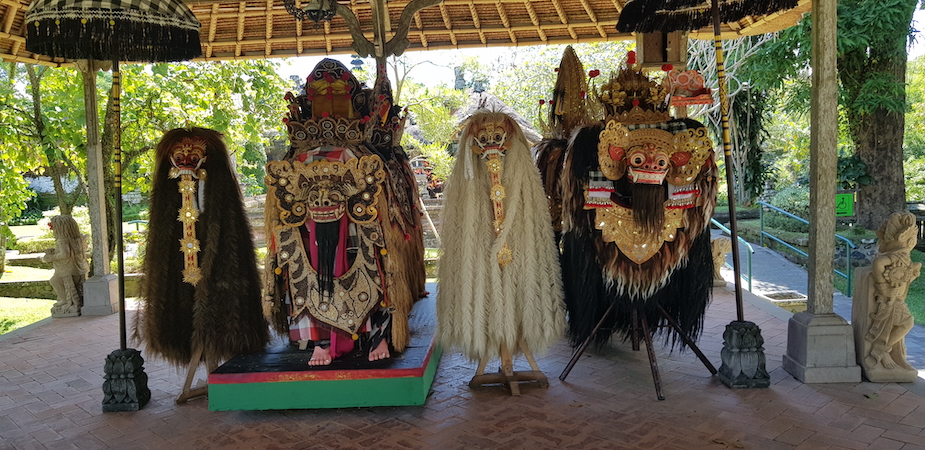
Such events are often seen as signs of imbalance, evidence of a disturbance in the unseen world. In response, people may turn to a balian, or traditional healer, who might recommend changes in one’s environment or behavior, or prescribe jamu, a traditional herbal remedy. The issue may stem from neglected offerings, offended spirits, or the influence of a leyak. Addressing it requires knowledge of the unseen.
Whether it was the work of a leyak or something else, the experience stayed with Ibu Rum and influenced how she raised her son, Pak Andri, teaching him to see the supernatural as both powerful and fearsome. Years later, during a video call, Pak Andri shared an experience of his own. One night, while staying at a villa in Ubud and enjoying food and drinks with friends, he repeatedly noticed what looked like a white sheet moving as if it were dancing. At the time, he brushed it off. But the next morning, reflecting on the night before, he tried to make sense of what he had seen. He told himself it must have been a staff member cleaning one of the rooms. But it was already late, around 10pm, and why would it have been moving towards the forest? At that realisation, Pak Andri got goosebumps.
A few years later, he had another unsettling encounter. Late at night, with the lights off, he heard the loud snorting of a boar coming from a nearby patch of trees.
‘It was so loud!’ he recalled, imitating the sound.
He froze. Slowly, he moved toward the wall, and the noise faded. But when he stepped back, the snorting returned just as loudly. Acting on instinct, he grabbed a branch from a moringa tree, thought to carry protective energy, and held onto it. The bushes rustled, and then everything fell silent.
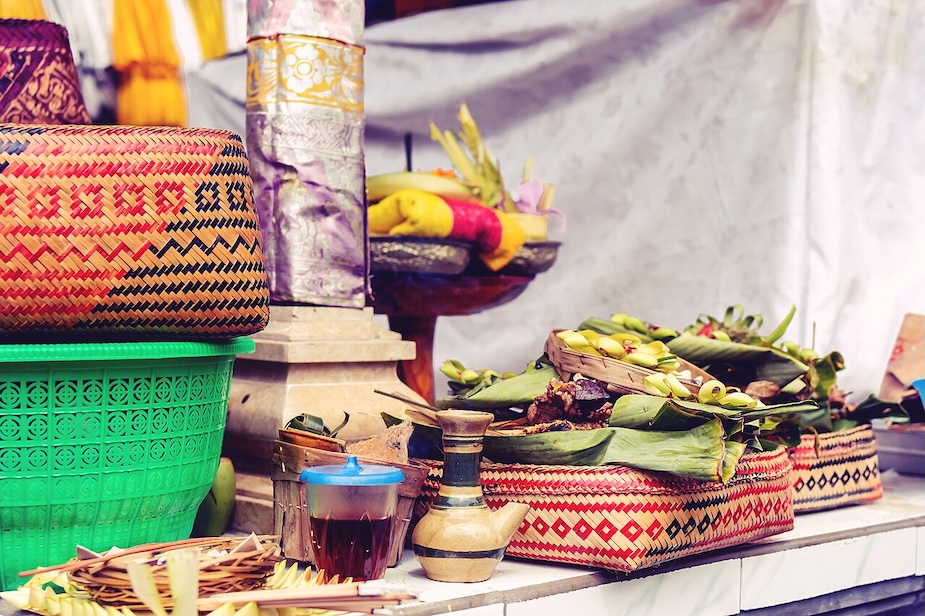
Supernatural experiences in Bali do not always have to be frightening. Ibu Vera, a friend of Pak Andri described the moment an earthquake struck during a temple ceremony. People rushed to flee, but she remained where she was, focused on her prayers, asking for success in graduating from university and finding a job. When others returned, they asked why she had not run. She told them she had not even felt the earthquake. Instead, she experienced a deep sense of calm and spiritual connection. She later came to see that moment as the confirmation that her prayers would be fulfilled.
The complex interplay of forces between the material and spiritual worlds cannot be understood from a single perspective. Yet there is a shared sense of respect for the unseen. The stories people tell, sometimes quietly, sometimes reluctantly, reflect a worldview in which the spiritual is not separate from everyday life but deeply intertwined with it. The supernatural is understood within a broader ecosystem of the visible and invisible with potential for positive and negative transformations.
Christy Childs (cchilds@mail.wlu.edu) is a senior at Washington and Lee University majoring in Cognitive and Behavioral Science with a minor in Data Science.