
Ghosts and modernity in Indonesia
In a quiet bar one evening, a group of new friends asked Emmelia whether she believed in ghosts. She hesitated. After several trips to Indonesia, she was no longer sure.
The uncertainty was not really about ghosts. It was about something harder to articulate. In Indonesia, she had begun to feel that what lingers is not only the dead. It is the past itself—older ways of being, older spaces, older moral worlds—that modern life has not fully pushed aside.
This is not unique to Indonesia. But in Indonesia, the past often feels closer to the surface. Modernity has not erased it. Instead, the past appears in new forms—sometimes as nostalgia, sometimes as tradition, and sometimes as something unsettling. Ghost stories are one way people talk about that presence.
Nights in Yogyakarta
Emmelia was nineteen when she stayed in university housing in Yogyakarta while teaching English. The building seemed ordinary enough during the day. At night, however, it changed. The long ground-floor hallway was dim and quiet in a way that felt heavy rather than peaceful. She began noticing flashes of light at the edges of her vision. She assumed she was exhausted and said nothing.
Then others started talking.
One man described a woman in a white dress who appeared whenever he switched off the lights. His description matched the Indonesian ghost, kuntilanak. Another woman woke crying, pushing against her door after dreaming of a threatening presence. Emmelia herself woke unable to move, hearing a woman whisper, 'Do you really think you can do this without me?'
Eventually they told an Indonesian colleague. He laughed—not dismissively, but knowingly. Many people believed the building had been constructed on a graveyard, he said. What surprised him was not the haunting itself, but that foreigners were experiencing it too.
At first, Emmelia tried to explain it away: stress, illness, unfamiliar surroundings, the disorientation of being young and far from home. These explanations made sense, but they never quite settled things. What stayed with her was not simply the experiences, but the way they could be discussed. In Indonesia, these stories did not need to be dismissed. They could be acknowledged, compared, and folded into everyday conversation.
Something shifted. She did not suddenly believe in ghosts. Instead, she lost confidence in the assumption that the past was safely contained. In the United States, strange experiences tend to be medicalised, psychologised, or dismissed. In Indonesia, they can be narrated as part of a shared world. The boundary between imagination and presence becomes less stable.
Later, when American friends asked if she believed in ghosts, she found herself hesitating again. The answer depended on where she was standing. At home, she leaned toward skepticism. In Indonesia, she often said yes—not because ghosts felt more real, but because the past felt more present.
Staging fear
Ron encountered something related in a very different setting: haunted attractions in Bali and Yogyakarta. These were deliberately constructed spaces, designed to frighten visitors. Yet what they staged was revealing.
In Bali, a drive-through attraction featured recognisable Indonesian figures: the pale-faced kuntilanak, the bound pocong, and Rangda, the Balinese witch queen. There were also wandering grandmothers searching for husbands, blurring the line between folklore and social satire. Students responded in different ways. Some laughed. Others were genuinely frightened. One recited the Rosary in Spanish. Another repeated sampai jumpa—'until we meet again'—as if language itself might offer protection.
Fear and play mixed together. The actors gravitated toward those who showed fear, amplifying the experience. The attraction did not simply present ghosts; it staged cultural familiarity. The figures were recognisable not because they were terrifying, but because they were embedded in everyday narratives.
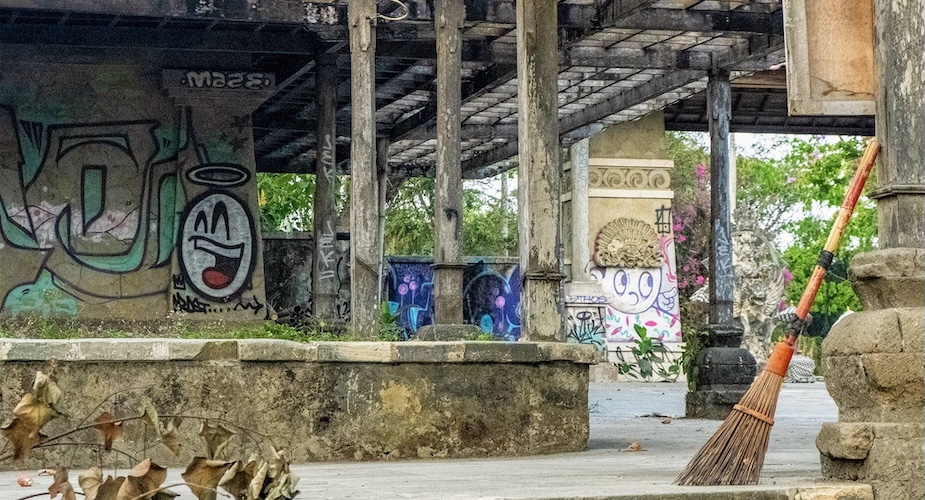
In Yogyakarta, two neighbouring attractions sharpened the point. One was a museum of 'spooky objects' filled with dimly lit displays. Next door was a haunted house with actors. Both leaned heavily on an 'old Java' aesthetic: dusty antiques, fraying dolls, and decaying interiors. Visitors moved slowly through narrow corridors, brushing past objects that seemed out of place in the present.
These were not simply representations of death. They were representations of age. Old objects, removed from everyday life, became eerie. The past, when framed by modern expectations, appeared strange. It is not simply death that haunts a place, but age itself. Modernity creates its own forms of fear.
Colonial shadows
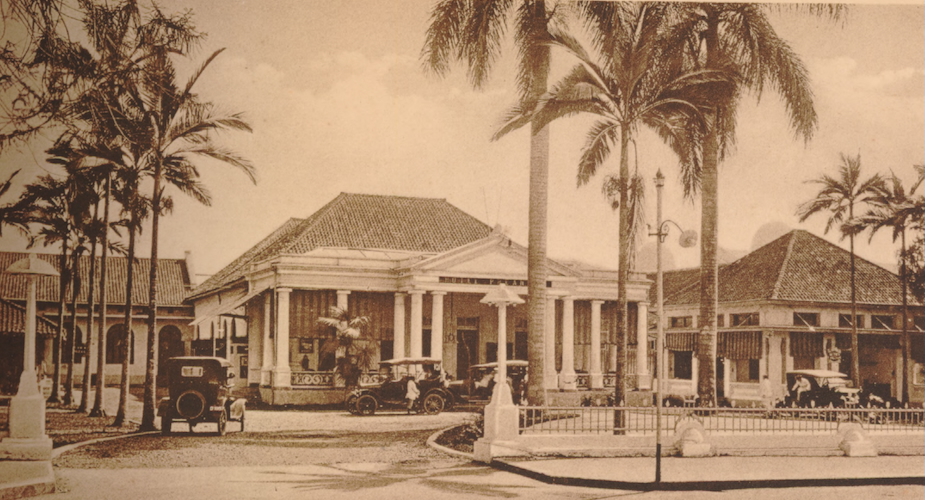
Stories shared by Indonesian friends point in the same direction. The rector of a state Islamic university described waking in a colonial-era hotel in Bandung to find a regal woman beside him and an elderly man at the foot of his bed. Others had seen the same figure. His reaction was not fear but annoyance. If they kept disturbing him, he said, he would request another room.
The setting matters. Colonial hotels are not neutral spaces. They are material reminders of another era, saturated with layered histories. Guests arrive expecting comfort and familiarity, but the buildings carry traces of different lives and hierarchies. Stories of hauntings in such places feel less like encounters with the unknown than encounters with what has not fully disappeared.
In another case, a hospital administrator described growing up in a deeply 'old-fashioned' family. They practiced ritual flower baths and other forms of spiritual cultivation. Their grandfather was known for entering meditative states in which his spirit could travel. When relatives misunderstood this and took his body to a hospital, he could not return. Now, they said, he still visits. The dog reacts to something unseen. The family leaves cigarettes and water to keep him comfortable.
These stories are not simply about belief in ghosts. They point to the coexistence of different temporalities. Practices that might be dismissed as superstition in one setting remain meaningful in another. They do not disappear. They persist, sometimes quietly, alongside modern institutions.
Even university service programs—Kuliah Kerja Nyata (KKN)—generate their own ghost stories. Students posted to rural villages often return with accounts of strange encounters: footsteps outside empty houses, figures glimpsed at the edge of rice fields, voices heard at night. Books and films now draw on these narratives. The stories reflect a particular anxiety: modern youth encountering places where older ways of life remain strong. The haunting emerges from that meeting.
Living with what lingers
Taken together, these accounts suggest that ghosts in Indonesia are not just about the supernatural. They are about time. They appear in places where different temporal layers meet: colonial and postcolonial, rural and urban, traditional and modern.
For Emmelia, this changed what it meant to be an outsider. At first, her experiences seemed to confirm her distance from the setting. Over time, however, she found herself inhabiting the same ambiguous space as those around her. Saying 'yes' to ghosts in Indonesia is not always a literal claim. It can also be a way of acknowledging that the past remains active.
There is risk in that shift. It means letting go of the assumption that modernity neatly replaces what came before. It means accepting that multiple ways of understanding the world can coexist without being resolved. The gain, however, is a deeper appreciation of how people live with continuity as well as change.
For Ron, these encounters resonate with a longer pattern observed over decades of research. Modernity in Indonesia rarely appears as a clean break. Instead, it unfolds as negotiation. Older practices, spaces, and sensibilities are not simply replaced. They are reinterpreted, sometimes nostalgically, sometimes uneasily, and sometimes as something that feels like a presence.
Ghosts are one way of talking about that presence.
Maybe.
So when Emmelia is asked whether she believes in ghosts, her answer remains careful: 'I don’t know. But maybe.'
It is not quite belief, but not dismissal either. It reflects an awareness that in Indonesia, the past is never entirely past. It lingers—in buildings, in family practices, in stories, and in the uneasy spaces where different ways of being meet.
And sometimes, when those layers come too close together, it feels like something is there.
Emmelia Helkins (nee Lukensbull) is a graduate student in medical anthropology at the University of Florida. She has months-long field experiences in Indonesia, Kenya, and Zanzibar. Ronald A. Lukens-Bull is Professor of Anthropology and Religious Studies at the University of North Florida. His research focuses on Islamic education, everyday religious practice, and modernity in Indonesia. He is the author of A Peaceful Jihad: Negotiating Identity and Modernity in Muslim Java and Islamic Higher Education in Indonesia: Continuity and Conflict (2005). He has conducted fieldwork across Java, Sumatra, and Bali for more than three decades.