‘They say that the people of Gunungkidul are shamans'
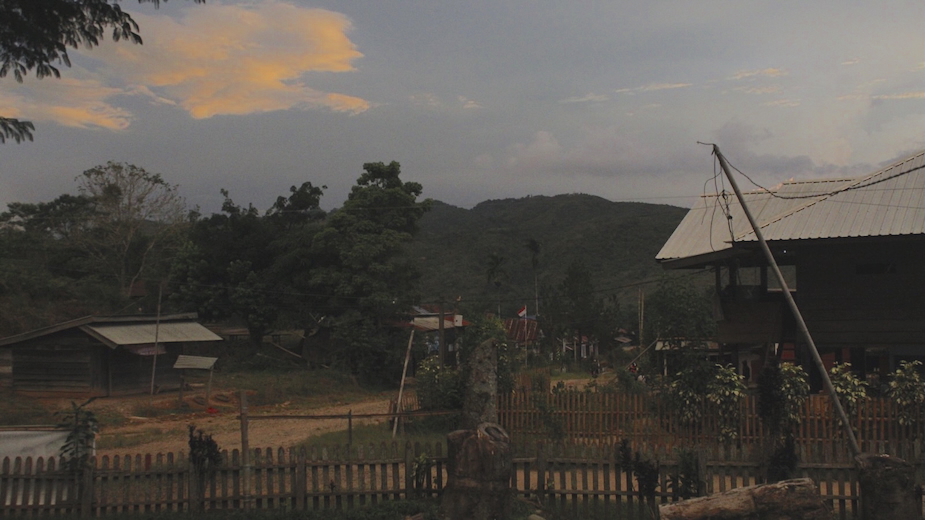
The further we went into Gunungkidul, the quieter the road became: plantations stretched across barren landscapes, caves bored into the mountainside, and the houses stood silent save for the dried corn swaying in the breeze. There were more older, than young people —this was expected as many of the young people in Gunungkidul had left for the city of Jogja.
There we met Ida, one of those who left her village as a youth but has since returned.
When Ida was nine years old, her parents took her to the city of Yogyakarta and she attended school there. She faced constant bullying. Gunungkidul is located less than two hours by car, southeast of Yogjakarta. However, despite being born less than fifty kilometres from the city, she was often ostracised for her place of birth, being called dirty, old-fashioned, and superstitious. Ida lived with that stigma until after she graduated from university, when a short trip home taught her that there was more to Gunungkidul than what had been dismissed in her education.
‘One of the most common accusations against the people of Gunungkidul, at least in my opinion, is that they are superstitious. They say that the people of Gunungkidul are shamans. At that time, I actually believed that Gunungkidul had many mystical practices and traditions. But after learning with my friends, it’s actually not like that. It’s not what people say. That’s just on the surface. Now, this is what makes me happy in Gunungkidul,’ she said.
‘My neighbours believe that ghosts really exist, and we live with them. That is their belief. That’s why they can’t be careless in how they view things. Some say this is just imagination. But if we look deeper, they are aware that they are not alone. If something happens (like an accident), even though there is a chronological account of it, they also believe in the mystical story behind it.’
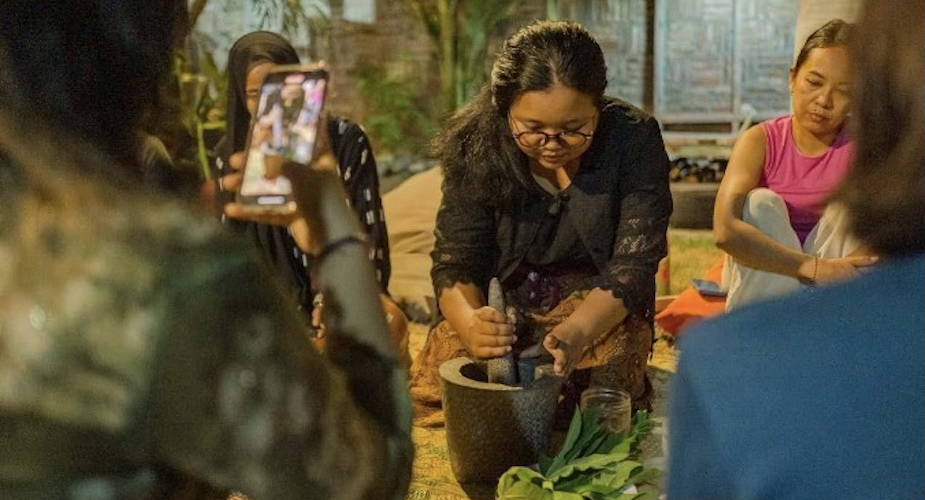
In 2023, Ida decided to return to the village of Rongkop, Gunungkidul. Now Ida runs Laboratorium Dusun, an organisation committed to preserving local culture through education and conservation initiatives. Despite her growing understanding of urban society, Ida wants to preserve the cultural landscape of Gunungkidul, including its spirits. Ida said that in her neighbourhood, mystical stories still circulate and are believed.
Jevi Adhi Nugraha, a young writer from Gunungkidul, wrote about ghosts in his book Menanam Hantu di Bukit Batu (Planting Ghosts on Stone Hill). His writing does not specifically discuss ghosts as a single object, but rather the symbolic aspect of how Gunungkidul is closely associated with mystical stories that cannot be explained scientifically.
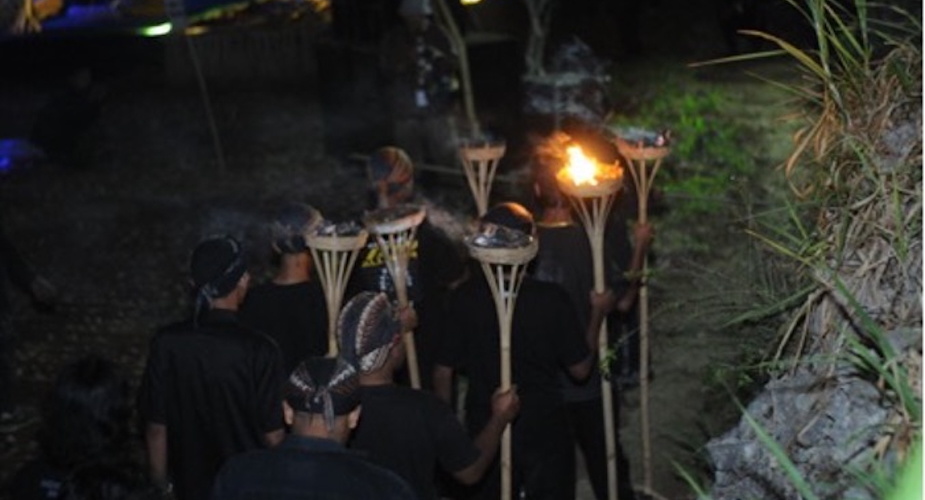
Unlike Mbak Ida, Jevi has lived in Gunungkidul since birth, in Keblak village. He has also formed a community called Klenik Club Studies to exchange stories about the spectral. Unlike Yogyakarta, which is often known for its progressive attitude and high educational standards, he said that many people see Gunungkidul as lagging far behind in every aspect—including education. ‘In my village,’ Jevi said, ‘superstition is still deeply rooted. Even now, as the village head election approaches, many people still visit shamans.’
A term Jevi uses to explain the supernatural stories is the Javanese term bloko, which means straightforward communication. He believes that Javanese people – especially in his village – tend to communicate in a way that is not bloko, which ultimately gives rise to many different meanings and perspectives. In this context, mystical stories become a medium for conveying commands, prohibitions, or social rules indirectly.
In Gunungkidul, the local community takes great care of trees, especially the large ones, which they call Resan. Large trees with strong roots that store water are called Resan (derived from the Javanese word ‘reksa,’ meaning ‘guardian’) because they regard these trees as protectors of their arid land. Jevi recalled the stories of how the elders created mystical tales about the Resan trees in order to protect them from damage. Though this exercise of communication isn’t bloko, ghosts were summoned to protect Gunungkidul from drought, something even more deadly than the spirits.
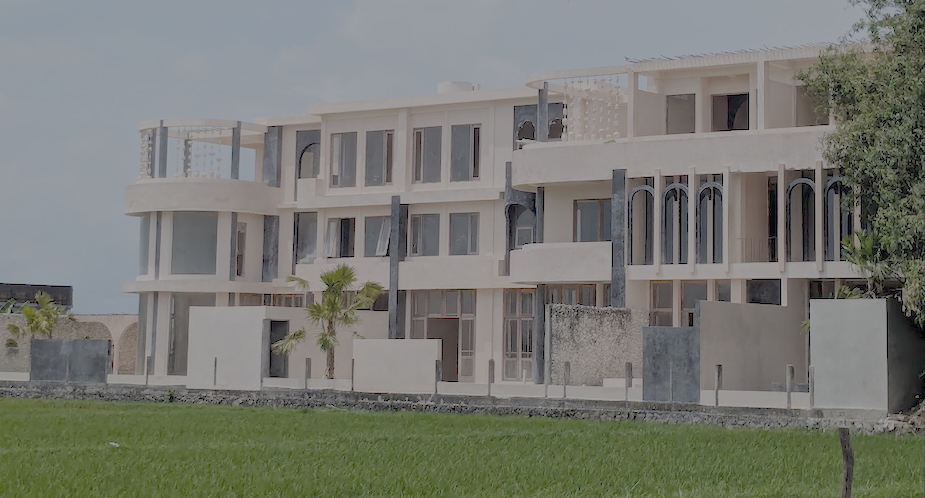
Currently, however, many large trees are still being cut down. Roads are also being built, threatening the ecosystem and animal habitats in the surrounding area. Most of this development is aimed at promoting lucrative tourist industries. Today, roughly 10,000 hectares of land are under control of investors hoping to develop Gunungkidul under the image of Indonesia’s New Bali initiative. The dispossession of land from local communities threatens Gunungkidul cultural and environmental landscapes – Mbak Ida believes this to be even more frightening than the ghosts.
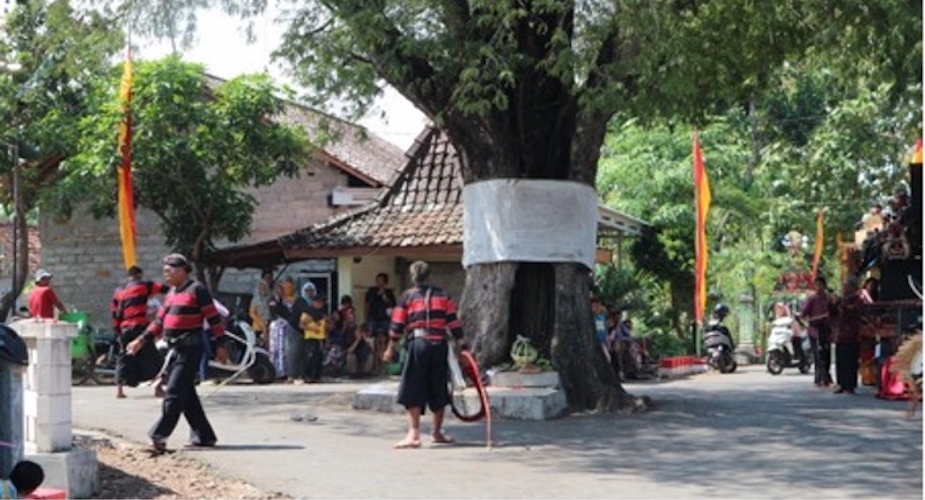
Poverty rates in Gunungkidul are high compared to other regions in Yogyakarta. Although the area is a popular tourist destination due to its natural beauty, the people of Gunungkidul have long lagged behind in terms of economic development and social welfare. However, what is troubling—for both Ida and Jevi—is the perception that the people of Gunungkidul are backward because of their outdated way of thinking and because they believe in superstitions and mystical phenomena.
Ida believes that it is precisely these local beliefs that protect them and their ecosystem. Yet, the local community’s powerlessness to resist the interference of those who profit from their land is what haunts Gunungkidul with a different kind of ghost: one that is stronger and cannot be driven away by any ritual. Even now, rituals which once bound communities are now being exploited for profit, and sacred landscapes risk demolition.
‘My neighbours believe that ghosts really exist, that we live alongside them. That’s what they believe. But that doesn’t mean we suddenly become afraid and unable to do anything. Instead, it teaches us that we shouldn’t be arbitrary in our perceptions,’ Mbak Ida says.
‘Yes, there are also those who say that this is just imagination, that it’s not realistic. But if we look deeper, from here, they (the community) realise that they are not living alone,’ Mbak Ida says.
Both Mbak Ida and Jevi share the story of Watu Manten, which is common among the people of Gunungkidul. Watu Manten is a pair of twin boulders believed to be the incarnation of a newlywed couple, who were sitting underneath a tree when they were struck by lightning. Since their tragedy, they have become guardians of the place. This belief is reinforced by rumours that any newlywed couple who visits Watu Manten will face problems in their marriage.
The story of Watu Manten became famous when a project to build a crossroad required the stones to be moved and the sacred trees to be felled. The community had initially warned the contractor not to move it carelessly to avoid disaster. This warning was ignored. The stone relocation project did not go smoothly: equipment frequently malfunctioned and many workers fell ill over the course of the project.
Ida recounted what happened after they tried to move the boulders. After many difficulties, the solution was to ask for permission. The contractor called people from the palace to perform a ritual to ask permission from the guardian of Watu Manten. Not long after, the relocation finally proceeded without incident. For Mbak Ida, these hauntings are neither warnings nor a source of terror, rather a form of protection. The rules established by these stories are not intended to restrict human action but to regulate our collective relationship with nature.
‘The position of the "ghosts" is important. I see the ghosts as "conservation police"; they protect nature and culture. Thus, these ghosts have the task of preventing this village from becoming a city,’ Ida says.
Even if they cannot be explained scientifically, these ghosts are indeed alive. Scientific explanation comes second to the lessons these spirits teach. Despite the stigma levied against it, the very same Mbak Ida faced in her youth, Gunungkidul is facing rapid change. These ghosts may be the final line of defense against human greed and the existential threat of cultural erasure. And in return, people like Ida and Jevi give voice to these spectres. Though the stones have been taken from atop their hill, the ghosts have not yet ceased to be.
Khairani Fitri Kananda is an anthropology graduate and continues to write and conduct research on culture and media. M. Cole Grady is an anthropology & journalism graduate currently leading the Bukit Lawang Trust, a community education centre in North Sumatera.