The earth keeps what war leaves behind, only we reinterpret it
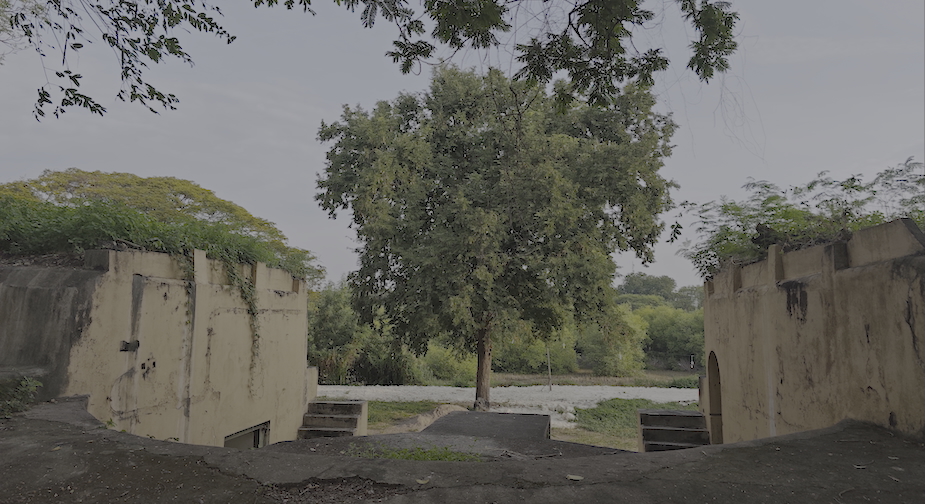
Benteng Kedung Cowek in Surabaya has become known less for its military history and more for its angker, sinister, aura. The fort was a vital site for the Battle of Surabaya on 10 November 1945. Originally built as a Dutch coastal battery, it was later seized by resistance fighters who operated the gun emplacements as Battalion Sriwidjaya under Captain Jansen Rambe, before falling to the Allied forces on 27 November 1945. Today, it is the last standing battery in the city, and its occupants may have never left.
The fort is more than a relic of war; here, history still walks around. Ghost stories surrounding the space have become central to how the community relates to the fort. The ghosts are not simply seen as reminders of violence; they shape how people care for the site and make sense of it in the present. Rather than being dismissed as superstition, these narratives play a role in preserving an otherwise neglected historical site. While the place was seemingly abandoned, dormant in time, the residents’ engagement kept it alive through various reinterpretations.
At the same time, the fort carries a darker reputation. Its grim image is strengthened by news of a homicide victim found in its casemates and historical accounts of countless dead fighters during the Battle of Surabaya, whose remain were not excavated. When friends in Surabaya discovered I was going to visit the fort, their first reaction was to question my decision. The fort lingers in memory the way its ghosts roam. Angker (haunted), they would say, and if ghosts were not menacing enough, many preman (thugs) in the area would be the next reason to appal me. However, despite being reputedly haunted, the coastal battery holds a place in the hearts of surrounding communities as an affordable recreational space.
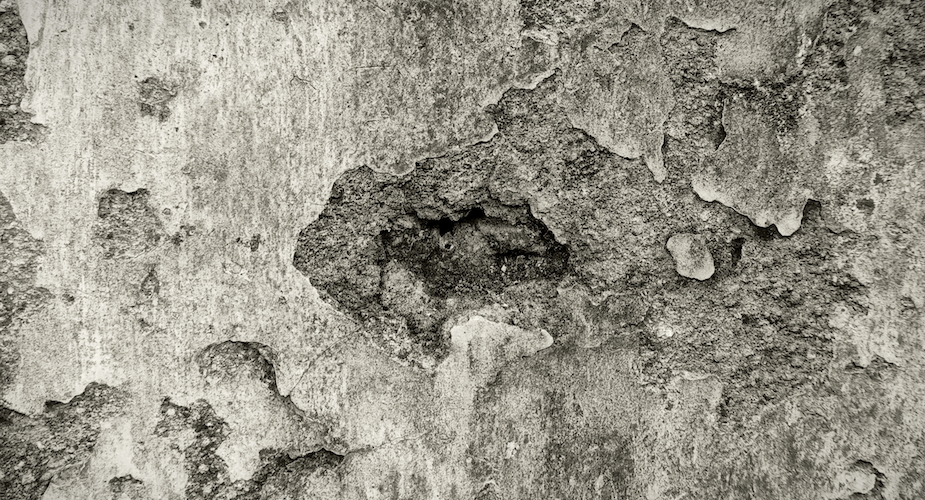
Although Fort Kedung Cowek is formally owned by the regional military command, the complex remained overgrown and undermaintained for decades. Surabaya’s Board of Culture and Tourism states that the fort was declared a heritage site in 2019, and afterwards, ongoing preservation efforts have been slow. Several of the larger bullet holes, though, have been mistakenly patched up and repainted by locals to give the fort a clean appearance, while the railings and steel from the original structure were looted long ago. Residents concur that the area was initially associated with either crime, a good fishing spot, hangout hub for delinquents, or a rumoured space for uji nyali (test of courage).
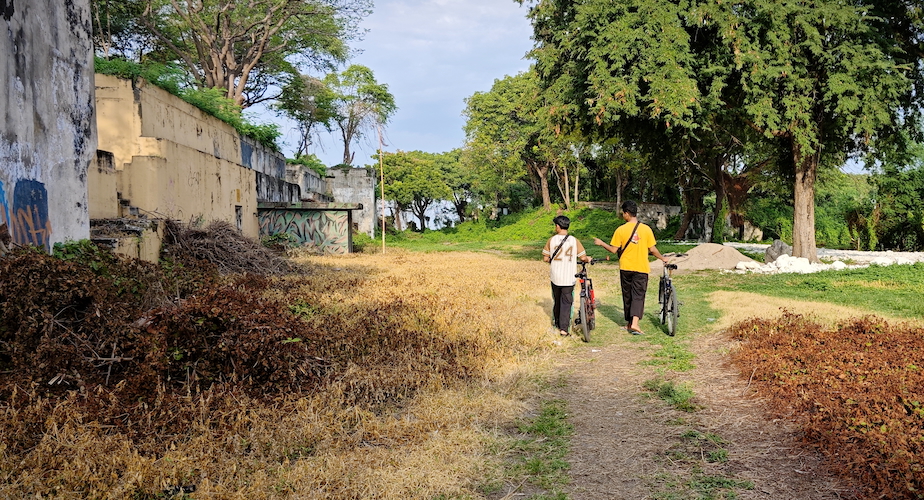
A group of 50-year-old males describing themselves as the pengelola or ‘informal caretaker’ testified that around mid-2025, the regional command permitted nearby residents to manage the site’s day-to-day use. They took up cleaning and supervising the area, setting up food stalls, collecting parking fees, and organising guided walks. Once cleared of overgrown bushes and vegetation to keep snakes at bay, the fort has become more visible and more frequently visited as a recreational space. The waters near its rocky shore are clear blue, the winds not deafening. It is in this setting that supernatural narratives operate as a framework that allows residents to claim responsibility and moral obligation over the site.
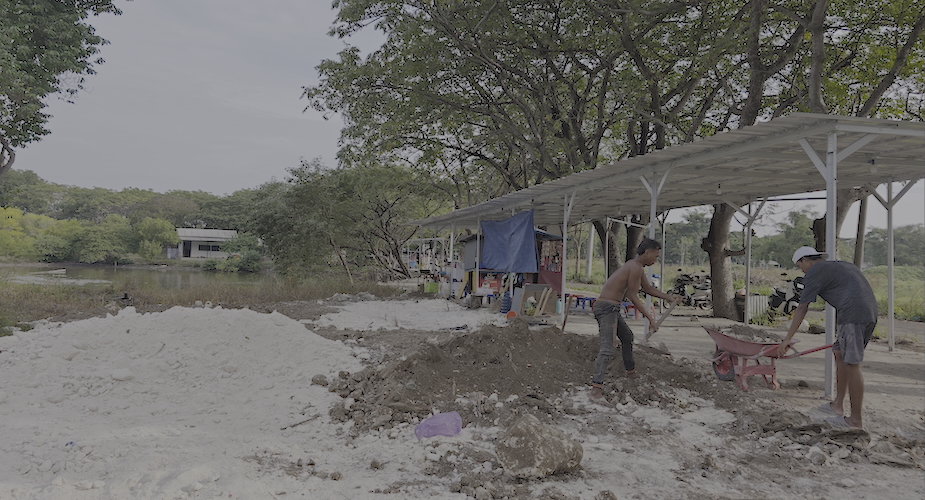
Thus, ghost stories coexist seamlessly with recreation. Locals describe this coexistence as natural, an example of the living and the spiritual sharing the same environment. The presence of ghosts does not generate fear, but continuity. Along with its angker reputation, ordinary life continues at the fort. Visitors come to relax, take photographs, or spend time with friends. Parents bring children to play. Fishermen cast nets. Food vendors sell snacks at the entrance. Teenagers gather after school.
The fort’s overseers, visible and invisible
Stories about hauntings at the fort are widespread: scorched soldiers on guard, phantom markets, to giant snake spirits. It is said that where blood has been spilt, the ground always harbours restless spirits. Coming there exactly at noon, I was mistaken for a curious tourist by the caretakers. ‘Stay only until 4 pm’, they warned.
‘Just yesterday, three young girls got possessed for staying until dusk despite warnings.’
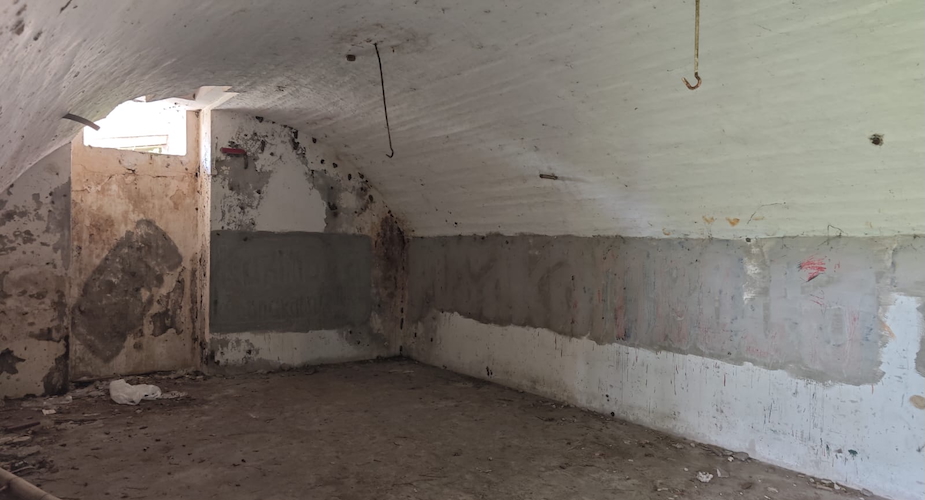
The possession was attributed to the spirit of a European woman whom they often referred to as the noni; the way European or Indo (Indonesian-European descent) women were called in the Dutch East Indies. The ‘caretakers’ admitted that they were initially confused as to why a spectral lady haunts a fort, to which they assumed that she might be the victim of violence nearby during the Bersiap (1945-1946) period, where many Europeans and pro-Dutch became targets of assault. Following the discovery of a young female student’s remains in one of the casemates in 2023, the noni began showing herself more frequently to those who harbour ill intent around the fort.
Witnesses recall her apparition walking through the casemates, gliding through the walls. ‘Well, nothing new, biasa. She has always been there after all!’ an old man exclaimed.
Nearby, a group of young men were smoking near the gun emplacement, facing the sea, trading stories about the female spirit, ‘I heard from friends that they saw the noni,’ one said.
‘But isn’t that strange? This is a fort,’ another man said.
This insinuation brings us to the ghost soldiers. It is not an unresolved grievance that caused their restlessness; the dedication and loyalty of the fort’s soldiers completing their duties seems to carry on after death. It was estimated that at least 200 men were killed in action during the fighting at Fort Kedung Cowek against the Allied forces, and their remains were not immediately removed.
Ady Setyawan, a military historian, recounted that the coastal battery is occasionally utilised for the closing ceremony of a military unit’s training programme. Witnesses recall instances where alleged apparitions of Indonesian resistance fighters appeared; burned, bleeding, or saluting silently. In such a context, ghosts are linked to sacrifice and honour rather than haunting, where their encounters reinforce the fort’s meaning as a site of battle and loss.
One of the caretakers implored after I was done exploring, ‘Did you find the noni or was it the mbah (elder) instead?’ he pointed to a tree just in front of the gun emplacement with his right thumb.
What sounded like a simple question drew attention to something that predates the fort. The overseering force of the site can also be traced back prior to colonial history, before the coastal battery was built in 1901 by the Dutch colonial administration. The noni and the soldiers may have been there due to the bloodshed, but another powerful figure has been connected to the land for a long time; a male guardian spirit dressed in a Javanese garb is said to tend to the space, sitting watchfully under the tamarind trees.
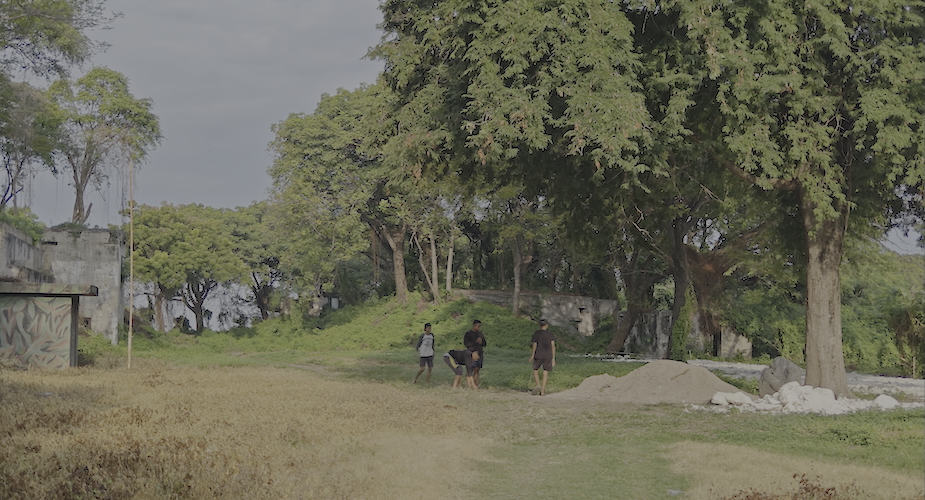
As the nature of these spirits, unlike how media and stories portray them as menacing, the caretakers and people who frequent the area described them as harmless; they are protectors rather than threats. The spirits are said to warn against inappropriate activity, disorder, or disrespect toward the fort.
‘We live alongside them, so afraid not.’
In June 2025, one of the community caretakers invited a medium to guide the spirits to move on. During the session, the medium reportedly spoke in a woman’s voice in a foreign language and refused to leave the space, stating that she needed to ensure the area remained ‘in good order. No other ladies fall victim.’ The land guardian spirit had also refused departure, explaining that he is bound to the space, where he must remain and watch over the grounds, and so he chose to sit under the tamarind trees. For those present, these messages reinforced the responsibility to maintain the site and organise visitors carefully.
This communication creates a layered spiritual interpretation. Surrounding communities understand the ghosts as guardians of order, military units view them as embodiments of patriotism and duty, and paranormal enthusiasts interpret them as evidence of a gruesome past. Each recognises the supernatural, but attributes different meanings to a place deemed as angker.
Dark tourism
Acknowledging the oral accounts of the site and its identity as a battleground, Fort Kedung Cowek could become a potential site of dark tourism. Its reputation for being angker is grounded on its status as vital site of warfare during the struggle for independence: where it then generates meaning through rumour, legend, and alternative histories. The stories of apparitions and restless spirits circulate as grassroots forms of historical knowledge, creating a communal awareness through a story that is very easy to understand.
Rumour of ghost soldiers can be easily associated with a war site. Scorched apparitions are linked to explosions from air strikes. Reports of spectral Indonesian fighters give the impression of their heroic struggle. This might serve as tools to prompt curiosities, though it also risks commodifying or reducing tragedy or important battles into entertainment.
Still, ghosts become more than superstition. They offer a vocabulary for contested memories of war and a means of addressing unspoken loss. The spectral lore that surrounds the fort functions as a tool of preservation, reinforcing the notion that caring for the space is a shared obligation. Beyond limited early restoration work, it is residents themselves who have reanimated the fort informally.
In a space without formal preservation, ghostly beliefs might influence behaviour more effectively than regulations. Ghosts at Kedung Cowek act as both reminders of the past and message-bearers responding to the present. Interpretations of the noni, for example, differ person to person. Some argue she represents a European civilian casualty in the periphery killed during early independence, while others believe she was assaulted and left near the fort in the chaos of war. In either case, she is described as a reminder that the atrocities of war are something that should not be perpetuated, nor avenged, because otherwise, we will be condoning the same violence.
The land guardian spirit also holds meanings through communal interpretation. Residents believe he embodies the long history of the native’s ownership and continues to exercise his agency in this space as urbanisation accelerates. Such meaning-making articulates social commentary against neglect, destruction and moral decline.
Considering its multiple layers as a colonial defence structure that was reclaimed by Indonesian resistance fighters, the coexistence of and spectres in this space also highlights its hybrid identity. A Javanese guardian spirit who guards alongside a noni, the ghastly fighters passing their batons of duties, a rumoured phantom market the news; these are representations of the progress and dynamics of a society, bearing a message that comes down to two things: peace and order. And let the fort, the whispers of its spirits, be a reminder of the fight to achieve that.
This model of urban legends serve as informal heritage resource. They operate as a preservation tool by discouraging further vandalism that has previously taken place through fear factor and encouraging maintenance that seeps down in the subconscious, in addition to posted warnings. They raise public awareness by keeping the fort present in local imagination, while also allowing people with no personal connection to the independence struggle to develop an emotional attachment to the site.
Heritage practice in Indonesia does not always depend on state designation or museum interventions. It often operates through local cosmology or spiritual geography. Hence, the supernatural is not external to heritage, but central to its survival, especially in modern urban society whose ties with the supernatural are gradually eroding. Fort Kedung Cowek, too, exemplifies how spiritual heritage intersects with colonial history. Ghastly tales here do not distort history. They offer a parallel mode of engagement that provides frameworks on memories and behavioural guidance, passed through oral traditions and meaning-making, where formal institutions have been absent. To prevent the commodification of tragedies, both informal and formal history must go hand in hand in terms of heritage management.
Present life in a reputedly haunted space
The reputation of Fort Kedung Cowek as a haunted site has reshaped its social significance. In a context of limited institutional attention, ghost stories have helped preserve a neglected historical site by offering mechanisms to regulate behaviour and attract visitors who might otherwise ignore it. For now, at least, people acknowledge the significance of the fort, though only to the extent of knowing it as an angker space where many fighters lost their lives for independence. For surrounding communities, these spirits are guardians whose presence justifies care and supervision. And reshaping this narrative, changing its image through preservation and properly-managed dark tourism initiatives, is a top-down duty that must be supported with narratives from below.
On a February weekend in 2026, I returned to the fort under a cloudy noon, deep in Surabaya’s rainy season. Only a handful of people lingered by the row of warung at the edge of the grounds, while a young man watched over the parking area. Nature had reclaimed the fort once more. Foliage and wildflowers draped the structure as if time had stalled. All quiet on the northern battery; though no visitor was present, the place remained clean, kept from trash and newer graffiti.
The caretakers had chosen not to trim the vegetation, 'percuma', there is no use; in this weather, it grows too quickly, and few visitors come on wet days. Still, they made their rounds on motorbikes, circling the fort, picking up a few pieces of trash they could find, and checking the casemates despite the quiet. Only the grass beneath the tamarind trees had been cut. The black stone where the elder spirit was said to sit remained unmoved.
In Surabaya, the fort demonstrates how heritage can be sustained through supernatural belief and everyday social practice in addition to archaeology and restoration programmes. The spectral and the historical are inseparable in this space. Ghosts, while being pictured as remnants of past violence, are active participants in the preservation and reinterpretation of the fort today. And I, coming home from the fort, saw in my dream an Indonesian resistance fighter scorched.
May those whose names are absent in official memorials be remembered, always.
Noandha Dhegaska (noahdegaskark@gmail.com) is pursuing her Master’s in Contemporary Southeast Asia at the National University of Singapore. She explores themes of coloniality/decoloniality, contested heritage, heritage from below, dark tourism, memory, and hauntology.