Pat Walsh helped turn an Indonesian prison into a Timor-Leste Museum
If you visit Dili, the capital of Timor Leste, you should visit the Chega Centre, a former prison, now a human rights museum, in the Balide neighbourhood.
Built during Portuguese colonial rule, Indonesian authorities used the Comarca prison to detain East Timorese resistance figures during the Indonesian occupation. The museum retains some original cells and photos of political prisoners—including the 'submarine' section -- which was kept perpetually flooded with water— as well as the dark cells, making prisoners disoriented about day and night. Prisoners’ graffiti is still carved into the walls.
A corridor has photos of journalists killed in East Timor, including three newsmen whom I personally knew. They were killed while covering the United Nations-organised referendum in 1999: Joaquim Bernardino Guterres (a Matebean radio reporter, shot in Dili); Sander Thoenes (a Dutch journalist working for the Financial Times and the Christian Science Monitor, shot in Becora); and Agus Mulyawan (a Jiji Press photographer, killed in Los Palos alongside seven Catholic nuns).
In March 2026, I visited this prison-turned-museum. Hugo Fernandes, the museum director, himself a former journalist, showed me around. 'Pat Walsh had his desk over there', Fernandes pointed to a corner in his office, referring to our mutual friend who was instrumental in establishing this museum.
Australian human rights advocate
Patrick Ernest Walsh (1941-2025) was an Australian human rights advocate. He helped set up the Inside Indonesia magazine in Melbourne. In 1999, he moved to Dili, working for the UN-established Commission for Reception, Truth and Reconciliation in East Timor (CAVR), helping to transform the Comarca prison into a museum and human rights documentation centre. CAVR documented at least 102,800 conflict-related deaths under the Indonesian occupation.
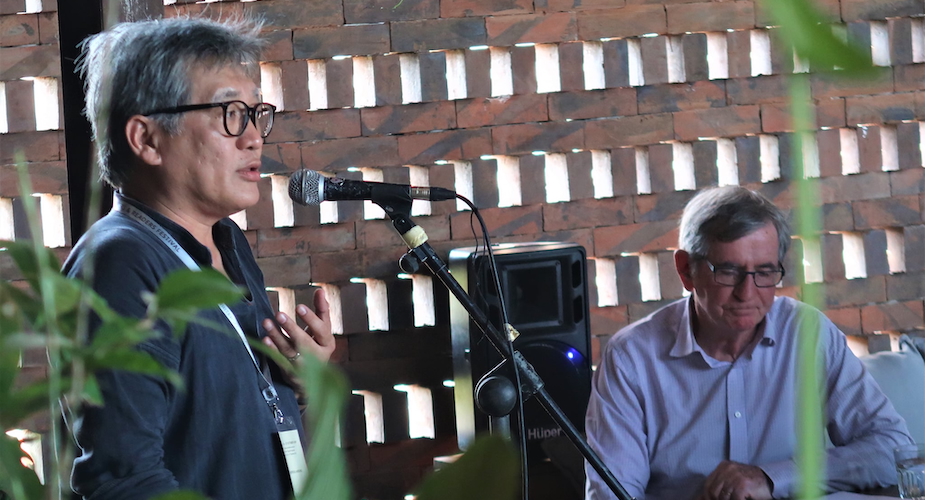
I first met Walsh in Melbourne in 1995 when he invited me to talk about journalism and political developments in Indonesia. Among those who attended my seminar were East Timorese activists in Melbourne. I talked about the establishment of the Alliance of Independent Journalists in Indonesia in 1994 to fight for press freedom. It prompted the Indonesian authorities to pressure news organizations to dismiss journalists involved in the union, including me.
That same year, dozens of East Timorese students protested by jumping into the compound of the United States Embassy during the Asia-Pacific Economic Cooperation (APEC) summit in Bogor, near Jakarta. The protest made international headlines.
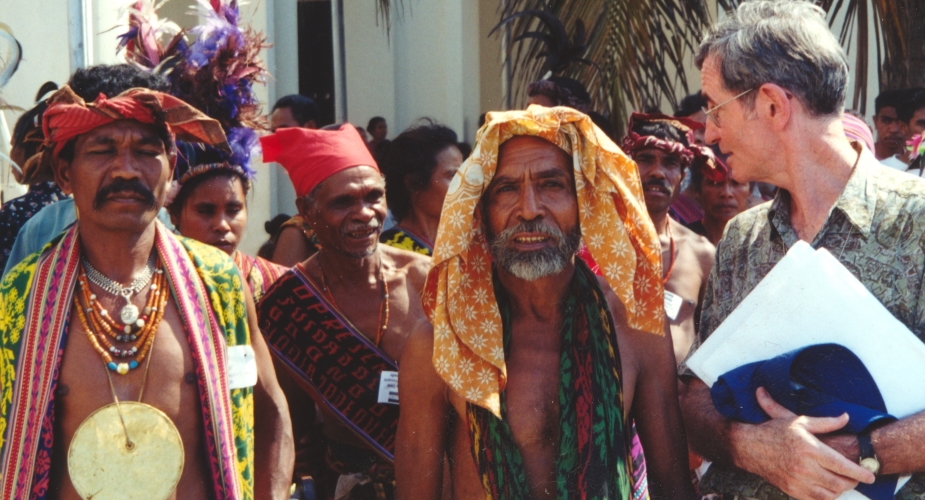
Walsh was deeply intrigued by East Timor stories. The discussion in Melbourne made me realise that the establishment of the Alliance of Independent Journalists (Aliansi Jurnalis Independen, AJI) and violations against journalists supporting it had led people to take the struggle for a free press seriously. 'Every struggle demands sacrifice', an East Timorese activist remarked.
This act elevated the dignity of Indonesian journalists, who had long been seen as overly submissive and insufficiently critical of the government and the military—especially since General Suharto’s regime came to power in 1965, during which at least 500,000 people were killed.
I returned to Jakarta and less than a month later, Jakarta police arrested three AJI members, including chairman Ahmad Taufik. It sparked a bigger international campaign on free press in Indonesia.
Unraveling across the archipelago
In May 1998, President Suharto resigned after three decades of authoritarian rule, opening a historic window. Tensions on the island of Java—where 62 per cent of the population live and the original site of ethnic Javanese, Indonesia’s main ethnic group at 42 per cent of the population—triggered political transformation across a nation of thousands of ethnic groups and languages, and hundreds of religions and belief systems. Many ethnic and religious groups sought a new equilibrium, demanding a larger role in political, economic, and cultural spheres within their respective regions.
I spent over a decade reporting, researching, and writing news articles and analytical pieces on conflicts ranging from Sumatra to West Papua. My 2019 book, Race, Islam and Power: Ethnic and Religious Violence in Post-Soeharto Indonesia, documented how race and religion were weaponised for political mobilisation in Indonesia.
Based on data from government bodies and humanitarian organisations, I estimated that at least 90,000 people were killed in communal and state violence during the decade after the fall of Suharto in 1998.
Across the archipelago—from Sumatra to West Papua and the Maluku Islands, and from Kalimantan to Sulawesi and Java—independence movements and militant groups fought the Indonesian military, with heavy loss of life. Indonesia occupied East Timor from 1975 to 1999. Thousands of civilians and resistance fighters died in the conflict. In 1999, 79 per cent of nearly half a million voters rejected autonomy within Indonesia—meaning the people of East Timor voted for independence.
The birth of a museum in Dili
I met Pat Walsh again in Dili in 2005 at the former Comarca prison. Back then, it served as the CAVR secretariat. Walsh explained that the museum would serve as a documentation center for human rights violations committed during the Indonesian occupation. The prison was prepared to become an archive center, preserving historical documents, photos, and survivor stories.
CAVR officially presented the Chega! report to Timor-Leste President Xanana Gusmão in Dili in October 2005. In Portuguese, the word 'chega' means 'enough'. It is a massive 2,800-pages in five volumes, documenting human rights abuses committed by all sides from 1974 to 1999 during the Indonesian occupation and the conflict leading to independence.
I met Walsh more frequently when he lived in Jakarta for 12 months in 2009 to oversee the translation of Chega! The Indonesian edition was published by Gramedia, and the Gramedia office was located next to my apartment building. We occasionally ran into each other on the street and had coffee; Walsh was particularly fond of nasi goreng.
During our meetings, Walsh would talk about his daily routine proofreading Chega! I deeply admired his persistence in reviewing such a lengthy manuscript. He closely observed his surroundings in Jakarta and, in true Walsh fashion, took detailed notes.
In October 2019, Walsh invited me to his book launch in Bali, The Day Hope and History Rhymed in East Timor also published by Gramedia.
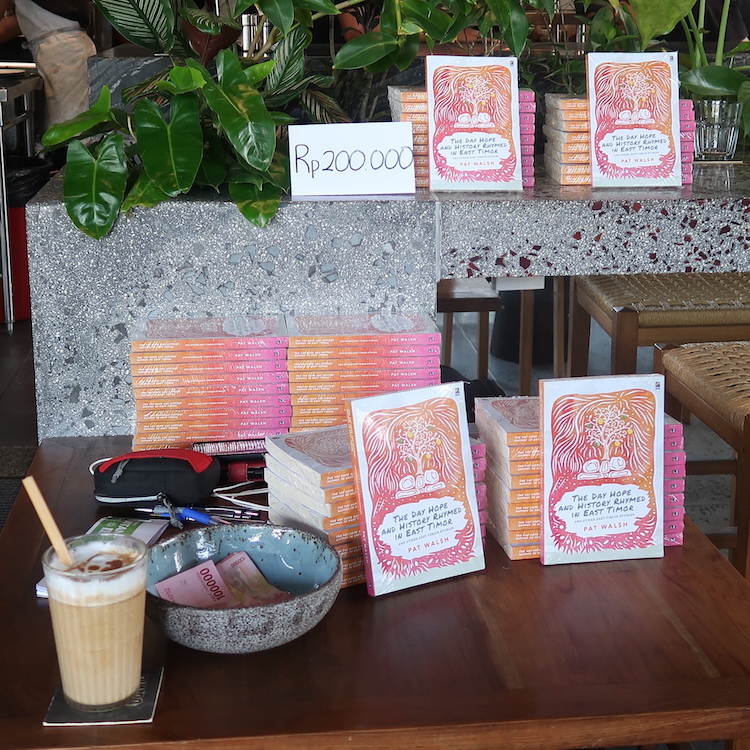
The book captures Pat Walsh's character: humble, painstaking, and serious. His network of acquaintances was vast—he knew many Indonesian presidents, including B.J. Habibie, who initiated the referendum in East Timor, and many East Timorese leaders since their days in the resistance movement. President Habibie personally welcomed Walsh into the State Palace in Jakarta.
His friendship with President Xanana Gusmao began when Xanana, as a resistance leader in East Timor, was arrested and sentenced to life in prison in 1993. Xanana was jailed at the Cipinang prison in Jakarta. Walsh helped Xanana see to his medical and other needs.
Walsh’s diligence and sharp insight made Australia-Indonesia relations, later also with Timor-Leste, feel far more genuine and grounded than the posturing displayed by many leaders and diplomats of both nations.
A passage in Walsh’s book reads:
'In 1999, in a remote corner of the world, something almost miraculous happened. After 500 years of colonialism, the political stars finally aligned and the people of Timor-Leste, written off as losers in the face of irreversible odds, successfully voted for freedom. Twenty years on, Pat Walsh remembers the day like it was yesterday.'
The political stars can indeed align. Indonesia was in total chaos with a lot of violence after the fall of President Suharto, changing the course of history in Timor-Leste. Through his dedication, research skills, and his writing talent—from Inside Indonesia to CAVR—Pat Walsh placed himself firmly at that narrow intersection of history.
Andreas Harsono helped found the Alliance of Independent Journalists in 1994 and is now working for Human Rights Watch and living in Jakarta.