Save Sangihe
If the universe has chosen us to be its guardians, then we as humans have no power to refuse it. Therefore, we must utilise all our resources and efforts to protect nature.
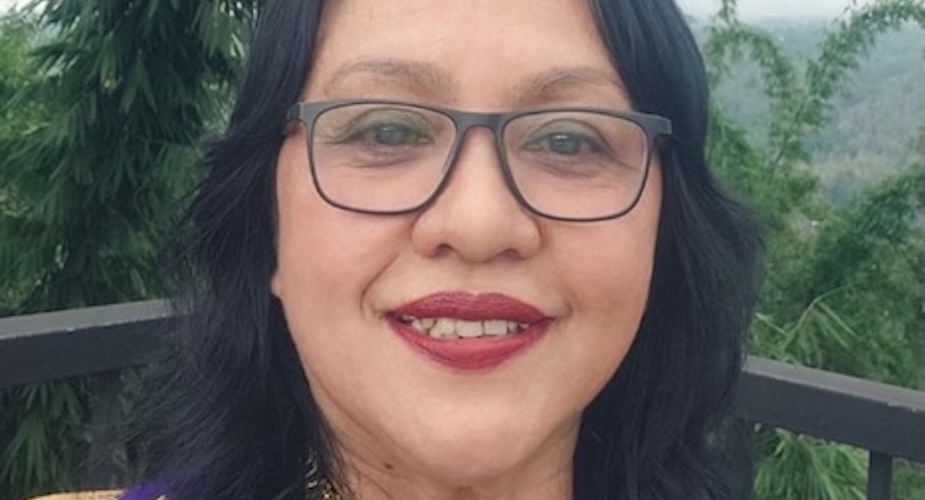
‘My name is Jull, with double L’, Jull Takaliuang reminds us. She was born in 1969 in the small village of Menggawa, Tamako District, Sangihe Islands, North Sulawesi. Sangihe is an island district situated on the northern border of Indonesia, near Mindanao Island in the Philippines. Jull completed her primary and junior education in the Sangihe Islands and her senior education in Manado. She then went on to complete her studies at Sam Ratulangi University in Manado. The journey from her residence in Manado to Sangihe takes approximately twelve hours by ship. Since the mining threat posed by PT Tambang Mas Sangihe (TMS) emerged in Sangihe, Jull has been returning to her native island more frequently.
Jull's role in advocating for communities affected by the mining industry began during the authoritarian regime of Soeharto. At that time, she personally accompanied the residents of Teluk Buyat, whose sea was being polluted since 1996 with mining waste dumped from the American mining company, PT Newmont Minahasa Raya (NMR). This case gained widespread attention after residents began experiencing alarming symptoms of heavy metal poisoning, including paralysis, lumps on their bodies, and life-threatening conditions. Jull, having witnessed the suffering of the residents firsthand, spoke out passionately. Tempo magazine even referred to her as ‘Indonesia's Erin Brockovich,’ referring to the American environmental activist featured in a film starring Julia Roberts.
We observed that her voice becomes notably firm and loud when discussing the injustices faced by the community as a result of mining activities. For Jull, it is not only large-scale or licensed mines that contribute to environmental and social issues but also smaller illegal mines that are protected by certain officials. This situation leads to land degradation and widespread suffering among the residents.
Success
Jull's ability to analyse societal issues, particularly injustice, was refined during her tenure as a journalist before she joined the Suara Nurani Foundation in North Minahasa in 1998. She and her husband, Didik Koleangan, emerged as a prominent environmental advocacy couple, often employing legal avenues to champion environmental justice. Through their efforts, they succeeded in getting the gold mining permit revoked for Bangka Island, North Sulawesi. This small island, spanning an area of 4,778 hectares, has nearly half its territory allocated to mining by PT Mikgro Metal Perdana (MMP), a partially Chinese-owned company .
After a protracted struggle, spanning almost two decades, the Supreme Court finally granted the residents' request to revoke PT MMP's production and exploration permits on 11 August 2016, as per Decision Number 255. Prior to a ruling in their favour on 14 July 2015, the East Jakarta Administrative Court had also annulled the company's production operation permit, which had been issued by the Minister of Energy and Mineral Resources (ESDM) on 17 July 2014. However, the damage had already been done. Customary forest areas had been cleared, mangroves filled in, mountains and hills demolished, and reclamation carried out along the coastline for the construction of a pier—leaving an ecological scar in its wake.
Alongside the Sangihe diaspora, she initiated the Save Sangihe Island (SSI) movement and organised efforts against another company, PT TMS. PT TMS was trying to acquire a contract area of approximately 42,000 hectares, representing 70 per cent of the total area of Sangihe Island, which measures only 73,698 hectares.
Sangihe Island is one of Indonesia's outermost small islands, where the local populace relies on natural resources for their livelihoods, particularly through agriculture and fishing along the coast and further out to sea. The island is renowned for its stunning scenery, bordered by two active underwater volcanoes, one of which is among the highest in the world. Additionally, it serves as the natural habitat for the rare endemic bird known as the Sangihe Whistler (Eutrichomyias rowleyi), or the Niu bird, in local parlance.
The SSI movement's campaign to protect this small island gained momentum in 2021, emerging as a collaborative effort among community groups and organisations in response to the Minister of Energy and Mineral Resources Decree No. 163.K/MB.04/DJB/2021, which elevated PT TMS's permit status from exploration to production.
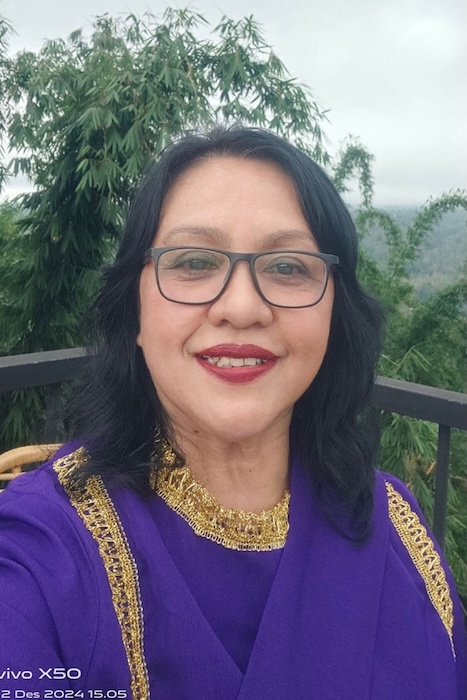
‘Sangihe Island is a living space, not a graveyard for the civilisation, culture, and lives of the Sangihe people. Therefore, if the concession progresses, civilisation in Sangihe will be buried,’ Jull remarked.
One method deployed by the resistance was a lawsuit, which argued that PT TMS's production operating permit had expired. In 2023, these efforts proved successful; PT TMS's production operations were ultimately prohibited by the Decree of the Minister of Energy and Mineral Resources Number 13.K/MB.04/DJB.M/2023. This decree forbids all construction, mining, processing, and refining activities, as well as transportation and sales. This decision came after the Supreme Court dismissed the cassation filed by both the Minister of Energy and Mineral Resources and PT TMS against the ruling of the Jakarta Administrative Court, which had revoked the upgrade of PT TMS's permit status to production operation.
Anti-extractivism
Jull's success in halting extractive projects strengthens her record as an anti-extractivism activist, opposing large-scale extraction of natural resources such as mineral mines, oil, and gas. Besides ecological impacts such as soil erosion, deforestation, loss of productive land for food, river and seawater pollution, declining biodiversity, and ultimately climate change, extractivism also brings social and political consequences: from human rights violations, unsafe working conditions, and unequal wealth distribution to conflicts between groups within society, society versus corporations, and society versus government.
Through persistent advocacy alongside the communities affected by mining in North Sulawesi, Jull became increasingly convinced that gold mining drives people away from prosperity and a sense of security. Jull believes that economic development should not harm the environment or disadvantage society. If development leads to death and causes disasters, then it represents a fundamentally flawed approach to progress.
The fruits of Jull's struggle have garnered sympathy and support from all corners of Indonesia, as well as recognition from outside the archipelago. In 2015, Jull received the N-PEACE Award from the United Nations Development Programme (UNDP) in the category of Untold Stories: Women Transforming their Communities. During the 2023 Mother's Day celebration, Jull was included in the list of 95 inspiring figures compiled by the Ministry of Women's Empowerment and Child Protection. For Jull, recognition is not the primary goal in advocacy work. She feels that she was carrying out a mandate from the Almighty to save the people and nature.
The universe
‘If the universe has chosen us to be its guardians, then we as humans have no power to refuse it. Therefore, we must utilise all our resources and efforts to protect nature,’ she said.
Jull realised that her struggles were directly against a system that did not favour the people. Nevertheless, she maintained that the legal system—albeit imperfect—could serve as a legitimate avenue for resistance, allowing the voices of the oppressed to be heard within the state framework. Despite the numerous challenges, Jull believes that the judicial system remains the most effective means of reducing the frequent conflicts and violence within the community, particularly when all other efforts have proven ineffective. She exemplified this belief by highlighting the struggle by the people of Bangka Island against a Chinese iron ore mining company. In this case, the community successfully secured a Judicial Review (PK) against the mining permit, leading to the eventual cancellation of the mining project.
Jull continues to inspire and mobilise young people and women in the SSI movement, fully aware that threats may resurface. While the victory in halting PT TMS's operations is significant, it represents only part of the broader picture. What was revoked was the production operation; however, the PT TMS work contract remains valid for the next 33 years.