Music and fandom create a bridge across cultures
Before BTS made K-pop mainstream globally, there was me: a teenager from the United States who fell in love with Indonesian music and became a Sahabat NOAH, the equivalent of BTS’s Army.
How far will someone go to meet their favourite Indonesian rockstar? In my case, I once contacted the President of Indonesia, Joko Widodo, hoping he might help me meet NOAH after seeing photos of him and the First Lady at one of their concerts.
I never received a reply, though I did later share my story with the Indonesian Embassy in Washington, D.C., who thanked me for helping promote Indonesian culture abroad. Earlier this year, when Ariel appeared at the Pocari Sweat Marathon in Chicago, I reached out again but this time to the Indonesian Consulate in Chicago hoping they might share my video inviting him to visit Oklahoma. I did not hear back, but the effort itself became part of the story of how far devotion can travel.
In the late 2000s, finding Indonesian music as an American teenager felt almost accidental. There were very few conversations about Indonesia in my environment and almost no visibility of its artists in the spaces I knew. That is part of what made the discovery feel so striking. I had no context for the music, no expectations, no prior exposure to Indonesian culture. I simply clicked on a video and found myself pulled into a world I had not known existed. That moment became a quiet turning point. It opened a door I did not yet have language for, but I could feel something beginning that was larger than a single song.
My fascination began with a single YouTube click in 2008, when I discovered 'Tak Bisakah' (Can’t It Be). I could not understand the lyrics, but I understood the feeling. From that moment, I followed Ariel’s voice through translations, fan forums and countless performances online.
Peterpan’s songs travelled with me through grief and renewal, shaping how I saw both myself and the world.
Encounter and devotion
When I first listened to 'Tak Bisakah', I replayed it until I lost count. The song was not soft, slow or dreamy. Its emotional power came from how Ariel held tension in his voice. It was dignity in vulnerability.
His voice carried urgency without desperation, ache without collapse. For me, this was not idolisation but recognition.
I realised later that I do not listen to music for technical brilliance alone. I listen for honesty, for whether a voice makes space for longing without forcing it. That was what I found in Ariel: textured sincerity, expressive without ego. His presence inside the sound made me feel understood.
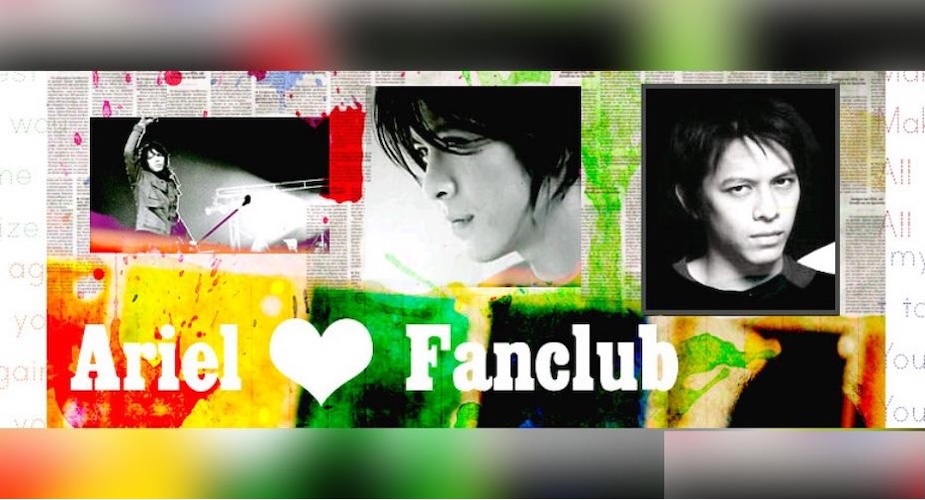
The more I listened, the more I became aware of how carefully he carried emotion. There was a steadiness in his voice that felt intentional and sincere. Even without understanding the lyrics, I could sense when a line carried longing, when a phrase softened, or when a moment held something unresolved. It was a kind of emotional clarity that did not require translation. What I responded to was not only the sound itself but the feeling that someone was expressing something true and unforced. That quality stayed with me, even before I understood who Ariel was or what Indonesia meant to me. His voice became a reference point for sincerity long before I knew anything about the culture behind it.
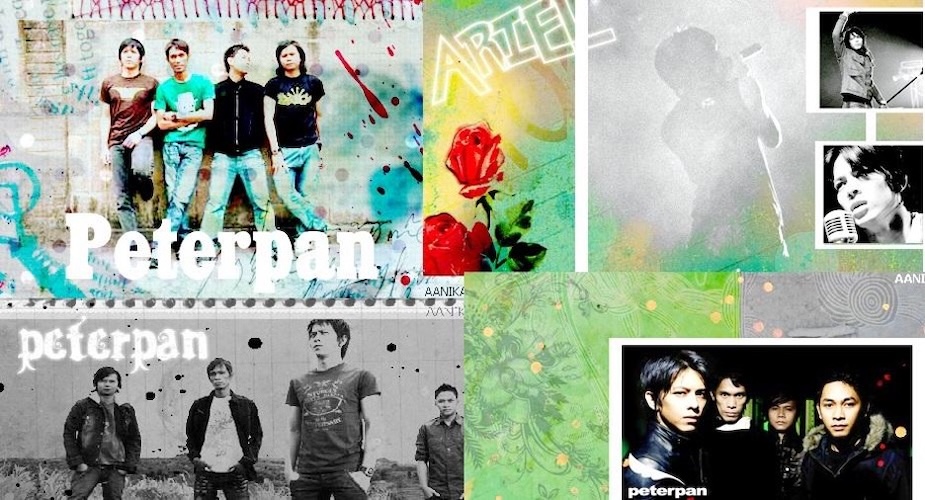
After watching Ariel in the music video for 'Menunggumu' (Waiting for You), I wrote my first poem, Dark Angel. For someone who had never written poetry, this was unexpected, but it became the first of many creative responses to his music. I created artwork inspired by NOAH and also launched the first English-language online forum for Ariel and Peterpan, hoping to create a space for other listeners like me.
My dedication spilled into everyday life:
- Singing the lyrics of the song 'Kukatakan Dengan Indah' in the grocery store, at home and while walking in the park.
- Watching untranslated interviews, replaying expressions for clues.
- Writing about how an Indonesian band led me to learn Bahasa Indonesia in my university essays.
- Emailing Indonesian community groups in the United States to request a Peterpan concert.
- Dreaming that I would wake up speaking Bahasa Indonesia fluently.
Much of this effort was labour. Without subtitles, I watched countless videos, reading emotion through gesture and tone. Body language became my dictionary. I guessed at humour, sadness or sincerity long before I knew the words.
Over time, these guesses became part of how I learned to listen. I replayed interviews to notice subtle changes in tone or expression, trying to understand conversations through feeling rather than vocabulary. Sometimes I understood correctly and sometimes I didn’t, but each attempt brought me a little closer to the world surrounding the music. It made the process of learning feel personal rather than technical.
Ariel and the music industry
Ariel never fit the stereotype of a rockstar. When I first watched him sing, he wore ordinary clothes, but his voice carried extraordinary depth. Over time, I saw him as both lyricist and performer, someone whose songs could only have been written by a person who had lived through heartbreak and change.
Fans describe his concerts as electric yet humble. Ariel seemed grateful to be on stage, more intent on connection than spectacle. That humility, combined with lyrics exploring longing and loss, helped explain why his music resonated so widely.
But his career was also marked by controversy. In 2010, private videos were leaked online without his consent. Under Indonesia’s strict anti-pornography law, Ariel was sentenced to prison for two years. For me, and for many others, it felt unjust, punishing a victim rather than the perpetrator and acknowledging a violation of privacy. His imprisonment sparked widespread debate across Indonesia about privacy, morality and media intrusion. When he returned, fans filled stadiums again, proof that music could outlast stigma.
Through it all, his voice remained central. Over the years, I noticed subtle changes in tone and expression, as if experience had added gravity. His early recordings were raw and unguarded, while later performances felt more grounded and reflective. That evolution mirrored his life.
Ariel’s journey reflects more than personal scandal. It shows how Indonesia’s music industry could sustain artists through turbulence while maintaining loyal audiences. NOAH’s endurance is not only about popularity. It is about connection, music that mirrors listeners’ own struggles.
While Ariel’s experience is unusual, few Indonesian musicians have undergone a comparable scandal followed by such a powerful artistic resurgence, it also reveals something about Indonesia’s music culture. The industry and its fans tend to value perseverance and reintegration rather than permanent exile. At the same time, the scale of NOAH’s comeback speaks uniquely to Ariel’s own strength as an artist. He returned to the stage not with defensiveness but with sincerity, creating music that resonated as deeply as before. His endurance reflects both an industry willing to make space for redemption and an artist capable of meeting that moment.
The transition from Peterpan to NOAH also revealed how deeply fans invest in continuity. It was not only a new chapter for the band but a shared moment for listeners who had grown with them. Indonesian music often circulates through personal networks, shared memories and everyday life rather than large promotional campaigns. Because of that, artists become woven into people’s routines and emotional histories. When Ariel returned, it felt less like a comeback engineered by an industry and more like a reunion supported by a community that had never let go. His presence carried a sense of familiarity and resilience that many people recognized in their own lives. That connection helped him return not as a figure defined by scandal but as someone whose sincerity still held meaning for those who had followed him for years.
Fandom as translation and cultural bridge
When people mention Indonesia, one might often get dreamy scenes of Bali in mind. But I think of Ariel and NOAH.
As a teenager, I spent hours trying to learn Bahasa Indonesia. I memorised commonly used phrases but was never fluent enough to read the news sites where most stories about the band appeared. Instead, I relied on generous fans who translated lyrics, explained idioms and added subtitles. Their help turned what could have been an isolating fandom into a shared community.
Translation was rarely seamless. I once laughed when fans called me kak (older sister or brother). At first I thought they were calling me a crow, as the word kak meant that in my own culture. Only later did I learn its affectionate meaning. Moments like that reminded me how easily meaning can slip, and how much patience it takes to stay connected across languages.

Through Ariel, I discovered a constellation of Indonesian music: Chrisye, whose classics Ariel often covered, and bands like Nidji and Sheila on 7. Their songs opened my ears to new rhythms of feeling. Proof that melody needs no translation to move a listener.
Fandom also changed how I presented myself. Despite my fear of public speaking, I volunteered to give a presentation on Indonesia at my high school’s international club. I spoke about Borobudur, Prambanan, Raja Ampat and Indonesia’s music scene with such enthusiasm that classmates assumed I had Indonesian roots.
My fascination with Indonesia had begun long before grief reshaped my relationship with NOAH’s music. I had already been learning Bahasa Indonesia, giving presentations on Indonesia at school, and seeking out Indonesian community groups in the United States. But listening to Ariel revealed gaps I could not bridge through translation alone. Because I grew up bilingual, I understood instinctively that translations are never the full story; they are shadows of meaning. I felt like an outsider looking into a world I wanted to understand more fully. Learning the language became a way to access not only the songs but the emotional world they came from: a form of belonging built through curiosity rather than heritage.
The music followed me into everyday life. When an Indonesian restaurant opened in my town, I used as many Bahasa Indonesia phrases as I could with the owners. They were surprised by my effort and more surprised when I mentioned NOAH. I already knew the names of dishes from my childhood, when my Indonesian neighbour often invited me for dinner. Years later, reconnecting with those flavours felt like another bridge back to the music I had followed from afar.
Trying to participate in the Sahabat NOAH fan community taught me as much about Indonesian culture as it did about the language itself. Most conversations happened entirely in Bahasa Indonesia, and I often read silently, understanding pieces but not the whole. Even so, fans responded with patience. They explained slang, clarified references and offered context I never would have known on my own. These moments felt like being invited into a living culture rather than simply observing it from the outside.
At the same time, I felt the limits of my fluency. There were conversations I wished I could join more fully and jokes I understood only after the fact. That mixture of closeness and distance shaped my sense of belonging. It required humility and a willingness to learn slowly, through repetition and care. But it also showed me that community can form even when words are imperfect. What mattered most was the desire to understand and to connect.
Engaging with Indonesian culture through NOAH widened my sense of who I could be. It taught me that belonging is not limited to the place you come from. It can also emerge from the people and stories that move you, even from far away.
Music through grief and renewal
I was very close to my grandparents growing up. When three of them passed away within five months, my world collapsed. Their absence left me with a lingering grief I did not know how to carry.
During that time, I turned to music as a lifeline. Ariel’s voice and NOAH’s songs became a place where my sorrow felt seen and recognized. I watched music videos repeatedly, searching his expressions for echoes of my own feelings. Even when I did not understand the lyrics, I felt understood by the emotion in his voice.
Out of that grief, I created something of my own. I made a video called Disappearing in Flames, pairing Peterpan’s music with songs that reflected my loss. It was simple, but it gave form to pain. Editing those fragments of sound and image was less about skill than survival.
Through Ariel’s songs, I learned that music does not need to be in your own language to understand you. What I could not articulate in my grief, I heard in the ache of his voice, something personal and collective at once. That realisation widened my worldview: communication is not only vocabulary but resonance. From there, I became open to music in other languages: K-pop, J-pop, Tamil, Telugu, Kannada, Malayalam. With each step, my idea of belonging expanded from geography to emotional humanity. Indonesia became my first doorway into that broader world.
During that period, I found myself listening with a different kind of attention. I noticed details in his voice I had overlooked before, small shifts in breath or emphasis that carried quiet emotional weight. Those details became anchors for me. On days when grief felt overwhelming, the steadiness in his delivery offered something I could hold onto. It did not take the pain away, but it made it feel less isolating. Music became a place where my emotions could exist without explanation. Through that, I learned that understanding does not always require shared language or direct communication. Sometimes it happens in the space between feeling and sound.
Looking back, I see that what I found in that music was not only beauty but recognition. As George Orwell wrote in 1984, “Perhaps one did not want to be loved so much as to be understood.” Ariel’s songs offered me that understanding when I needed it most. They reminded me that grief and music can exist together, and both can carry us forward.
Broader resonance
Following Ariel and NOAH changed how I saw the world. Their music opened me to languages and cultures I might never have explored. What began as a search for lyric translations became an entry point into Indonesia’s history, art and everyday life.
I also learned how unevenly global culture is recognised. K-pop became an international phenomenon in recent years while I had already been listening to Indonesian music and then K-pop since 2009. For me, Ariel’s voice came first. The fact that Indonesian music remains overlooked outside its borders says more about global blind spots than about artistic quality.
Years of translating, mishearing, guessing and revisiting NOAH’s English-language releases convinced me that Indonesian music deserves global recognition. If I could carry it this far through fragments and mistakes, imagine what could happen with real access and understanding.
This contrast made me think more deeply about how visibility in global culture is shaped. Indonesian music rarely appeared in the international spaces I knew, not because it lacked artistry but because it did not have the same pathways for global distribution. What reached the world often depended on industry support, translation availability and media infrastructure, none of which reflected the full reality of Indonesia’s musical landscape. Realizing this changed how I understood cultural recognition. It taught me that what becomes globally celebrated is not always what is most meaningful. Many powerful artistic traditions remain known only within their own communities. Listening to NOAH made me aware of how many worlds exist beyond the ones I grew up with, and how much beauty can remain unseen simply because no one has built a bridge to carry it farther.
That conviction has been confirmed in small ways. When friends and family learned about this aspect of my life, many were surprised while others said they understood my commitment. Some listened to “Menunggumu” and said they liked it. In those moments, I felt not only pride as a fan but joy in knowing that Indonesian music had reached another set of ears.
Loving NOAH from abroad has always meant work. Before subtitles were common, I watched concerts and interviews with no translation, relying on body language and tone to imagine what was said. I copied articles into translation apps, asked fans for explanations and pieced together meaning word by word.
I remain grateful to the Indonesian fans who welcomed me, and I recognise how much I gave in return: hours of listening, translating and sharing. Together, we created belonging across oceans. That is the gift of Indonesian popular culture, and the reason it deserves to be heard everywhere.
In a world that often divides people by language and nation, the shared love of a song can still build a bridge stronger than borders.
This labour has been part of my devotion and part of my education. It has made me long to meet Ariel one day, not as an idol and fan, but as two people who have shaped each other’s worlds through sound. I want to speak honestly about music and meaning, without mediation or mistranslation. Until that day comes, I carry the connection his voice created with me. It continues to shape the way I listen, the way I learn and the way I understand the world.
Aanika I. is a writer and cross-cultural storyteller whose work explores how identity, music, and memory shape belonging. Blending fiction, nonfiction, and poetry, she weaves history with emotion to celebrate the connections that help us find home in unexpected places. Read more and connect with her here.