Remembering Pat Walsh
It’s hard to put into words why Pat Walsh was important to me.
I was 18 when I attended my first Timor rally. It was to protest the 12 November Santa Cruz Massacre in Dili in 1991. I heard my friend and fellow activist in the solidarity group Action in Solidarity with Indonesia (Aksi) Kamal Bamadhaj, aged 20, had been shot along with many Timorese at a cemetery.
I was nervous, being Indonesian. However, I thought it was important to be there. I told the crowd, when I eventually got up to say something at the end of the rally, that I was embarrassed for being an Indonesian. I wore the biggest pair of sunglasses I could find, along with a floral peasant top, which was completely not protest wear. I thought I would be incognito. It was to be the beginning of my lifelong engagement with East Timor/Timor-Leste.
Some of the Timor solidarity activists, like Pat, welcomed the involvement of Indonesians in the solidarity campaign on the street, as did many East Timorese whom I came to know over the years. I didn't always find this kind of attitude. I think Pat’s visits to Indonesia meant he knew what Indonesians were up against and made him prepared to welcome Indonesians who were willing to attend East Timor-related things.
As a solidarity activist with Aksi, which later became Asiet (Action in Solidarity with Indonesia and East Timor), I soon became a regular visitor to the Uniting Church buildings at 124 Napier St in Fitzroy, for example, to organise campaigns and events and go to the offices of Inside Indonesia, the ACFOA Human Rights Office, and later, the East Timor Human Rights Centre. And when I began working for Overseas Service Bureau in 1996, you could say I also became part of the Argyle St./Kerr St. crowd – Bill Armstrong, Peter Britton, Kirsty Sword, Julia Fountain, and many more who also worked on various initiatives related to Timor, openly or more discreetly. We held events at the Kerr St meeting room on Indonesia- and Timor-related issues after hours when the office closed.
Through these activities, I got to know Pat as a dependable, sure pair of hands in this movement that often proved so difficult to be optimistic about. What Pat exuded was a sense of calm suggesting that the cause of resisting the Suharto regime and winning freedom for the East Timorese people was just and right. Such was the aura he exuded that often I’d be a little intimidated by him. He was, after all, an elder of our movement. He was a good listener, and I think that made him an effective campaigner. There were many tactical differences in the Timor solidarity movement, with often more talkers than listeners. Pat was both. He earned the respect of many by giving everyone a hearing, even if they had the most outlandish ideas. He was bold and worked effectively with others. Despite the dark years of the campaign, when it looked as if nothing would change, Pat and those he inspired kept going. What hope would there have been without the consistent work of those who were there in the beginning?
After 1999
After the success of the United Nations referendum on 30 August 1999, both Pat and I found ourselves in a free East Timor and working for the United Nations Transitional Administration in East Timor (Untaet). You could have knocked me over with a feather that Timor was free. Many friends from Australia were also there: Matt Abud, Sonny Inbaraj, Vacy Vlazna, Helen Hill, Joaquim Santos, Vicky Tchong, Emilia Pires, Gerry and Helene van Klinken, and Lia Kent. Many others. It was difficult, complicated work compounded by the destruction of large parts of Dili by the retreating Indonesian forces.
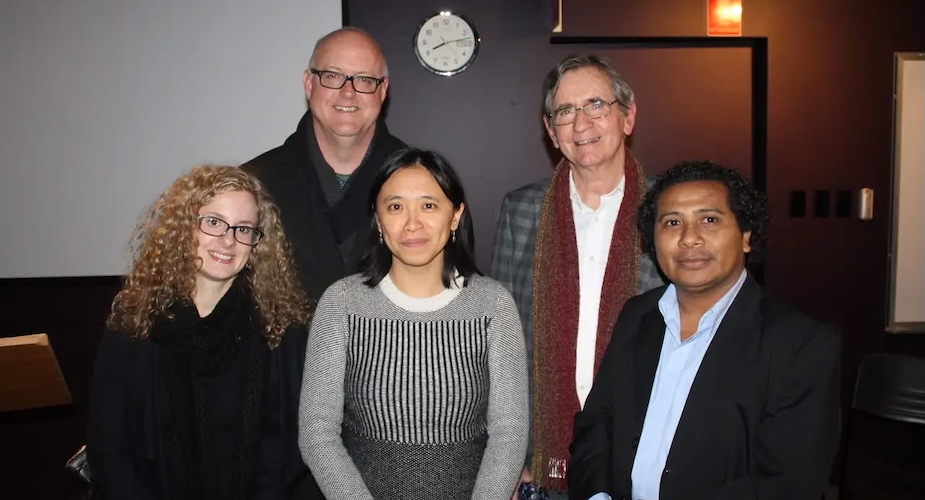
There was a lot of trauma. I had visited Timor just before the ballot in July 1999 with the Australian Council of Trade Unions, and when I returned in March 2000, Dili had been transformed in shocking and sad ways. It had been emptied of many inhabitants as people either sought refuge in Dare or were expelled to West Timor. Our paths were to cross many times as I was a translator/interpreter across the whole UN mission. We attended many of the same events. I felt a sense of relief that Pat was there, working on human rights, serious crimes, and justice, despite the tricky landscape in which we were operating. The UN used to complain that there were too many Australians. We, the old activists, also saw the arrival of Australian officials, intent on advising the UN and the new East Timorese government. Australian officials had previously been on the other side of the fence when it came to advocacy for an independent Timor.
Probably the closest we grew was in the years after the end of the CAVR, the East Timorese Truth, Reception and Reconciliation Commission, when Pat was intent on testing the extent to which Indonesia could receive and act on the Commission’s final report, Chega!. Pat commissioned me to translate the final ‘Recommendations’ chapter of the Chega! report into Indonesian, concerned that its sensitive contents could be leaked if done in Timor-Leste or in Indonesia.
When he finished promoting and publicising the Chega! report in Indonesia, he spoke to me about his frustrations, the barriers in post-reformasi Indonesia, how people had learned or not learned about Timor, and how we could overcome this by strengthening the study of Indonesia’s entanglements with Timor-Leste. This was something I had started thinking about around 2014. Pat’s words pushed me further in that direction.
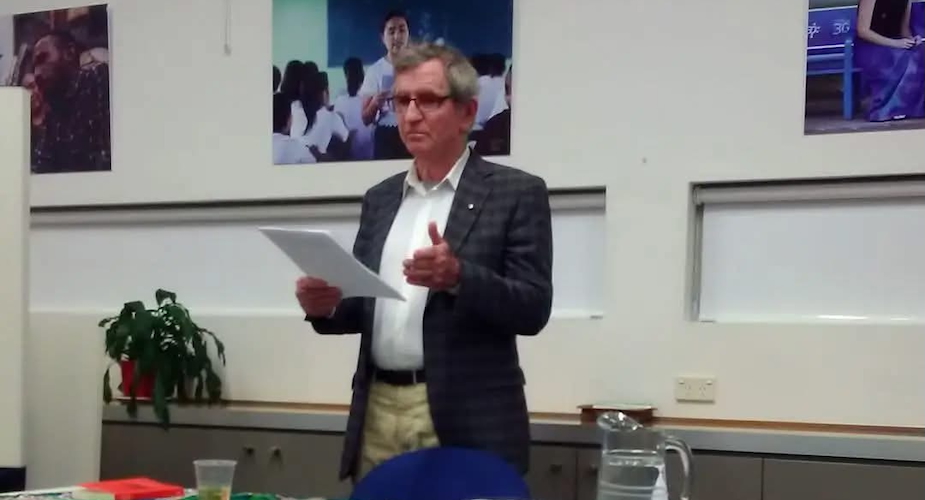
His work has also inspired my recent work in this area. The clearest example of this was his dedication to pursuing the issue of justice and memorialization of East Timor’s Great Famine of 1977-79 (his term). His chapter, ‘Famine Girl’ in the book How Hope and History Rhymed in East Timor, fascinated me so much that I researched and published two academic journal articles on the famine photographs by Peter Rodgers that became such an iconic part of the Timor campaign. Pat appeared in both articles. He reconnected a historian with the history of the movement in which she had become involved. He pushed me to look back at the lives and afterlives of these photographs and his own involvement with them. More broadly, I began designing a research project on iconic photographs related to Timor-Leste.
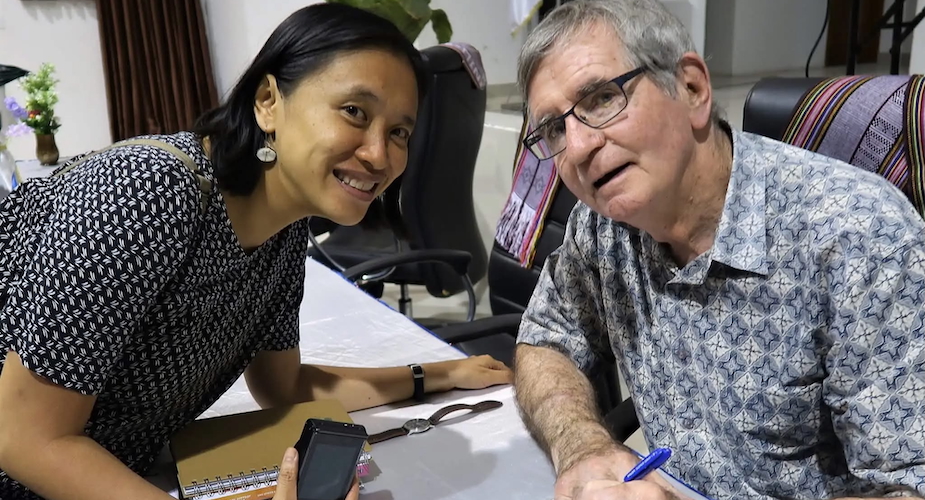
Pat was an internationalist – he thought the Irish Famine’s commemoration could have inspired some of what the Centro Nacional Chega! (CNC), Timor-Leste’s national memory institute, could do on the Timor famine. A significant portion of our discussions focused on this topic. I learnt a great deal from his knowledge and experience. At the 2023 Timor Leste Studies Association conference, I introduced Yazalde Savio, the CNC’s famine researcher, to Pat, which thrilled Yazalde no end, for him to fill Pat in on the CNC’s research on a topic so important to Pat and encourage Yazalde. They spoke to each other in Indonesian quietly at the end of lunch, with Pat again carefully listening.
Local-global
Pat was also someone who worked at the local level to inspire change. One of the last public talks he gave linked Victoria’s Yoorrook Commission with truth, reconciliation and justice work in Timor-Leste. He was aware of his own implicatedness and the need for him to act to address the issue of dispossession, land rights and reconciliation. He was also so displeased with the 2024 election of Indonesian President Prabowo, a former special forces commander of the army. He told me in a Facebook message that ‘we’, I assume he meant the CAVR, should have focused more closely on Prabowo and his actions in Timor-Leste.
Pat realised how much more had to be done on human rights in Timor and Indonesia. He was often critical of the lengths to which Timorese political leaders went to placate Indonesian leaders. While he understood their reasons, he thought at times they went too far and to the detriment of the victims of human rights abuses in Timor-Leste. He felt this injustice keenly. We were still messaging on Facebook about where East Timorese leaders stood on human rights after Prabowo's election, dissecting who was taking which stance; however, the work we thought was important, challenging impunity, remains incomplete with Pat’s passing.
It was crucial to include Pat’s views on Indonesia-TL relations. Therefore, in around October, when I was co-editing an issue of Inside Indonesia focusing on this topic, I approached him to allow me to edit and publish his talk from July on truth and reconciliation, ensuring he would be included. He readily agreed and, to my relief, approved the edits. Perhaps this was Pat’s last published piece ever – fitting that it was in the magazine he co-founded.
What I’ll also miss greatly is Pat’s self-deprecating humour, his brilliant way with words, his moving prose and his analytical thinking. On a personal level, he made me feel seen, first as a young Indonesian teenager in Australia, throughout my life as an activist, an NGO worker, a translator, and an academic. He made me feel part of the activist community. I am sad that I will never get to have any more conversations with Pat about Timor and Indonesia or hear from him about Qantas’ terrible service (late again and freezing) between Dili and Darwin, ‘the flying fridge’ as you dubbed it.
Pat has left behind an incredible legacy, inspiring us to think, feel, write, speak, and be courageous even if we feel, at first, that we need big sunglasses to hide behind.
Vannessa Hearman (vannessa.hearman@curtin.edu.au) is a historian of Indonesia and Timor-Leste based at Curtin University in Western Australia. Her book on East Timorese refugees, titled The Good Sea: The Journey of the Tasi Diak and the Politics of Refugee Protection in Australia, is published by Melbourne University Publishing. Vannessa is a member of the board of Inside Indonesia.