From mobile esports to grassroots media patchworks
On Joko's YouTube channel, a game of Free Fire can begin with a simple invitation. He opens a game room, shares the code with his subscribers, and waits to start streaming.
Streaming is a major profession in mobile esports. During a livestream, viewers watch a player's gameplay in real time on platforms such as YouTube, often with live commentary and a chat feature that allows them to interact with the streamer.
What looks like a group of people playing on their phones can also be work, community organising, small business and a way of navigating insecure livelihoods. Indonesian mobile esports show how these activities come together - and what they reveal about the everyday resilience of grassroots digital life.
For Joko, for example, the first viewers to enter become his teammates. There is no long preparation and no established squad. Part of the entertainment comes from not knowing whether the temporary team will click, struggle or produce an unexpected star.
'I would create a game room and share the code with my subscribers. Whoever joins the fastest can play a game together with me.'
The important part is the movement between these roles. Playing becomes content to be viewed, and viewers become participants. A WhatsApp group becomes a community space, but the same group can be a space where gaming knowledge becomes a paid service. Friendship, fandom, coaching, moderation and income overlap. I use the term 'mobile playbour' (a portmanteau of play and labour) for this intersection of play, work, mobile media, digital platforms, community relationships and local entrepreneurship.
The idea originated from interviews and observations with 18 esports practitioners. This includes e-athletes, administrators, streamers, amateur competitors, and local gaming community members across Java and Borneo. Their experiences revealed that Indonesian mobile esports extends beyond professional leagues; it also involves people creating small, adaptable economic opportunities through a device they carry daily.
Mobile esports
Mobile esports became highly visible in Indonesia during the second half of the 2010s. By 2018, the Mobile Legends Southeast Asian Cup was shown on Kompas TV, while esports appeared as an exhibition sport at the Asian Games in Jakarta and Palembang. But the larger story was already unfolding far from television studios and major arenas.
For many Indonesians, the smartphone is the main device for communication, entertainment, information and gaming. It also lowers the cost of entering competitive play. Popular multiplayer games could run on a smartphone costing around US$200, far below the cost of a gaming PC or console setup. This accessibility helped mobile games become the dominant logic of gaming for many young Indonesians.
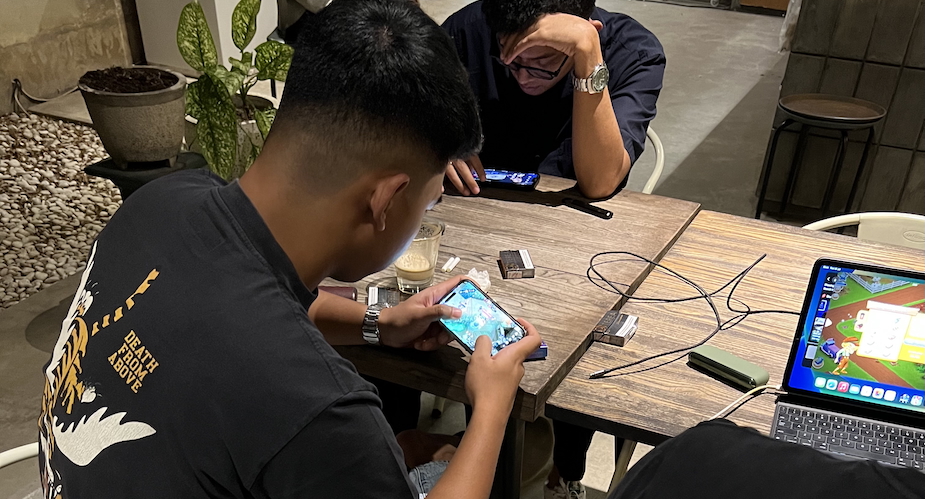
It also changed where gaming could happen. A familiar example is main bareng, often shortened to mabar: 'playing together' in English. A gaming clan or group of friends can arrive at a coffee shop, café or warmindo – an Indomie noodle stall – put their smartphones on the table and turn it into a gaming space. These gatherings can be social, but they can also be used for training, improving rankings, team-building and online competition.
Play gathering
Businesses adapt in return. Some cafés and food stalls strengthen their Wi-Fi, add signal boosters or offer packages for gaming groups. In Tenggarong, East Borneo, a participant I call Qadir described how angkringan, inexpensive street-food stalls, are becoming part of the local mobile gaming scene. Food and drinks often cost less than US$1, the stalls stay open from dusk until dawn, and some host weekly micro-tournaments. Players gain an affordable place to gather; businesses gain customers and publicity when an event fills the venue.
This is why mobile esports in Indonesia cannot be understood simply as 'esports on a phone'. The phone makes competitive mobile gaming portable, but the practice expands through the social and economic world around it.
Precarity and mobility
Mobile playbour’s accessibility can generate genuine income as well as real risks. One income route is competitive online gaming. Some players work as ranked-match jockeys, logging into a client's account and raising its rank. Others work as players-for-hire, joining a client as a paid teammate. On the mobile app Lita, players could register as freelance gaming partners and convert the app's virtual coins into Indonesian rupiah. Iman, one of the people I interviewed, told me about a friend who earned about US$1,200 over three months as a Mobile Legends player-for-hire. For that period, the income was enough for him to become a breadwinner for his family.
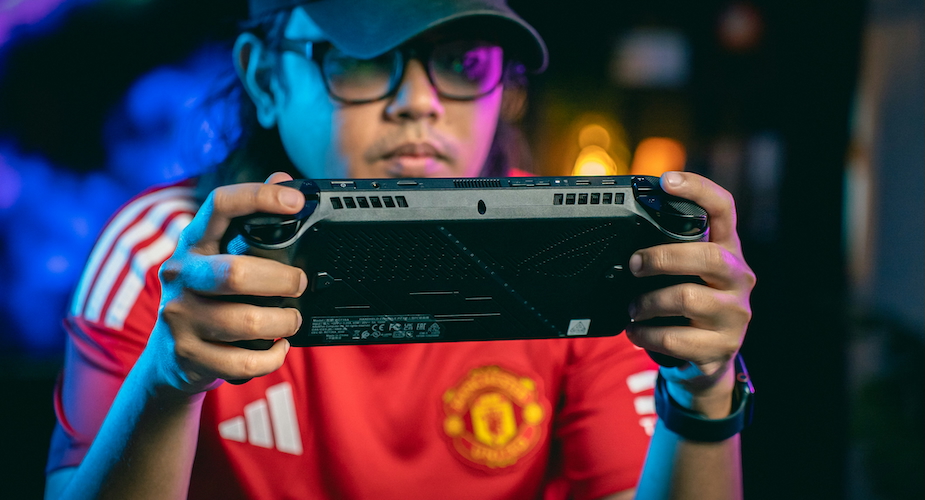
In Indonesia, game streaming reaches beyond the screen. Streaming links mobile gaming with local esports, businesses, and everyday communication through platforms such as WhatsApp. Joko's streaming activities, for example, show how these connections turn gameplay into opportunities for community participation and collaboration
Yet Iman and another participant, Diandra, were clear about the limit: this was not a secure career path. They saw paid gaming as a side job that fitted around school or university. The same contradiction appeared in local esports teams.
Fajar and Hadi, for example, played for a Yogyakarta-based local team while also taking on duties beyond competition. They helped scout talent because small teams often lacked enough staff to separate playing, administration and recruitment. Fajar reported earning only US$75 a month. Hadi earned more from streaming than he did from competing. Both had changed clubs three times in three years, and their latest contracts lasted only one year. Hadi shared his thoughts on the experience:
'Mobile esports is risky because many are unwilling to see the grim pictures and the difficulty in establishing a foothold in the profession. Especially if you're from a small town.'
These contrasts are central to mobile playbour. Barriers to entry can be low, payouts can be quick, and people can move between different ways of earning. But income is often irregular, contracts are short, and there may be little protection when a platform, team or tournament disappears. Accessibility creates opportunity without automatically creating security.
At the same time, mobile playbour also enables mobility. Practitioners can assemble opportunities from the resources around them: a smartphone, gaming skill, a social media account, a WhatsApp group, a reputation, a local café, a network of friends or a relationship with a community organiser. These resources can be recombined as circumstances change.
This is also why the word ‘mobile’ does more work than simply naming the device. Mobility in Indonesian mobile esports means socially moving between different online and offline income strategies. The smartphone enables much of this movement, as the people involved keep adjusting to a changing environment. In this sense, the Indonesian context of ‘playbour’ captures another set of blurred boundaries between play and work. These boundaries often meet within the informal economy, where work can be flexible and inventive but also unstable.
Grassroots media patchworks
Looking across these cases, mobile playbour also points to something broader than esports. The recurring pattern is patchwork: combining available opportunities to compensate for what formal structures do not consistently provide.
In mobile esports, the formal problems are short career paths and sub-optimal institutional support. The response is not one grand solution. Instead, people stitch together smaller activities. These include the dual role of game streaming and esports coaching, running a YouTube channel via WhatsApp, or turning food stalls into gaming venues.
I describe these arrangements as grassroots media patchworks. Patchwork is an apt term because these systems are heterogeneous and incomplete. They are made from pieces that were not necessarily designed to work together, yet people combine them because they are accessible and useful.
Indonesia's most visible grassroots media patchworks often emerge during moments of public mobilisation, when people use social media and messaging platforms to connect, share information, and organise from below. Mobile playbour reveals a quieter version of the same capacity to assemble resources through networks.
This is the everyday dimension that mobile playbour brings into view. Grassroots media resilience is not only visible when people collectively confront a crisis. It can also appear in the routine work of moving into a new role when the old one becomes unsustainable.
Bridging the gap
Celebrating this adaptability too readily can be risky. When people excel at improvising around structural issues, there is a danger of turning resilience into a self-congratulatory tale of resourcefulness. This would overlook a key aspect of mobile playbour: the patchwork is essential because the gap between grassroots mobility and institutional stagnation persists.
At the grassroots, the organisation can look highly horizontal: players, viewers, organisers, cafés, teams and local businesses connect laterally and create opportunities together. However, power is not equally horizontal. Game publishers, platforms, institutions and employers still control important infrastructures and resources. The networks may be decentralised in practice while structural power remains concentrated elsewhere.
Seen this way, the patchwork maintains the capacity to act despite incomplete or unequal structures. It is an everyday process of maintenance, recombination and adjustment. The patchwork can bridge a gap without closing it.
Joko's YouTube channel offers a small but revealing example of mobile gaming becoming a self-sustaining community. None of this guarantees him a secure career. But together, these pieces create possibilities that would not exist on their own.
The same is true at an angkringan in Tenggarong, a warmindo in Central Java, a local esports team in Yogyakarta or a player-for-hire working through an app. Mobile playbour shows how Indonesians build their economic and social skills by using the everyday media already integrated into their lives.
Haryo Pambuko Jiwandono is an Indonesian digital game scholar in the School of Media and Communication at RMIT University in Melbourne. He is also a researcher at RMIT's Digital Ethnography Research Centre (DERC).