In an era of digital protest, communal places are needed to sustain a long revolution
In recent years Indonesia saw a lot of hashtag-driven youth protests, including #ReformasiDikorupsi (‘Reform Corrupted’, 2019), #TolakOmnibusLaw (‘Reject the Omnibus Law’, 2020), #PeringatanDarurat (‘Emergency Warning’, 2024), and #IndonesiaGelap (‘Dark Indonesia’, 2025). These hashtags were popular not only on social media, but also on the streets. Students, workers, and activists from several cities gathered in the streets, forming interconnected protest nodes. Those protest movements – which some scholars have characterised as ‘rhizomatic’ – represented heroic and promising moments for social transformation. However, these protest movements were largely unsuccessful.
According to critics, this was mainly due to the hashtag-based nature of the protests, which makes them necessarily fleeting. Yet few of these critics present a more sustainable alternative. For that, I argue, we need to reconsider the significance of place – in particular of ‘fourth places’, a concept introduced in urban studies referring to places that stimulate informal social gatherings among strangers. In Indonesia, this takes the form of 'kopi darat' - meaning literally, ‘coffee on land’, or an in-person meetup.
The limits of online action
Criticism towards rhizomatic movements varies and much of it is valid. It is the kind of movement that takes pride in its lack of hierarchy and leader, which allows it to expand more rapidly and broadly. But it is precisely these attributes that render rhizomatic movements fragile: most of them are sporadic, reactive, and have been unable to make any significant change, if any, thus far. The sharpest critique toward these movements revolves around the question of how to organise such actions into a force capable of exerting real pressure on the government. At the very least, the ‘people’ need to be able to articulate their demands concisely, critically, and sharply, rather than churning out a list of demands in a single protest.
This is especially true when these movements are linked to the power of social media. When ojek driver Affan Kurniawan was crushed to death by a police tank in August 2025, people quickly responded with anger. In response, social media influencers produced a list of 17+8 demands, along with a corporate-style website to track deadlines of those demands. Some analysts interpreted this as an indication that people are not only reacting, but also re-organising. Kompas’ media monitoring shows that the hashtag #17plus8Tuntutan Rakyat only briefly trended before fading.
It often seems as though social media is a powerful platform that can educate people politically, make them aware of their rights, and facilitate sincere, seamless ‘association and assembly’ (berserikat dan berkumpul) activities. That is, of course, an ideal scenario – and, like many ideals, it often exists only in the imagination. In reality, people tend to get busy with their thumbs whenever there is a protest, a trending topic, or a specific hashtag, only to fall silent the rest of the time.
Is this wrong? Not necessarily. Social media has usefully amplified criticism of the government’s ‘free nutritious lunch’ or MBG (makan bergizi gratis) program in the form of memes spoofing the program. However, when subsequently memes and AI-generated songs went viral about ‘MBG’ as Mas Bahlil Ganteng or Handsome Bahlil – referring to Bahlil Lahadalia, the Minister of Energy and Mineral Resources – some worried that the humour would undermine the substance of the criticism directed at the MBG program itself. Cynics argued that netizens are only capable of cracking jokes. The fact is, creating memes, songs and humorous videos is far easier than organising a structured movement. The latter requires discipline, time, and both material and emotional investment – with no guarantee of success. It is understandable, then, that people opt for the easiest form of political expression, dropping drop the occasional comment on social media or reposting funny videos mocking the government.
Clearly, an internet war of memes and reposted funny videos simply will not suffice to get people to organise themselves. A precondition for that is nurturing and sharpening a shared critical consciousness, which requires various gatherings, discussions and areas for sharing – in short, a place. Perhaps, if the place in question originates from mutual interests like hobbies or the arts, it might enjoy greater longevity. This is where the concept of the ‘fourth place’ becomes worth discussing.
The fancy kopi-darat
The ‘fourth place’ concept is essentially a fancy label for the term kopi-darat, which was popular in the pre-social media era. It builds on the ‘third place’ concept popularised by American urban sociologist Ray Oldenburg (not to be confused with Edward Soja’s more philosophical ‘third space’ concept). The ‘first place’ is home, the ‘second place’ is school, campus, or the office, while public spaces like cafés, pubs and bookstores constitute the ‘third place’. According to Oldenburg, a third place is essential to society as a venue for socialising, getting to know one another, and discussing shared issues within the community.
A ‘fourth place’ emerges when people grow weary of online community gatherings and shift toward face-to-face interactions instead. Indeed, recent surveys are beginning to capture that Gen Z has become increasingly socially offline. They are tired of screens and crave human connections. A 2024 US-based poll found that 95 per cent of young people aged 18–35 want to explore their interests in person, and 73 per cent of the participants are planning to attend live events within the next six months.
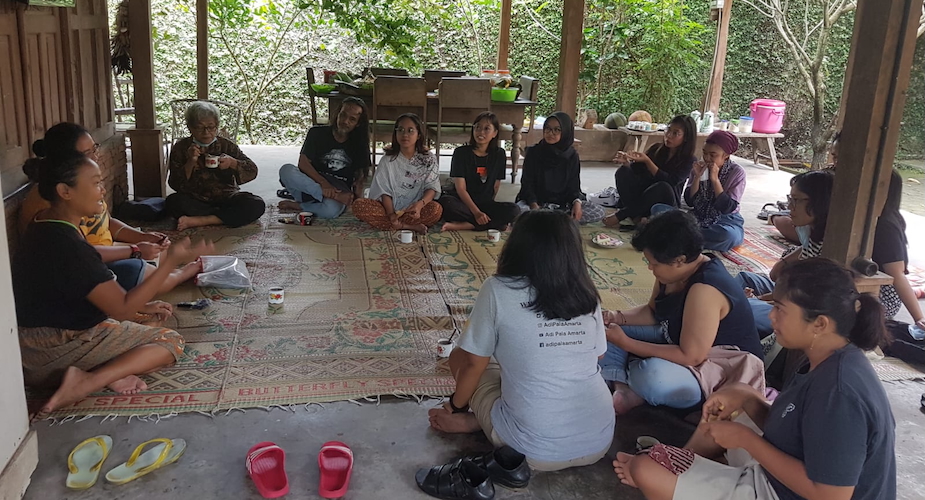
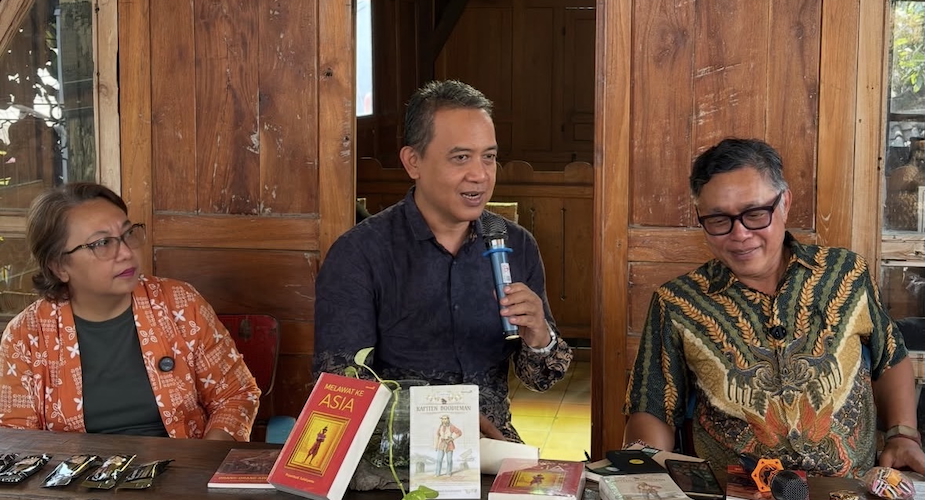
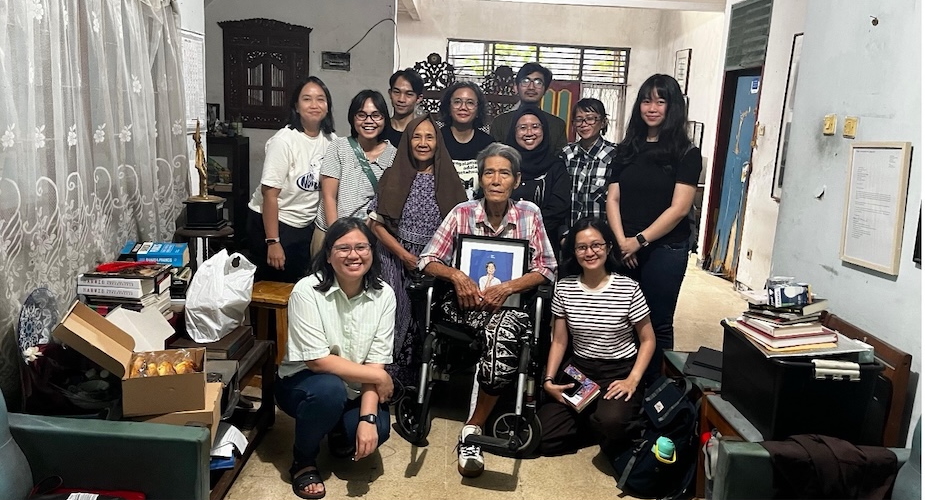
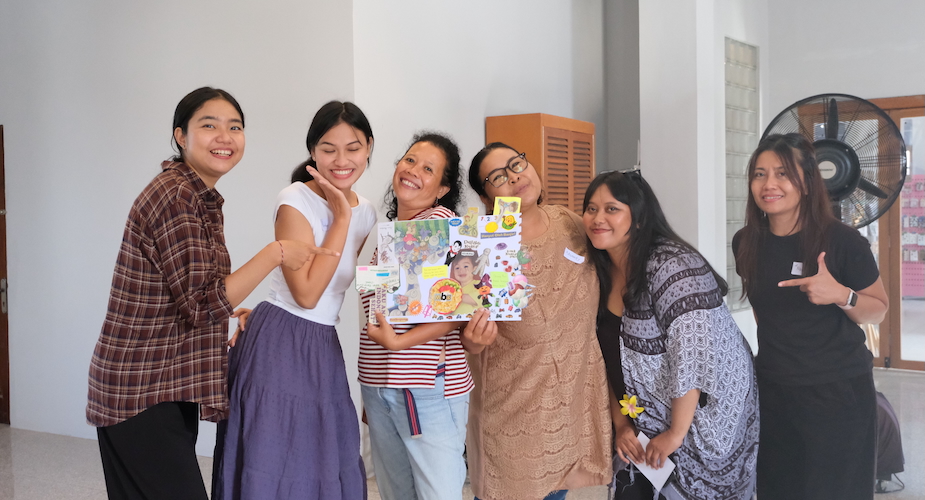
A similar phenomenon is evident among young people in Indonesia. For instance, there is a growing trend of workshops for zine-making, reading in parks, coffee tasting, beadwork, mural painting, sketching, and so on. National media have highlighted reading clubs like Lingkar Sastra Tangerang for their collective knowledge-building activities. Another example is Zine Antara Bulukumba, a platform for the South Sulawesi-based zine-making collective SaESA to discuss and analyse local culture and social issues. These communities already exist, and some have endured because they are bound by a shared passion for a hobby. Here is a thought: rather than creating entirely new ‘political’ groups or movements, civic awareness can also be introduced by ‘piggybacking’ on the agendas of existing communities.
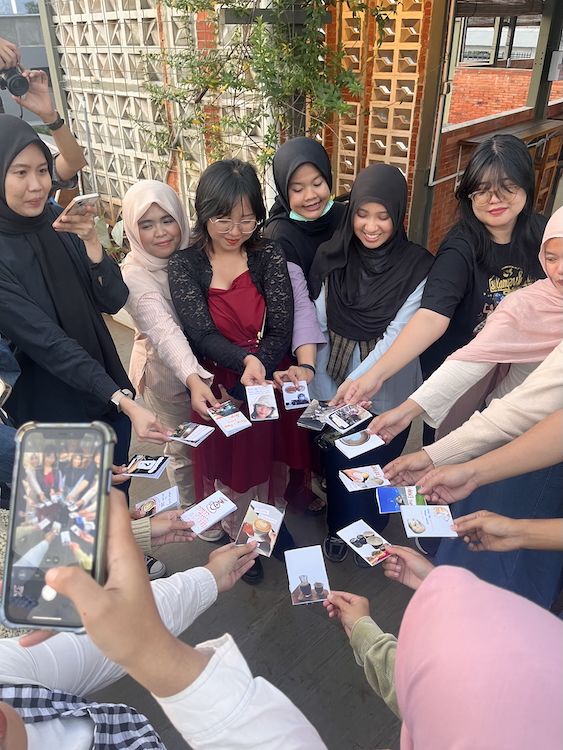
A zine-making community could organise a workshop centred on the theme of rising costs of living. A park-based reading group might dedicate a special session to historical texts regarding the mass killings of 1965–1966. A collective of muralists and sketch artists could host a special session visualising Indonesia 20 or 30 years into the future through visual art. These methods of integrating political awareness can take various forms – and indeed, are already being widely practiced. It is a shift from sharing a common interest to recognising a shared destiny.
From connectivity to connection
One invaluable benefit of the ‘fourth place’ is the availability of space for human-to-human conversation, with minimal intrusion of algorithmic logic. This stands in contrast to the more anonymous nature of ‘social media’ activism. On social media, we are compelled to pay more attention to personality-based politics, viral influencers, and civic efforts that we may do as individuals to demonstrate that we care about what happens in our country. Social media’s algorithms (more so than the content itself) have shaped people’s self-focused attitude towards politics. Offline communities effectively counter this tendency.
In a fourth place, people can practice building relationships with one another and build meaningful connections. In real-life situations, we cannot simply scroll away from the person standing in front of us just because we do not like the way they talk or what they talk about. Instead of shutting down or snapping, offline meetings force us to learn how to actually communicate. The hope is that this will gradually foster an awareness that ‘berserikat dan berkumpul’ is not merely a reactionary act triggered by an impending protest, but rather an activity integral to the daily lives of citizens in a democratic society.
A long revolution
The fourth place concept is certainly not a prescription for civil movements to abandon their rhizomatic nature in favour of formal organisation. I do not view rhizomatic movements and formal unions within civil society as mutually exclusive, nor do I see one as a stage that must be surpassed to reach the other. Both need to exist and operate in tandem. Likewise, embracing the fourth place does not necessarily mean eliminating digital media altogether. Many of the aforementioned ‘fourth place’ collectives are also active on social media, which – ironically perhaps – helps to spur more people into offline spaces.
In his renowned book The Long Revolution, Raymond Williams posits that the revolution in ‘Western’ society unfolded in three phases: the democratic revolution (practical political participation), the industrial revolution (economic transformation), and the cultural revolution (expansion in communication, literature, and education) – all of which played out over a vast timeframe spanning centuries. Perhaps we Indonesians, too, are currently navigating that long revolution in our own version as a nation. Cultivating fourth places might be the strategy to nurture the habits of collaboratively sharing shared and civic interests, sustaining the long revolution after the mass protests have passed.
Andina Dwifatma (andina.dwifatma@atmajaya.ac.id) is a lecturer at the School of Communication, Atma Jaya Catholic University of Indonesia.