The perils of showing off
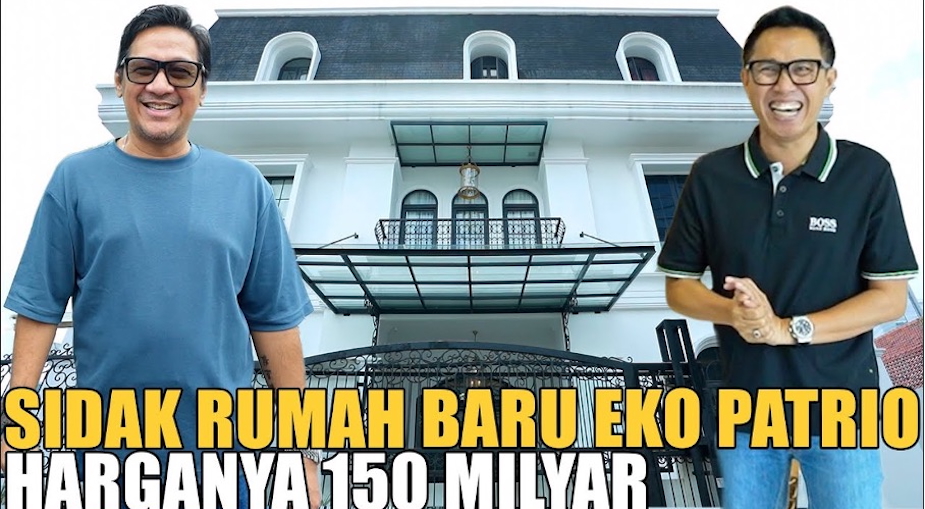
Videos of public figures flaunting their wealth are common on YouTube and other social media channels, and they have been watched millions of times. Such as the ones of Eko Patrio, a famous Indonesian comedian and tv host, who joined politics and served as a member of parliament for the National Mandate Party (Partai Amanat Nasional, PAN). Eko, like other public figures, liked to invite celebrities and influencers to his lavish home in Jakarta, who then posted elaborate videos on social media platforms lasting half an hour and more.
In the videos, Eko proudly gives tours through his city mansion explaining in detail the exclusive design and interior, including the luxurious goods that decorate his house. One of the titles of the videos is very much to the point ‘Inspecting the house of Eko Patrio … the price is 150 billion, very luxurious,’ which makes it impossible not to know how costly his house was.
In Indonesia today, such behaviour is called flexing. The term is a quite recent adoption of an English word deriving from the language of the body builder community. Its popularity is due to wealthy Indonesians like Eko who, while not literally flexing their muscles, are flexing their material success on various media, particularly their social media accounts. Flexing is practiced to an extent that it has become a separate media genre. It has evolved into something trendy that public figures are inclined to do to retain their status, similar to what can be regarded as its precursor: interviews with successful people in their homes who staged their private lives for their fans. The difference is, however, that in the case of flexing the private is defined even more in material terms with showing off one’s wealth being at the core of this mediated practice. Thus, flexing in Indonesia is unmistakably intentional – and as such has become increasingly controversial.
Flexing in religion and politics
In a country with huge gaps between affluent and poor strata of society, one might assume that flexing is generally condemned, but this is not the case and would also run counter to the fact that it has become so popular. Rather, and this is the argument of this short article, flexing is deemed to be particularly problematic if it is associated with the realms of politics and religion – or, to be more precise, if the showing off of wealth is entangled with democratic representation and religious piety.
In the latter case, Indonesian Muslims are reminded that showing off one’s piety or committing riya’ (the term used in the Qur’an), offline or online, is categorised as sinful behaviour according to classic Islamic scholarship, and this can go hand in hand with showing off wealth. For instance, when celebrities post pictures of their luxurious umroh pilgrimage tours; or when women attend prayer gatherings (majelis taklim) with luxury-brand handbags, which is then criticised by the preacher, as I was able to observe during previous research.
No less contested is flexing conducted by elected officials who should represent the Indonesian people, many of whom are less affluent and have nothing that they can flex with. So why should a member of parliament engage in such a practice and its mediation? One answer to this question why flexing on social media became a public issue might be that the realm of politics and the world of celebrities can intersect in profound ways in Indonesia.

The above-mentioned Eko Patrio is not the only example of the entanglement between the entertainment industry and politics, as it is not uncommon for political parties in Indonesia to invite celebrities to become candidates for parliamentary elections. This enabled the political career of Eko as it did for the tv presenter Uya Kuya, another elected member of parliament. However, the two celebrity politicians and several other members of parliament suddenly became highly unpopular in August 2025.
The turning point came with their insensitive comments and postings about the public criticism of the large housing allowances members of parliament were entitled to; one of them, Ahmad Sahroni – then chief treasurer of the National Democratic Party (Nasdem) – called the protesters ‘the stupidest people on earth’. This instantly backfired and even led to the looting of their Jakarta residences on 30 August 2025 and eventually to losing their seats in parliament, as they were deemed an unbearable burden for their political parties, PAN and Nasdem, due to this spectacular drop in popularity.
Pomp and power
Interestingly, the looting of the houses of ‘insensitive’ members of parliament was interpreted not only in the context of the housing allowance issue, but also linked to the flexing on their social media accounts. Eko Patrio and Uya Kuya as well as Ahmad Sahroni – a businessman rather than a celebrity, which did not deter him from frequently engaging in flexing as well – became the negative examples of an Indonesian elite being out of touch with the socio-economic reality of their constituencies.
Countless social media posts saw a causal connection between flexing and looting, which became perhaps the most widespread interpretation of a topic that had gone viral. For example, under one of the YouTube videos one finds sarcastic comments such as that the video ‘helped people a lot to know the house of Eko Patrio.’ As a consequence, party leaders started to warn their members of parliament not to hurt the feelings of ordinary Indonesians by engaging in flexing. And the Indonesian Ulama Council (MUI) called for a stop of the looting, while – in the same breath – reminded office holders to avoid flexing.
From the perspective of the victims, especially those with a celebrity background, the lootings came as a nasty surprise, since flexing was part of their lifestyle and had not prevented them from being elected. They did not anticipate the disruptive potential of a social media practice that seemed to be widely accepted, yet could suddenly turn into a sign of grave failure in the eyes of their digital audiences.
At the same time, the public criticism of flexing does not target the rich per se, but rather their display and mediation of wealth. The looting of houses did not occur because their owners were affluent, but due to making their wealth public as a source of pride, while they were holding public office. I am somehow reminded here of Clifford Geertz’ famous (and heavily criticised) assertion in his classic book Negara that ‘power served pomp, not pomp power’ in nineteenth century Balinese kingdoms. However, in twenty-first century Indonesia, the big difference is of course that through such media practices the power of the state, of which members of parliament are a part, is transformed into the celebration of individual pomp. Flexing on social media is anything but a lavish state ritual that Geertz regarded as crucial for legitimising rule in Bali. It rather constitutes an activity that, in these cases, discloses the private wealth of public office holders.
Politics from above and from below
Public figures that rose to high positions in the realms of politics and religion and that engage in flexing arouse suspicion that they have used their positions to acquire wealth. They are perceived as misusing wealth as a sign of piety or, in the case of politicians, their ostentatious presentation of wealth is interpreted as a sign of the failure of public representation. I want to connect this line of thought with another classic analysis of wealth in Indonesia. Benedict Anderson, in his widely read essay ‘The Idea of Power in Javanese Culture’, argued that ‘wealth necessarily follows power’ and not the other way around. According to Javanese beliefs, powerful people do not – and should not – actively strive for wealth, which is seen to make people spiritually weak and hence powerless; instead, wealth comes to them automatically as a consequence of possessing power.
Eko Patrio and other celebrity politicians violated also this principle, since they unmistakably conveyed to the Indonesian public that they put much effort into becoming rich, even after they had assumed public office as representatives of the Indonesian people in the national parliament. In their fall, I want to argue, modern concepts of democratic representation and older ideas of the relationship between power, wealth and pomp converge.
Performed by elected politicians and high-ranking civil servants, flexing can appear as a politics from above deemed inappropriate and illegitimate, hence evoking politics from below. And it is the very media on which flexing takes place that allows for these digital counter-politics that can appear unexpectedly and massively and thus can even escape increasing attempts of the powerful to control Indonesia’s online spheres.
At the same time, however, such politics from below have their limits, as they draw attention to the alleged wrongdoings of particular individuals without addressing the structural conditions of socio-economic inequality that inform flexing in the first place. The conspicuous mediation of wealth has become the main target of criticism and not its massive accumulation – and this might not run counter to the interests of those who are benefitting from the latter.
Martin Slama (martin.slama@oeaw.ac.at) is a researcher at the Institute for Social Anthropology, Austrian Academy of Sciences.