Is Indonesia's most notorious hacker a criminal or an activist playing hide-and-seek with the state?
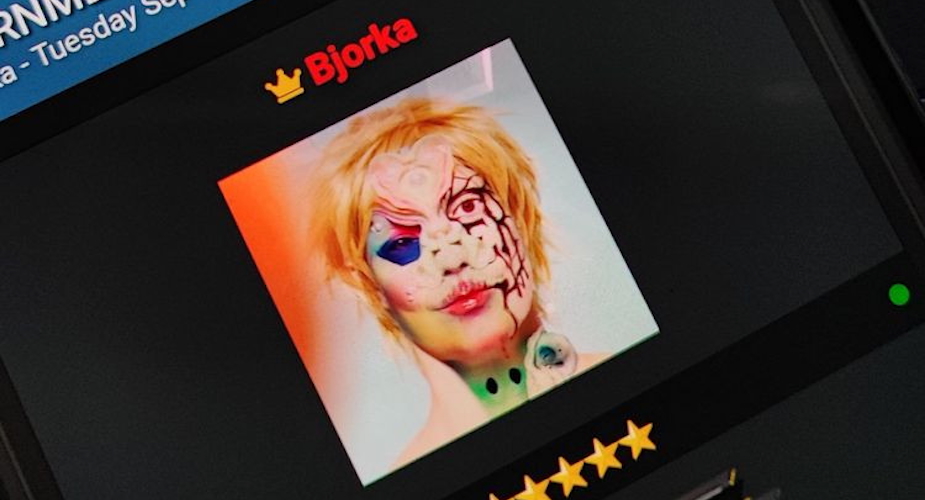
In early September 2022, an anonymous account calling itself Bjorka, after the Icelandic singer Björk, offered 1.3 billion SIM card registration records for sale on the hacking forum BreachForums for US$50,000. The Communications and Information Ministry insisted the data had not come from its systems. Over the following days Bjorka posted what it said were 105 million records from the General Election Commission and a log of confidential correspondence between then-president Joko Widodo and the State Intelligence Agency (BIN).
Then things turned personal. On the birthday of communications minister Johnny Plate, Bjorka published his national ID number, phone number, vaccine ID and family details on Telegram, with the caption ‘Happy birthday Johnny, Johnny, yes papa’.
The state’s response was swift and predictable. Police and officials treated Bjorka as a criminal. Jokowi set up an emergency task force, and commentators speculated about the amount of money involved. Our argument is that this is not wrong, but it is not enough to understand the world of hacking in Indonesia.
Criminals and ‘ethical’ hackers
Hacking has been part of Indonesia’s digital life since the early days of the internet. In the early 2000s, some warnet (internet café) operators dealt in goods bought with stolen credit card details, a practice known as carding, while others installed software to capture customers’ passwords. Today’s breaches are far larger. Hackers reportedly took 279 million records from the national health insurer BPJS Kesehatan in 2021, and the e-commerce platform Tokopedia lost the details of some 91 million users in 2020.
It is understandable that the dominant response is legal and security-focused. Leaked ID numbers and home addresses can do real harm. Media portrayals often depict hackers as young people from lower-middle-class backgrounds hacking for money. That image softens when a hacker is rebranded as ‘ethical’ and useful to the state. For example, in 2017 Indonesian police said they were considering recruiting Haikal, a 19-year-old accused of hacking some 4,600 websites and of stealing airline tickets worth around Rp4 billion from Tiket.com, because his skills could serve the country. Legislators have since spoken of working with hackers, showing the acceptability of hacking when it is aligned with state interests.
In a chapter we wrote for the book Digital Technology and Activism in Authoritarian Contexts and Beyond, we propose another reading. Without dismissing the risks to privacy, we suggest that hacking can be a form of political activism, in which hackers use data, code and technical skill to voice grievances and resist authority. Hacktivists took part in the Arab Spring uprisings in Tunisia, Egypt and Libya in this way.
Ngoprek as political repertoire
In Indonesia, hacktivism is closely tied to ngoprek, the playful tinkering with technology that has long been part of computer culture. Anthropologist Joshua Barker’s research on Indonesia’s internet engineers shows how this kind of tinkering produced tools to bypass censorship and protect communication and carried an implicit ethos of resistance.
Seen this way, Bjorka’s leaks were politically charged ngoprek. They exposed vulnerabilities, questioned authority and redistributed access to information. The SIM card data came from a registration scheme introduced in 2017, and its exposure showed how poorly the state protects the personal information it compels citizens to hand over. Bjorka’s posts also revived painful issues, including the 2004 murder of human rights activist Munir and public distrust of the state oil company Pertamina.
Many netizens cheered for Bjorka. They called Bjorka a ‘digital vigilante’ or a ‘Robin Hood’, suggesting the hacks were not only an act against the state, but a way of voicing public discontent.
Hide-and-seek
Activism in Indonesia usually means street protests, online campaigns or creative performance. Bjorka chose to play hide-and-seek. The account was loud and highly visible, but it carefully managed what could be found. It claimed to be based in Poland and wrote in English to an Indonesian audience, which made it harder to track. It also ran several accounts, among them @bjorkanism, @bjorxanism and @bjorkanesian. When one was suspended, another appeared.
This is playfulness as politics. The account’s open taunt, ‘Yeah, catch me if you can’, mocked a government that could not keep pace with it. Anonymity also lets the message travel without a face attached, a common practice in hacker culture. Authorities, increasingly frustrated, responded by labelling Bjorka a criminal. That is the easiest response, because it avoids confronting weak digital infrastructure and the grievances that drive protest.
Doxxing and its dilemmas
Bjorka sold datasets for money, which led some observers to dismiss the whole enterprise as profit-driven. But Bjorka also doxxed officials seen as responsible for poor data protection. Plate was the most prominent case, but politicians including Anies Baswedan, Puan Maharani and Erick Thohir were also targeted.
Doxxing is dangerous, and civil society groups are right to warn of its harms. Yet in this case it also worked as pressure, giving citizens a way to direct their frustration at an official they held responsible. Activists used similar tactics against police violence in Hong Kong in 2019. Bjorka’s leaks also appeared to speed up the Personal Data Protection Law, which had stalled since 2020 and was passed on 20 September 2022.
Who was Bjorka?
Authorities have twice announced an arrest. Within days of the Plate doxxing, in September 2022, police detained a 21-year-old ice seller from Madiun, Muhammad Agung Hidayatullah, and named him a suspect for allegedly helping set up a Bjorka Telegram channel. He was not detained, and Bjorka kept posting. In late September 2025 police arrested another 22-year-old, WFT, in Minahasa, North Sulawesi. He is accused of illegally accessing and extorting a private bank over customer data and says he has used the Bjorka name since 2020. Police have not confirmed that he was behind the 2022 leaks, and some doubt it.
What matters for our argument is the need for a fuller understanding of hacking that takes political motives seriously. Those motives extend beyond personal fulfilment and money and cannot be reduced to cybercrime or to youthful attention-seeking. In Bjorka’s case, the political messaging, much of it about data protection, is hard to miss. Calling hackers criminals and enemies obscures the conditions that make hacktivism possible in the first place.
Abdullah Faqih is at the University of Sydney and Fahmi Rizki Fahroji is at Rensselaer Polytechnic Institute.